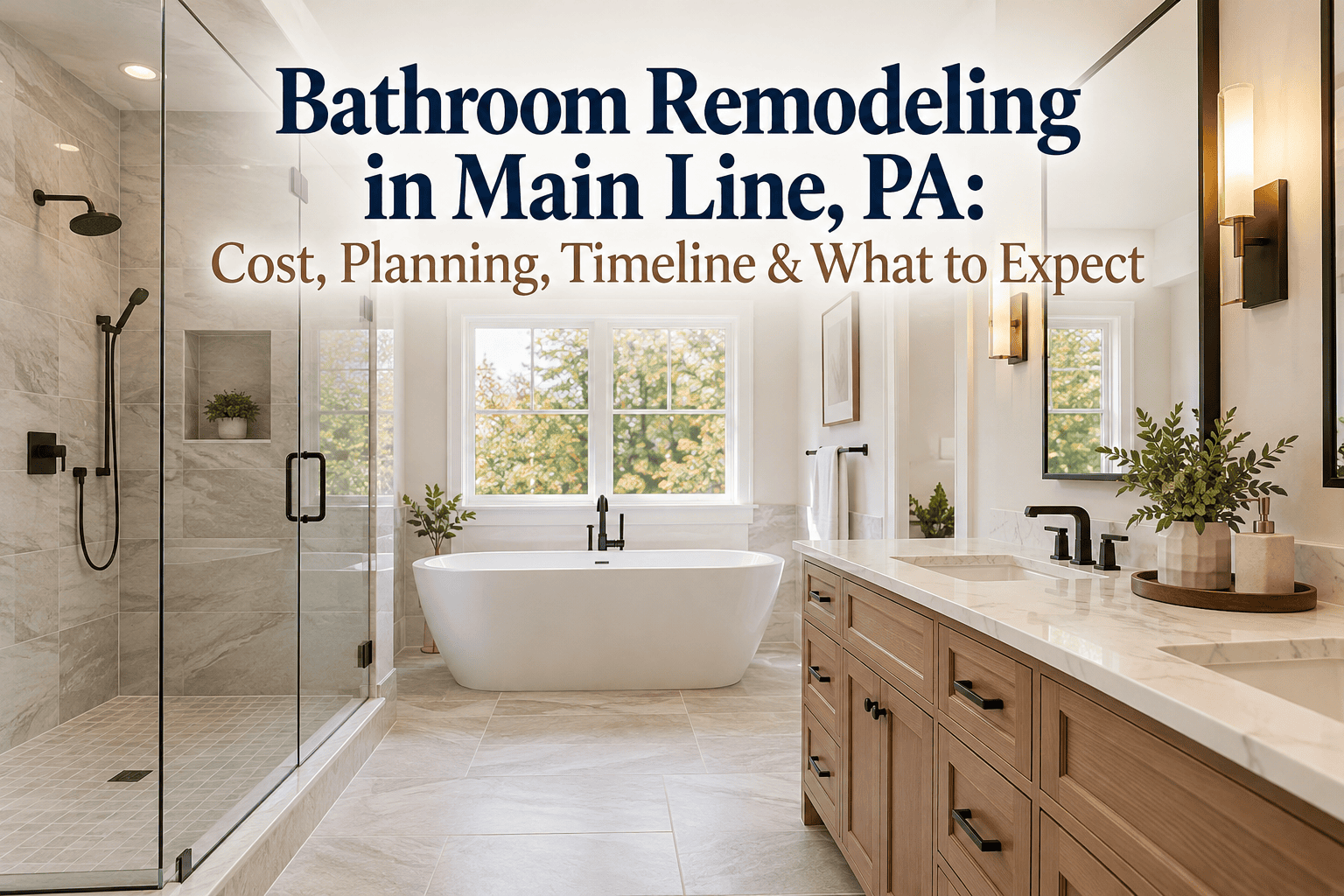
Most homeowners do not remodel a bathroom on a whim. It’s usually a combination of things: fixtures that are starting to fail, a layout that never worked well, or a bathroom that simply hasn’t been touched since the home was built decades ago. Bathroom remodeling in Main Line, PA, involves a lot more than swapping out a faucet or regrouting tile. It touches plumbing, electrical, ventilation, waterproofing, and often structural considerations, all in a relatively small footprint where every decision affects the ones around it. This guide focuses on what actually shapes the cost, timeline, and scope of a bathroom remodel, so you know what to expect before the first wall comes down.
Planning a bathroom remodel this fall? Call Hynes Construction at 610-896-6388 to discuss your project, priorities, and remodeling options.
When Should You Remodel Your Bathroom?
A bathroom doesn’t need to be falling apart to justify a remodel, but certain signs make the case more clearly than others. Visible water damage around the tub, shower, or toilet base is one of the most urgent, since moisture problems tend to spread into subflooring and framing if left alone. A layout that no longer serves the household, whether that’s a single sink in a bathroom two people share every morning or a tub nobody uses taking up space that could be a walk-in shower, is a functional reason to consider a change. Aging fixtures, failing grout, outdated tile, and insufficient storage all add up over time, even when no single issue feels urgent on its own. And if your bathroom simply hasn’t been updated in twenty or thirty years, both the materials and the layout conventions have likely moved on considerably since it was built.
What Is Included in a Bathroom Remodel?
A full bathroom remodel typically touches most or all of the following:
- Vanity, including the cabinet, countertop, and sink, often one of the most visible changes in the room.
- Shower or tub, whether replacing an existing unit, converting a tub to a shower, or reconfiguring the wet area entirely.
- Flooring, usually tile or another water-resistant material suited to constant moisture exposure.
- Tile, both flooring and shower or tub surround, which affects both appearance and waterproofing.
- Lighting, including vanity lighting and overhead fixtures, often undersized in older bathrooms relative to how the space is actually used.
- Plumbing fixtures, such as the faucet, showerhead, and toilet.
- Storage, including built-in niches, medicine cabinets, or additional vanity storage.
- Ventilation, an often-overlooked element that’s critical for controlling moisture and preventing mold growth over time.
- Painting, typically with moisture-resistant products suited to a bathroom environment.
Because water management ties all of these together, waterproofing and ventilation deserve as much attention during planning as the visible finishes.
Bathroom Remodel vs. Bathroom Facelift
Not every bathroom needs to be gutted to the studs, and understanding the difference between a facelift and a full-scale renovation helps set the right expectations and budget.
A bathroom facelift generally keeps the existing layout and plumbing locations intact while updating surfaces and fixtures: a new vanity, new flooring, new fixtures, and possibly a new tub or shower surround, without relocating plumbing. This approach is faster and less invasive, and it works well when the existing footprint already functions reasonably well.
A full-scale renovation goes further, often including layout changes, relocated plumbing, and sometimes structural adjustments to accommodate a different configuration entirely, such as converting a tub-and-shower combo into a larger walk-in shower, or reconfiguring the room to add storage.
Knowing which category fits your goals before requesting an estimate helps avoid confusion later, since the cost and timeline differences between the two approaches are significant.
How Much Does Bathroom Remodeling Cost?
Bathroom remodel cost depends on scope, materials, and whether plumbing is being relocated. Rather than quoting a universal number that likely wouldn’t apply to your specific bathroom, here is what actually drives the budget:
- Scope. A facelift costs meaningfully less than a full-scale renovation involving layout changes.
- Materials. Tile, countertop material, and fixture selections range widely, from budget-friendly options to high-end natural stone and custom tile work.
- Plumbing changes. Relocating a toilet, sink, or shower drain adds labor and sometimes requires opening up flooring or walls that would not otherwise need to be touched.
- Size of the bathroom. A larger bathroom generally costs more simply due to the additional material and labor required, though small bathrooms with complex layouts can sometimes be disproportionately expensive per square foot.
- Structural work, if the renovation involves changing the room’s footprint or reinforcing framing to support a new configuration.
- Finish level, from standard fixtures and tile to custom or designer-grade selections.
A detailed, in-home assessment remains the most reliable way to understand what your specific project will cost, since bathroom remodels vary more by scope than almost any other room in the house.
How Long Does a Bathroom Remodel Take?
Bathroom remodels generally move through these phases:
- Planning and design, including finalizing layout, fixtures, and materials.
- Material selection and ordering, particularly important for tile or fixtures with longer lead times.
- Demolition, removing existing fixtures, tile, and sometimes flooring or drywall.
- Rough plumbing and electrical, especially if the layout is changing.
- Waterproofing and tile work, a critical phase that takes time to do correctly given the moisture exposure bathrooms face daily.
- Fixture installation and finishing, including vanity, toilet, lighting, and final details.
A facelift that keeps the existing layout can often be completed considerably faster than a full-scale renovation with plumbing relocation, which involves more phases and more opportunities for material lead times to affect the schedule. Because a bathroom is often the only one serving part of a household, planning around that disruption, whether through a temporary setup or access to another bathroom, is worth discussing before the project starts.
What Can Increase Bathroom Remodeling Costs?
Certain factors tend to push a bathroom remodel beyond the original estimate if they are not anticipated upfront:
- Plumbing relocation. Moving a toilet, sink, or shower drain, even a few feet can require significant work below the floor.
- Structural issues, such as damaged subflooring discovered once old tile is removed.
- Water damage that was not visible until demolition exposed it, sometimes extending into framing or adjacent walls.
- Custom materials, including specialty tile, natural stone, or custom cabinetry, which cost more than standard options and may have longer lead times.
- Unexpected demolition findings, from outdated wiring to plumbing that does not meet current code and needs to be brought up to standard as part of the work.
A reasonable contingency budget helps absorb these without turning a planned renovation into a financial surprise partway through.
How to Choose Bathroom Materials
Bathroom materials face more moisture exposure than almost any other room in the home, which makes durability and moisture resistance just as important as appearance.
- Durability matters because bathroom surfaces see constant use and moisture cycling, so materials that hold up over years of daily use are worth the investment.
- Moisture resistance is essential for flooring, shower surrounds, and vanity materials, since porous or poorly sealed materials can deteriorate or support mold growth over time.
- Maintenance varies by material. Natural stone, for example, often requires periodic sealing, while porcelain tile generally requires less upkeep.
- Style should still align with the rest of the home, particularly if the bathroom is visible to guests or part of a primary suite.
Balancing these factors, rather than choosing purely on appearance or purely on price, tends to produce a bathroom that holds up well over time.
How to Prepare Your Home for a Bathroom Remodel
A few practical steps make the remodeling process smoother for the household. If the bathroom being remodeled is the only one in the home or the only one serving certain bedrooms, it’s worth arranging access to another bathroom or a temporary alternative before demolition begins. Clearing out personal items and fixtures ahead of the scheduled start date, rather than during it, keeps the project on schedule. And confirming material selections and lead times in advance helps avoid a mid-project pause waiting on a backordered tile or fixture.
When Should You Contact a Bathroom Remodeling Contractor?
Ideally, before you have finalized every material decision. An experienced contractor can help evaluate whether your goals require a facelift or a full-scale renovation, flag potential plumbing or structural considerations specific to your home, and provide a realistic budget and timeline based on your actual bathroom rather than a generic estimate.
If you have been weighing a bathroom project for a while, whether it’s a dated vanity, a layout that does not work, or fixtures showing their age, Hynes Construction has worked with homeowners throughout Ardmore and the surrounding Main Line communities on everything from facelifts to full-scale bathroom renovations. For homeowners still deciding whether to hire a professional at all, our article on the benefits of hiring a local bathroom remodeling contractor covers that question in more depth, and our broader home remodeling tips apply to bathroom projects as much as any other room in the home.
Frequently Asked Questions
How much does a bathroom remodel cost?
Cost depends on scope, materials, and whether plumbing is being relocated. A facelift that keeps the existing layout costs less than a full-scale renovation involving layout changes, and a detailed in-home assessment gives the most accurate picture for your bathroom.
How long does a bathroom remodel take?
A facelift can often be completed faster than a full-scale renovation, which involves more phases, including plumbing relocation and waterproofing. Material lead times for tile and fixtures can also affect the overall schedule.
What is the most expensive part of a bathroom remodel?
Plumbing relocation and structural work tend to add the most cost, along with custom materials like specialty tile or natural stone. Standard fixture and material selections keep costs more predictable.
Is a bathroom facelift cheaper than a full renovation?
Generally, yes. A facelift keeps existing plumbing locations intact and focuses on updating surfaces and fixtures, while a full-scale renovation often involves layout changes and plumbing relocation that add both cost and time.
What should I remodel first in a bathroom?
Many homeowners prioritize functional and water-related issues, like failing waterproofing or plumbing problems, before purely cosmetic updates like vanity style or paint color.
Can I remodel a bathroom without moving plumbing?
Yes. A bathroom facelift is designed around exactly this approach, updating the vanity, fixtures, flooring, and surfaces while keeping the existing plumbing locations in place, which keeps both cost and timeline more contained.
How do I choose bathroom remodeling materials?
Prioritize durability and moisture resistance first, since bathroom surfaces face constant water exposure, then factor in maintenance requirements and how the material fits the rest of your home’s style.
Should I replace my bathtub with a shower?
It depends on how your household uses the bathroom. Walk-in showers are popular for accessibility and space efficiency, but a tub may still make sense in a home with young children or in a bathroom where resale considerations favor keeping at least one tub.
How do I choose a bathroom remodeling contractor?
Look for experience with projects similar in scope to yours, clear communication about plumbing or structural considerations specific to your bathroom, and a detailed written estimate rather than a vague lump-sum quote.
Is fall a good time to start a bathroom remodel?
Yes. Starting the planning process now allows time for material selection and scheduling before the holiday season, when most households prefer their bathrooms to be fully functional for guests.
Want to see more of our work, home improvement ideas, and project updates? Follow Hynes Construction on Facebook and Instagram for inspiration, project updates, and helpful homeowner information.
Ready to plan your bathroom remodel? Hynes Construction helps homeowners throughout the Main Line, Delaware County, Chester County, Montgomery County, and Philadelphia plan bathroom remodels that fit their homes and their budgets. Call 610-896-6388 to schedule a consultation.

(President, Hynes Roofing and Siding)
With over 35 years experience in the roofing and siding industry, Michelle Hynes has built a business from 2 people into over 45 people and 19 trucks!