Siding Services
GET FREE ESTIMATE
Fiber Cement Siding Main Line PA : Hynes Construction
James Hardie fiber cement siding is the most installed premium exterior cladding on the Main Line PA for a straightforward reason: it is the only siding material engineered specifically for Pennsylvania’s climate conditions, available in profiles architecturally appropriate for every Main Line housing era, backed by the most comprehensive manufacturer warranty in the residential siding category, and proven over 30+ years of performance in exactly the freeze-thaw, high-rainfall conditions that define Chester, Delaware, and Montgomery Counties.
Request your free estimate today or call 610-896-6388.
Hynes Construction is a James Hardie-certified installer, authorized to install the full Hardie product line with access to complete manufacturer warranty coverage. We have installed Hardie products across Ardmore, Bryn Mawr, Wayne, Gladwyne, Narberth, Haverford, and all Main Line communities for decades. Whether you are replacing aging vinyl, completing a stucco remediation, or re-cladding a home from scratch, James Hardie delivers the combination of performance, appearance, and warranty coverage that makes it the right choice for the overwhelming majority of Main Line homes in the premium and upper-mid price ranges.
See our dedicated blog resource: James Hardie Fiber Cement Siding: Complete Guide for Main Line Region.
What Is James Hardie Fiber Cement Siding?
How It Is Made – Fiber Cement Composition
James Hardie fiber cement is manufactured from a proprietary blend of Portland cement, ground sand, cellulose fiber (wood pulp), water, and additives. The manufacturing process uses a Hatschek machine to build up thin sheets of the mixture into panels that are then auto clave-cured, meaning they are cured under high-pressure steam to develop maximum density and dimensional stability. The resulting material has the appearance of wood but the performance characteristics of a cementitious product: non-porous, non-combustible, pest-inedible, and dimensionally stable under the temperature swings that cause wood and vinyl to expand, contract, and eventually fail.
HardieZone Technology for Pennsylvania’s Climate
James Hardie uses a climate-zone manufacturing system called HardieZone to engineer its products for specific regional conditions. All Hardie products sold in the Main Line, PA, market are manufactured to HZ5 (HardieZone 5) specifications. It is the northern climate formulation designed for severe freeze-thaw cycling (50 to 70 cycles per Pennsylvania winter), temperature ranges from below zero to above 95 degrees Fahrenheit, high annual rainfall (44+ inches), and snow and ice loading. HZ5 Hardie boards are specifically tested and validated for the conditions that have failed every other siding material on Main Line homes from this era. This is not a marketing claim. It is a documented manufacturing specification.
ColorPlus Technology – Factory-Baked Finish
James Hardie ColorPlus is a factory-applied finish system available on most Hardie products. The paint is applied in multiple coats in a controlled factory environment and baked onto the board surface, producing a finish consistency and adhesion quality that field-painted boards cannot match. ColorPlus products carry a 15-year limited warranty against peeling, cracking, and chipping covering both the paint and the labor to repair any defect. The 2026 Hardie Statement Collection includes Iron Gray as the color of the Year, with 19 stocked options. ColorPlus products eliminate the first major repainting cycle year entirely, delivering meaningful lifecycle cost savings compared to primed boards that require painting within the first year.
Hynes Construction | James Hardie Certified Installer | Ardmore PA 19003 | 610-896-6388 | 30-Year Product Warranty | 15-Year ColorPlus Finish Warranty | Free Estimates
Why Vinyl Siding Is a Smart Choice for Many Main Line Homes
Zero Painting Required – Lowest Maintenance of Any Cladding
This is vinyl siding’s most significant advantage over wood, fiber cement, and stucco. The color is manufactured into the PVC compound – it is not a surface coating. There is nothing to peel, nothing to chip, and no painting cycle every 5 to 10 years. The only maintenance vinyl siding requires is periodic washing with a garden hose and, for stubborn dirt, a low-pressure wash with mild soap. For Main Line homeowners with busy schedules and tight maintenance windows, zero painting for the life of the product is a meaningful benefit.
Moisture and Weather Resistance for Pennsylvania’s Climate
Pennsylvania delivers 44 inches of average annual rainfall, 50 to 70 freeze-thaw cycles per winter, and summer humidity that would degrade untreated wood within a few years. Vinyl is inherently resistant to moisture penetration through the panel surface itself. It does not rot, does not harbor mold growth within the material, and is not affected by insects. The critical moisture management question for any siding system is whether the wall behind the siding is correctly protected, and that depends on the installation, not the product.
Energy Efficiency – Insulated Vinyl Siding Options
Standard vinyl siding is a single-layer panel with minimal insulating value. Insulated vinyl siding adds a contoured EPS foam backing to the rear face of each panel, which increases the effective R-value of the wall assembly, reduces thermal bridging through the wall studs, and increases the panel’s rigidity reducing the hollow sound and flex that some homeowners associate with standard vinyl. For Main Line homes where energy efficiency is a priority, insulated vinyl is worth the modest price premium over standard vinyl and delivers meaningful improvement in both comfort and energy performance.
Cost-Effective Entry Point Compared to Fiber Cement
Vinyl siding installation on a Main Line home typically runs $6 to $12 per square foot installed, compared to $10 to $20+ for James Hardie fiber cement. For a 2,000 square foot exterior, that difference can represent $10,000 to $20,000 in total project cost. For homeowners where the budget difference is material, vinyl siding installed correctly by an experienced crew delivers reliable long-term performance that justifies the investment. For homeowners where the premium material investment makes sense, James Hardie fiber cement is the alternative we recommend.
Wide Range of Styles, Profiles, and Colors
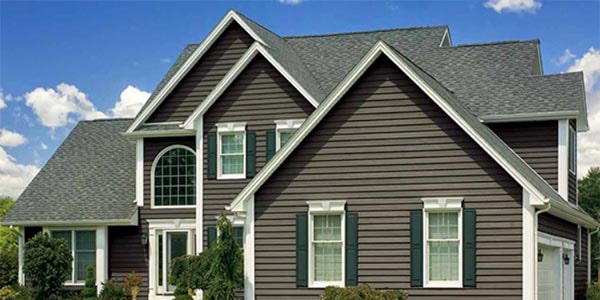
Modern vinyl siding is available in a wider range of profiles, textures, and colors than most homeowners expect. Traditional horizontal lap panels in multiple exposure widths, Dutch lap profiles, beaded lap for colonial applications, board-and-batten vertical panels, and shake-profile panels that replicate cedar shingles are all available. Color ranges have expanded significantly in recent years, with deeper, richer tones now available that were previously only achievable in painted materials. Fade resistance in premium vinyl formulations has improved to 10+ year color stability in most applications.
James Hardie Product Lines We Install
HardiePlank Lap Siding – Most Popular
HardiePlank is the world’s best-selling fiber cement siding product and the most commonly installed Hardie profile on Main Line homes. Available in multiple surface textures, including Cedarmill (wood grain texture, most popular for Main Line traditional homes), Smooth (for contemporary and modern applications), and Beaded Cedarmill (for colonial and coastal-inspired profiles). HardiePlank is available in 6-inch, 7-inch, 8.25-inch and 9-inch exposure widths. The 7-inch exposure in Cedarmill texture is the most installed profile on Main Line colonial and Craftsman homes because it replicates the proportion of original wood clapboard siding while delivering modern performance.
HardieShingle – Cedar Shake Profile
HardieShingle replicates the appearance of cedar shingle siding without any of the maintenance requirements. Available in staggered-edge and straight-edge profiles, HardieShingle is architecturally appropriate for Craftsman, coastal, and cottage-style homes and is commonly used for dormer faces, gable ends, and accent sections alongside HardiePlank on the main body of the home. HardieShingle panels are available in ColorPlus colors and install faster than individual wood shingles.
HardiePanel Vertical Siding
HardiePanel provides board-and-batten and vertical panel profiles for architectural applications where horizontal lap siding is not appropriate or desired. Used on contemporary-style homes, additions, and accessory structures; garage faces; and as accent elements on gable peaks and dormer sections. Available in cedarmill and smooth textures in all standard ColorPlus colors.
HardieTrim and HardieSoffit
HardieTrim boards provide fiber cement trim at windows, doors, corners, and architectural details. Using Hardie trim alongside Hardie siding creates a consistent, dimensionally stable exterior where trim and siding move identically under temperature change, eliminating the gap-and-crack problems that occur where dissimilar materials meet. HardieSoffit panels provide ventilated and non-ventilated soffit applications in fiber cement. We install Hardie trim and soffit as part of all complete Hardie re-siding projects.
James Hardie Warranty Coverage
30-Year Non-Prorated Transferable Product Warranty
The Hardie substrate warranty is 30 years, non-prorated, and fully transferable on home sale. “Non-prorated” means the full replacement value is covered for the entire warranty period. It does not reduce over time, as many competitor warranties do. “Transferable” means the warranty follows the home, not the original homeowner, which is a meaningful feature in the Main Line real estate market, where warranty transferability is a selling point. The warranty covers defects in the product itself, delamination, cracking, and premature deterioration under the conditions the product was installed to withstand.
15-Year ColorPlus Finish Warranty
ColorPlus factory-finished products carry a separate 15-year limited finish warranty covering both the paint and the labor to repair peeling, cracking, and chipping of the factory-applied finish. This is the only factory-applied exterior siding finish with a 15-year labor-inclusive warranty. Field-painted fiber cement boards are covered only by the substrate warranty. The paint application warranty is the responsibility of whoever painted them.
Hynes Workmanship Warranty
Separate from and in addition to the Hardie manufacturer warranties, Hynes Construction provides a written workmanship warranty on all fiber cement siding installations. The workmanship warranty covers installation quality such as flashing, nailing, expansion gaps, and all integration details for the period stated in the warranty document. Written warranty documentation is provided at project close. See our warranties page for details.
Our Vinyl Siding Installation Process
01 Home Assessment and Measurement: We measure the full exterior and assess the condition of existing siding, substrate, window flashing, and moisture barrier. Any signs of moisture damage behind existing siding are documented and addressed as part of the installation scope.
02 Substrate Preparation and Moisture Barrier: Existing siding is removed. The substrate is inspected for rot, soft spots, and flashing failures. Damaged material is replaced before any new cladding is installed. A new moisture barrier is installed over the full substrate to protect the wall assembly.
03 Correct Window and Penetration Flashing: Every window, door, and utility penetration is flashed correctly before vinyl panels are installed. This is the step most installers skip or shortcut, and it is the step that determines whether the wall stays dry for 25 years. We do not skip it.
04 Vinyl Panel Installation with Correct Expansion Gaps: Panels are installed with manufacturer-specified nail hem spacing to allow thermal expansion and contraction. Starter strips, corner pieces, J-channels, and all trim components are installed to manufacturer specifications. No panels are face-nailed tight.
05 Final Inspection and Cleanup: Full inspection of panel alignment, trim integration, and all window and door surrounds. All debris, old siding, and staging equipment were removed. Written warranty documentation provided at project close.
How Long Does Vinyl Siding Last in Pennsylvania?
In Pennsylvania’s climate, high-quality vinyl siding installed correctly by an experienced contractor lasts 20 to 30 years before replacement becomes appropriate. The lifespan variation within that range is driven almost entirely by installation quality, product grade, and the sun exposure the home faces. South-facing elevations receive the most UV exposure and tend to show color fading first. Premium vinyl formulations with higher TiO2 concentrations in the compound deliver better long-term color stability than economy products.
Factors that shorten vinyl siding lifespan on Main Line homes: improper nail hem installation (causes buckling), missing expansion gaps at corners and trim connections, absent or inadequate moisture barriers behind the panels, and failure to flash window perimeters correctly. All of these are installation defects, not material defects. When vinyl siding fails prematurely on a Main Line home, the cause is almost always the installation, not the product.
Why James Hardie Is the Best Choice for Main Line PA Homes
Moisture and Rot Resistant
Fiber cement does not absorb moisture through the panel surface. Water that contacts the face of a Hardie panel runs off rather than being absorbed into the material. The substrate does not rot, does not swell, and does not provide a nutrient base for mold growth within the material itself. This is in direct contrast to wood siding (which absorbs moisture and rots) and to stucco systems (which trap moisture inside the wall cavity when installation components are missing). For the Main Line’s 44-inch annual rainfall and its humid summers, moisture resistance is the single most important performance characteristic a siding material can have.
Fire Resistance – Noncombustible
James Hardie fiber cement is classified as noncombustible under ASTM E136. The siding will not burn and does not contribute fuel in a fire event. This is a meaningful safety distinction from vinyl siding (which melts and can contribute to fire spread) and from wood siding (which is combustible). Many insurance carriers recognize noncombustible siding as a risk reduction and offer premium discounts for homes re-sided with fiber cement. We recommend checking with your insurance provider before installation to confirm potential annual savings.
Freeze-Thaw Stable for Pennsylvania Winters
HZ5-specification Hardie boards are manufactured to withstand Pennsylvania’s 50 to 70 annual freeze-thaw cycles without cracking, heaving, or dimensional change. This is documented in Hardie’s product testing under ASTM C1185 freeze-thaw cycling protocols. Vinyl siding manages freeze-thaw cycling through thermal expansion gaps, which work until they do not, typically after 15 to 20 years of cycling. Stucco cracks under freeze-thaw cycling, particularly when moisture has entered the substrate and freezes inside the material. Fiber cement, manufactured as a dimensionally stable cementitious product, does not have this failure mode.
Pest Resistant
Because fiber cement does not contain digestible organic material at its surface, it cannot be damaged by woodpeckers, carpenter bees, or wood-boring insects. Wood siding is vulnerable to all three, particularly in the tree-canopy-heavy residential environments that define much of the Main Line. This is a maintenance concern on pre-existing wood-sided homes but a non issue on homes reclad with Hardie products.
Architecturally Appropriate for Historic Main Line Homes
The Cedarmill texture profile replicates the wood grain character of original clapboard siding in a way that no other modern siding material does. For the Victorian, Craftsman, Colonial Revival, and Tudor homes that define the architectural character of Ardmore, Bryn Mawr, Narberth, and Wayne, HardiePlank Cedarmill in historically appropriate profiles and colors is indistinguishable from original wood siding at normal viewing distances while delivering 30+ years of maintenance-free performance. Our certifications and affiliations document our experience with historic Main Line properties.
Insurance Premium Savings
Because James Hardie fiber cement is noncombustible, many insurance carriers offer reduced annual premiums for homes with Hardie siding. The savings vary by carrier, policy type, and home characteristics but can represent meaningful annual reductions for some Main Line homeowners. We recommend contacting your insurance provider before your Hardie installation to ask specifically about premium adjustments for noncombustible exterior cladding.
James Hardie Fiber Cement vs Vinyl Siding: Full Comparison for Main Line PA
| Factor | James Hardie Fiber Cement | Vinyl Siding |
|---|---|---|
| Cost installed (Main Line 2026) | $10 to $20+ per sq ft | $6 to $12 per sq ft |
| Expected lifespan PA | 30 to 50+ years | 20 to 30 years |
| Fire resistance | Noncombustible (ASTM E136). Insurance discounts available. | Flammable. Melts in fire. |
| Moisture absorption | Non-porous. Zero moisture absorption through panel face. | Low absorption but vulnerable at installation gaps. |
| Freeze-thaw stability | HZ5 spec. Proven stable under 50-70 PA cycles/year. | Good with correct gaps. Buckles when gaps are wrong. |
| Maintenance | ColorPlus: repaint every 15 years. Primed: every 5-7 years. | None. No painting. Periodic washing only. |
| Impact resistance | High. Resists hail and windblown debris. | Moderate. Cracks in extreme cold or high-velocity hail. |
| Architectural range | Full. Every Main Line style including historic. | Good for modern/contemporary. Not ideal for premium historic. |
| Pest resistance | Complete. Not digestible. | Complete. Not digestible. |
| Substrate warranty | 30-year non-prorated transferable. | Manufacturer-dependent, typically 20-30 years. |
| Finish warranty | 15-year ColorPlus (labor inclusive). | Color in material – no separate finish warranty. |
| Insurance premium benefit | Yes – noncombustible classification. | No benefit. |
| Home value premium Main Line | Strong – recognized by appraisers and buyers. | Moderate – market-dependent. |
James Hardie Siding Cost Guide for Main Line PA (2026)
| Project Type | Cost Range Main Line PA | Key Variables |
|---|---|---|
| Full re-siding – small home (1,200-1,800 sq ft exterior) | $18,000 to $35,000 | Profile, ColorPlus vs primed, substrate condition |
| Full re-siding – medium home (1,800-2,800 sq ft exterior) | $28,000 to $55,000 | Profile selection, trim complexity, substrate repairs |
| Full re-siding – large home (2,800+ sq ft exterior) | $50,000 to $100,000+ | Complex rooflines, multiple profiles, premium trim |
| After stucco remediation re-cladding | Add $15 to $25 per sq ft to remediation cost | Dependent on substrate repair extent |
| Partial section replacement | $3,000 to $12,000 | One or two elevations, profile matching |
| ColorPlus premium vs primed | Add $1.50 to $3.00 per sq ft | Eliminates first paint cycle (~$4,000-$8,000 value) |
Our James Hardie Installation Process
01 Free On-Site Assessment: Full exterior assessment including substrate condition, window and door flashing status, moisture management, and any special conditions (HOA, historic district, commercial permitting). Written assessment with photographs at no charge.
02 Profile and Color Selection: We guide you through the Hardie product line – HardiePlank, HardieShingle, HardiePanel, and HardieTrim profiles – and the full ColorPlus color range. Samples are provided. For homes in HOA-governed communities or historic districts, we identify colors and profiles that meet the relevant approval criteria before selection is finalized.
03 Permit and HOA Submission: We handle all permit applications and HOA color/material submissions before work begins. Permit timelines are factored into the project schedule.
04 Installation to Hardie Specification: Existing cladding removed. Substrate inspected and repaired. Moisture barrier installed. Window and door perimeters flashed correctly with sill pans, drip caps, and flexible flashing tape before any siding goes on. HardiePlank installed with correct fastener type, fastener spacing, and nail placement per Hardie technical installation guide. All joints caulked with Hardie-compatible elastomeric caulk. HardieTrim and soffit installed to complete the system.
05 Final Inspection and Warranty Documentation: Full site walkthrough with homeowner. Site cleaned completely. Written warranty documentation – Hardie product warranty, Hardie ColorPlus finish warranty (if applicable), and Hynes workmanship warranty – delivered at project close.
Areas We Serve for James Hardie Fiber Cement Siding
We install James Hardie fiber cement siding across all 30+ communities in our Main Line service area. See the full service area for all locations.
Get a Free James Hardie Estimate in Main Line PA
Request online: Free estimate here – response within one business day.
Siding Services
GET FREE ESTIMATE
Frequently Asked Questions
James Hardie fiber cement is a manufactured composite of Portland cement, ground sand, cellulose fiber (wood pulp), water, and proprietary additives. The materials are blended and formed into panels using the Hatschek process, then autoclave-cured under high-pressure steam. The result is a dense, dimensionally stable board that has the appearance of wood but does not absorb moisture, does not rot, is noncombustible, and is not digestible by pests.
HardieZone 5 is James Hardie’s climate-specific formulation for the northern zone of the United States, covering Pennsylvania and all of the Main Line region. HZ5 boards are manufactured and tested for freeze-thaw cycling, below-zero winter temperatures, high annual rainfall, and seasonal temperature swings that cover 100+ degrees Fahrenheit across the year. All Hardie products sold and installed in the Main Line area are HZ5 specification. This is not available from every fiber-cement manufacturer. It is a Hardie-specific engineering program.
James Hardie fiber cement siding installation in the Main Line PA market runs $10 to $20+ per square foot installed, depending on profile selection, ColorPlus vs. primed boards, home complexity, and substrate condition. A full re-siding of a standard Main Line single-family home typically runs $18,000 to $55,000, depending on size. After stucco remediation, Hardie re-cladding adds $15 to $25 per square foot to the remediation scope. Free written estimate at contact us or call 610-896-6388.
ColorPlus Hardie siding comes with a factory-applied, baked-on finish in one of Hardie’s standard colors, covered by a 15-year finish warranty against peeling, cracking, and chipping. Primed boards come factory-primed but unfinished. They must be painted before installation, and the paint job is the homeowner’s or contractor’s responsibility, not covered by the Hardie warranty. ColorPlus boards cost approximately $1.50 to $3.00 more per square foot installed but eliminate the first painting cycle (typically $4,000 to $8,000 for a full re-side) and carry the 15-year finish warranty. For most Main Line homeowners, ColorPlus is the better lifecycle value.
Yes. HardiePlank in the Cedarmill texture profile replicates the wood grain character of original clapboard siding in a way that reads as architecturally authentic on Victorian, Craftsman, and Colonial Revival homes at normal viewing distances. We have installed Hardie on pre-1940 Main Line homes in historic districts with HOA and Certificate of Appropriateness approval. The key is correct profile selection and color selection for the specific architectural style and neighborhood. We handle that guidance as part of every estimate.
Many insurance carriers offer premium reductions for homes with noncombustible exterior cladding. Because James Hardie fiber cement is classified as noncombustible under ASTM E136, it qualifies for these discounts with most major carriers. The specific discount amount varies by insurer, policy type, and home characteristics. We recommend contacting your insurance provider before installation to confirm whether a premium adjustment applies to your specific policy.
A full James Hardie re-siding of a standard Main Line home takes 5 to 10 business days depending on home size, exterior complexity, profile selection, and substrate repair requirements. Stucco remediation followed by Hardie re-cladding takes 2 to 4 weeks for a standard project. Permit processing and any HOA submission timeline are factored into the schedule before the project start date is confirmed.
ColorPlus finish boards require repainting approximately every 15 years under the finish warranty period. After that, a professional repaint every 10 to 15 years is appropriate. Primed and field-painted boards should be repainted every 5 to 7 years. All installations should have window and door perimeter caulking inspected annually and any gaps resealed before winter. The fiber cement board itself requires no other maintenance with no sealing, no staining, and no annual treatment.


TESTIMONIALS
-
C
I highly recommend Peter from Hynes Construction. He did work on the flat roof of my house and did a fabulous job. He is a very professional guy, great with follow up, answers your questions and gives great suggestions based on his experience, and Hynes construction is reasonably priced. Services: Power/pressure washing, Roof repair, Roof installation, Window cleaning.
Candance Prvitt
-
C
Krissy helped me and provided a competitive quote for a new roof. After going through with 4 different quotes from other roofing companies, I decided Hynes Construction was the perfect company for the job. The roof looks beautiful and I am happy working with Hynes Team and I would recommend them to anyone doing a roof replacement! Services: Roof inspection, Roof installation, Roof repair
Marlain Tassone
-
B
Hynes Construction did a fantastic job on my roof. Krissy was professional and easy to work with. They completed my large roof in a day. The crew worked very hard and cleaned up every bit of it. I am extremely happy with my decision of choosing Hynes Construction... Thanks a lot for a wonderful job well done. Services: Roof inspection, Roof installation, Skylight installation
Brigid Goon
-
N
They are quick. Handled everything in a proper way. Hynes Team did an amazing job and were very professional and friendly. They did a great job in cleaning. The work quality is fabulous and they offer competitive pricing. Professional and on time, I would definitely recommend Hynes Construction. Service: Window cleaning
Nancy Brown
-
M
Hynes is undoubtedly the best roofing company around! Professional and experts in what they do, they are clear and will guide you in a right way. I had a leak in my kitchen which another company told me I needed to replace the whole roof which I was too scared off. Later I called Hynes Team for second opinion and they were able to repair the roof and save me from spending thousands of dollars! So thankful for their honesty Services: Roof inspection, Storm / wind damage roof repair, Roof repair
Michael Reilly
-
S
Ridge and Peter both were wonderful and easy to work with. They took the time telling me about the work required and they both were very knowledgeable. I am sure Hynes Team and the company really take good care about the people they work with. I would highly recommend Hynes for any Roof replacement projects! Services: Roof inspection, Roof installation, Roof repair
Stantec
-
J
Contacted Hynes Construction for some minor roof repairs. Hynes had someone out in no time and the repairs were done right after, they were really quick and delivered on time as they promised. I would definitely recommend them for your roofing needs! Thanks to Dan for getting our roof repaired and giving us peace of mind Service: Roof repair
Jeffer Punzalan