TPO
GET FREE ESTIMATE
TPO Roofing Installation Main Line, PA
TPO membrane roofing has become the modern standard for flat and low-slope roofs across commercial buildings and residential additions throughout the Main Line. TPO Roofing Installation Main Line, PA. Hynes Construction, based in Ardmore, has installed TPO roofing for office buildings, retail centers, warehouses, and residential flat roof sections for more than 35 years, and that same commercial roofing expertise extends to property owners across Delaware County, Chester County, Montgomery County, and Philadelphia.
Schedule a free roofing material consultation to find out whether TPO is the right flat roofing system for your commercial building or residential addition.
Call 610-896-6388 or contact us online
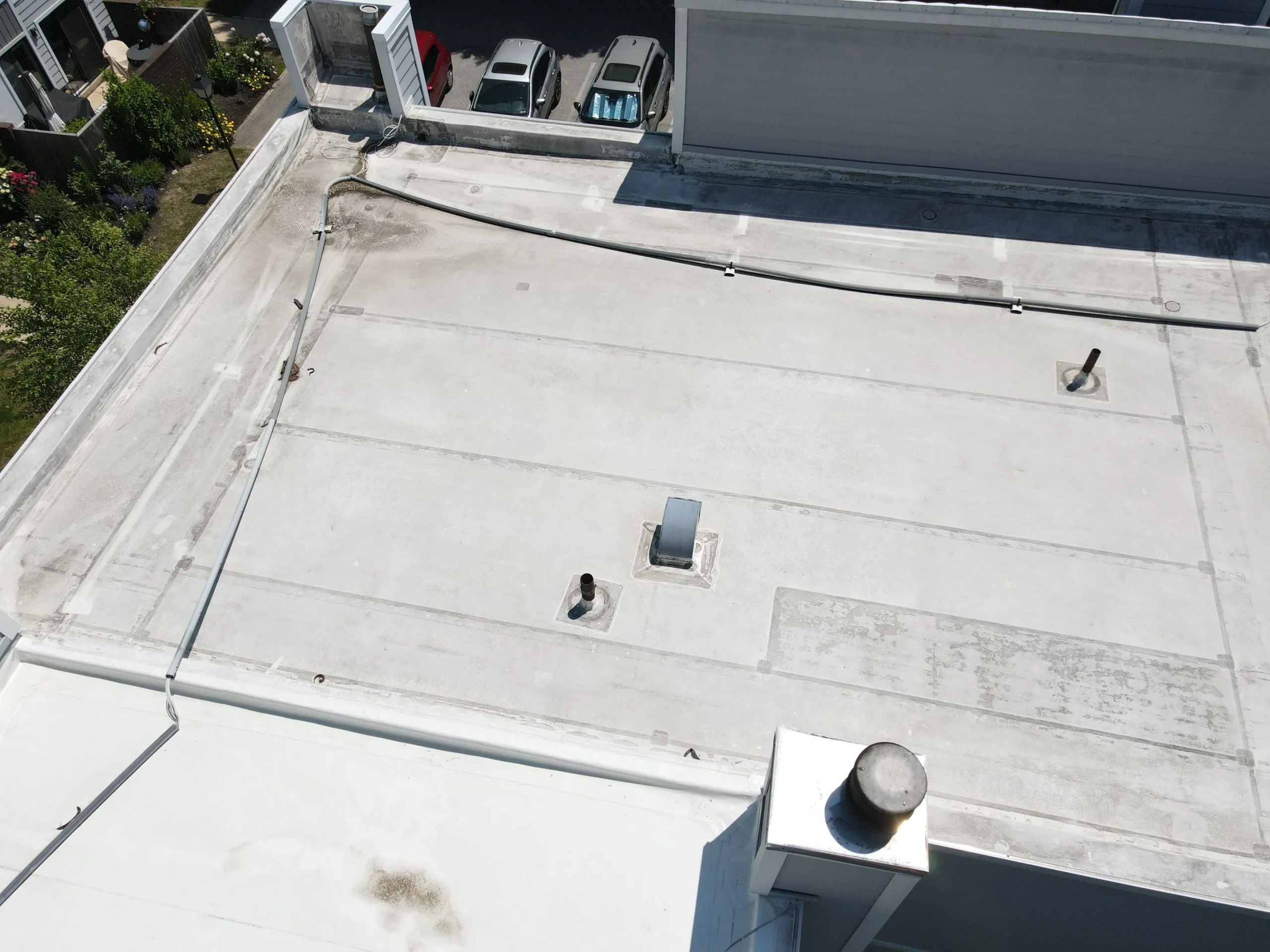
Property owners and facility managers choose TPO for its combination of energy-efficient reflectivity, durable heat-welded seams, and a more cost-effective installation than older built-up roofing systems. We install TPO to full manufacturer specification, with membrane thickness and drainage design matched to your building’s actual traffic and exposure conditions, rather than a generic one-size-fits-all approach.Homeowners choose tile primarily for its exceptional fifty-plus-year lifespan and the genuine architectural authenticity it brings to the right home style, common throughout historic sections of Bryn Mawr, Villanova, and West Chester. Because tile is considerably heavier than shingle or metal, we assess structural capacity honestly before ever recommending it, and we will tell you directly when a home needs reinforcement or when tile simply is not the right structural fit.
35+ Years Experience | Licensed and Insured | Manufacturer Certified | Financing Available | Warranty Protection | Commercial Roofing Specialists | Residential Roofing | 5 Star Reviews
What Is TPO Roofing
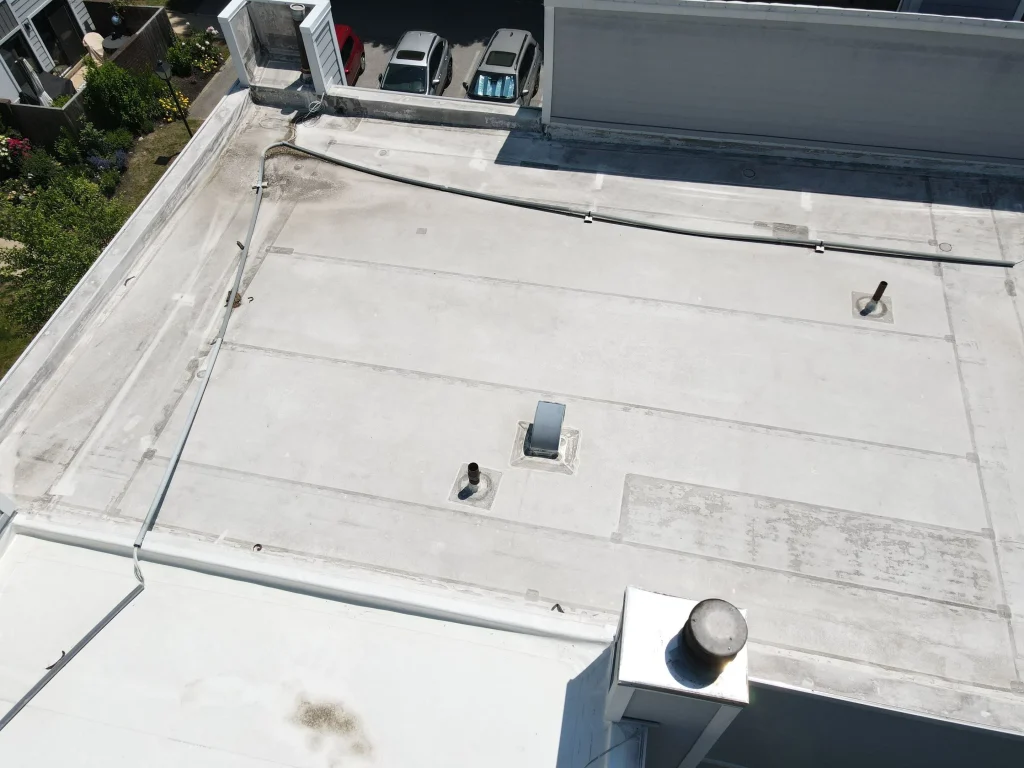
TPO, thermoplastic polyolefin, is a single ply membrane roofing material manufactured in large sheets and installed across a flat or low slope roof with heat welded seams that fuse adjoining sheets into one continuous, watertight surface. The membrane is typically white or light colored, a deliberate design choice that reflects solar heat rather than absorbing it the way older dark-colored roofing materials do.
Performance depends heavily on membrane thickness and proper installation of the heat-welded seams, which create a genuinely stronger bond than adhered or taped seams found in some competing flat roofing systems. Property owners choose TPO primarily for this combination of energy-efficient reflectivity, durable seam performance, and a more accessible cost than older built-up or modified bitumen systems.
Commercial buildings represent TPO’s primary application, appearing extensively on office buildings, retail centers, warehouses, and multi-family properties throughout our service area, anywhere a flat or low-slope roof structure rules out traditional shingle, metal, or tile. Residential use is more limited but genuinely common on additions, porch roofs, and other flat sections where a pitched material simply is not structurally appropriate.
A typical lifespan runs twenty to thirty years depending on membrane thickness and installation quality. Weather performance is strong when properly installed, with TPO handling Pennsylvania’s temperature swings, UV exposure, and ponding water reasonably well, though drainage design matters considerably to how the system performs over its full expected life. Understanding these performance factors is the first step toward determining whether TPO is the right investment for your flat roof.
Is TPO Roofing Right for Your Property
TPO is purpose-built for flat and low-slope applications, and understanding where it fits helps clarify whether it is the right system for your specific roof.
Ideal For
Flat commercial roofs: TPO is the modern standard for flat commercial applications, offering the best combination of cost, energy efficiency, and durability available for this roof structure.
Warehouses and industrial buildings: Large flat roof areas benefit significantly from TPO’s reflective surface, which reduces cooling costs across substantial square footage.
Office buildings and retail centers: TPO’s proven track record and manufacturer warranty support make it a dependable choice for commercial property owners managing long term capital budgets.
Residential additions and low-slope sections: Any flat or low-slope section on an otherwise pitched residential roof is a strong candidate for TPO, since traditional shingle or tile cannot perform properly on that pitch.
May Not Be Best For
Steep slope residential roofs: TPO is engineered for flat and low slope applications and is not the appropriate material for a standard pitched residential roof, where shingle, metal, or tile is the correct choice.
Property owners wanting a traditional architectural appearance: TPO’s utilitarian, functional appearance suits commercial and flat roof applications but is not chosen for aesthetic reasons the way shingle or tile might be.
Roofs with severe existing drainage problems left uncorrected: Installing TPO without first addressing a genuine slope or drainage issue simply carries the same ponding problem forward onto the new membrane.
Free Roofing Material Consultation
Not sure if TPO roofing is the right choice for your commercial property or residential addition? Our experienced roofing specialists will inspect your roof, discuss your goals, and help you determine whether this roofing system is the best fit for your budget, property, and long term needs. Schedule My Free Consultation:
Schedule Free Consultation: Call Us 610-896-6388 or fill out our contact form.
Best TPO Roofing for Your Building Type
Since TPO serves commercial and flat roof applications rather than traditional home styles, the more relevant question is which building type benefits most from its specific performance characteristics.
Warehouses and Distribution Centers
Large flat roof areas throughout industrial corridors in Delaware and Montgomery Counties benefit significantly from TPO’s reflective surface, which meaningfully reduces cooling costs across substantial square footage.
Office Buildings
Commercial properties throughout King of Prussia and Conshohocken commonly use TPO for its proven track record and manufacturer warranty support, important considerations for facility managers planning long term capital budgets.
Retail Centers and Strip Malls
Flat-roof retail properties throughout our service area benefit from TPO’s cost-effective installation and dependable performance across the large, often uninterrupted roof spans these buildings feature.
Schools, Churches, and Medical Facilities
Institutional buildings prioritizing long term reliability and manufacturer warranty backing are consistently well served by TPO’s established performance history.
Residential Additions and Porch Roofs
Homeowners throughout the Main Line adding a flat-roof addition or replacing an aging porch roof are excellent candidates for residential-scale TPO installation.
Benefits of TPO Roofing
TPO’s advantages are the reason it has become the default choice for modern flat and low-slope roofing.
Energy-Efficient Reflectivity: The reflective white membrane surface reduces heat absorption significantly compared to darker roofing materials, lowering cooling demand.
Heat-Welded Seams: Seams are fused through heat welding rather than adhered or taped, creating a genuinely stronger, more consistent watertight bond.
Cost-Effective Installation: TPO installs more affordably than older built-up or modified bitumen systems while delivering comparable or better performance.
Puncture and Tear Resistance: Modern TPO formulations resist punctures from rooftop foot traffic and equipment better than many older membrane materials.
Chemical Resistance: TPO holds up well against exposure to grease, oils, and other substances sometimes present on commercial rooftops near kitchen exhaust or industrial equipment.
Lightweight Material: TPO adds minimal structural load compared to built-up gravel roofing, a genuine advantage on buildings with weight constraints.
Fast Installation: Large sheet sizes and efficient seaming allow TPO projects to move faster than some alternative flat roofing systems.
Strong Manufacturer Warranty Support: Established manufacturers offer robust warranty programs on properly installed TPO systems, protecting your investment.
Reduced Urban Heat Island Effect: Reflective TPO roofing contributes less to surrounding heat buildup than dark roofing, a genuine environmental benefit on larger commercial buildings.
Proven Long-Term Track Record: TPO has been extensively used in commercial roofing for decades, with a well-established performance history across every climate zone.
Monday through Saturday | Free Estimates | Emergency Response Available
Types of TPO Roofing We Install
TPO installation methods vary based on building structure, and choosing the right one affects both performance and cost.
Mechanically Attached
The membrane is secured to the roof deck using fasteners and plates at specified intervals, and then seams are heat welded between sheets. This method is generally the most cost-effective installation approach and works well on a wide range of deck types, making it our most common recommendation for standard commercial applications.
Fully Adhered
The membrane is bonded directly to the roof deck or insulation layer using adhesive across the entire surface, rather than relying on mechanical fasteners. This method offers a very clean, low-profile finished appearance and performs particularly well in high-wind exposure areas since there are no fastener patterns creating potential stress points across the membrane.
Ballasted Systems
The membrane is laid loosely over the roof deck and held in place using rounded stone ballast or paver systems rather than fasteners or adhesive. Ballasted systems can be a cost-effective option on structurally appropriate buildings, though the added weight of the ballast material needs to be confirmed against the building’s structural capacity before this method is chosen.
Monday through Saturday | Free Estimates | Emergency Response Available
TPO Roofing by Main Line and Regional Location
Commercial TPO demand and typical applications vary somewhat across our service area based on the local business and institutional mix.
Main Line Communities
West Chester’s and Malvern’s growing commercial development, including office parks and medical facilities, commonly specify TPO for new construction and reroofing projects.
Delaware County
Broomall’s and Newtown Square’s commercial and light industrial properties frequently use TPO given the county’s significant concentration of warehouse and distribution facilities.
Chester County
Historic sections of West Chester include Italianate and formal period homes where tile restoration preserves documented architectural character important to the borough’s historic district guidelines.
Montgomery County
Tile is less common throughout King of Prussia and Conshohocken, where newer construction and mid-century development are more typically suited to shingle or metal.
Philadelphia
King of Prussia’s dense commercial district, including large retail and office properties, represents some of our most active TPO installation and maintenance work.Select historic institutional buildings and estate properties near the Art Museum area feature tile roofing, though it remains uncommon on typical residential rowhome construction.
Our TPO Installation Process
TPO installation requires precise seam work and proper drainage design, and our process reflects both.
1. Inspection
A full assessment of the existing roof deck, drainage, and any structural concerns before recommending TPO installation.
2. Preparation
Site protection and material staging arranged around your building’s operating schedule to minimize disruption.
3. Material Selection
Guidance on membrane thickness, typically forty-five, sixty, or eighty mil, based on expected foot traffic and rooftop equipment exposure.
4. Underlayment and Insulation
Proper insulation installed beneath the membrane, with tapered insulation used where drainage correction is needed.
5. Installation
Membrane installed using the mechanically attached, fully adhered, or ballasted method best suited to your building’s structure.
6. Flashing
Detailed flashing installed at every parapet wall, penetration, and drain critical points for long term watertight performance.
7. Seam Welding
Every seam is heat welded to full manufacturer specification, creating the continuous, fused bond that defines TPO’s watertight performance.
8. Cleanup
Full site cleanup, including removal of all installation debris from the rooftop and surrounding grounds.
9. Final Inspection
A completed project walkthrough confirming proper seam integrity, drainage performance, and overall installation quality.
10. Warranty Registration
Registration of your manufacturer warranty alongside our own written workmanship guarantee.
Need Help Choosing the Right Roofing Material
Selecting a roofing system is not just about appearance. It affects durability, maintenance, energy efficiency, and long term value. Our roofing experts will inspect your property, explain your options, and help you compare roofing materials so you can make an informed decision with confidence.
Request Your Roofing Consultation: Call Us 610-896-6388 or fill out our contact form.
TPO Roofing vs Other Roofing Materials
TPO occupies the flat and low-slope category, and understanding how it compares to both flat-roof alternatives and pitched materials clarifies the right choice for your building.
TPO vs Shingle
TPO occupies the flat and low-slope category, and understanding how it compares to both flat-roof alternatives and pitched materials clarifies the right choice for your building.
TPO vs Metal
Metal handles pitched roof structures, while TPO is engineered specifically for flat and low-slope applications. On a commercial building with a mixed roofline, both materials sometimes appear side by side.
TPO vs Tile
Tile is a pitched residential and institutional material, while TPO serves an entirely different flat roof application, so direct comparison rarely applies to the same project.
TPO vs Roof Coating
A roof coating restores an existing aging flat roof, TPO or otherwise, rather than installing a new membrane system. For a flat roof that is structurally sound but simply worn, a coating can be a more cost-effective alternative to full TPO replacement.
| Feature | TPO | Shingle | Metal | Tile |
|---|---|---|---|---|
| Lifespan | 20 to 30 years | 20 to 30 years | 40 to 70 years | 50+ years |
| Maintenance | Low | Low | Very low | Low |
| Energy Efficiency | High, reflective surface | Standard, reflective options available | High with reflective finish | Good, natural insulation |
| Relative Cost | Priced per square foot | $ | $$$ | $$$ |
| Wind Resistance | Good | Good, higher with impact rated products | Excellent | Good |
Cost Factors for TPO Roofing
TPO is typically priced per square foot rather than by the square, and here is what genuinely drives that price up or down.
Roof Size: The primary cost driver, with material and labor scaling directly with total square footage, though larger commercial roofs benefit from some economy of scale.
Membrane Thickness: Forty-five, sixty, and eighty mil options carry different price points, with thicker membrane costing more but resisting punctures and UV degradation better.
Insulation Requirements: Adding or upgrading roof insulation as part of the project affects both cost and long term energy performance.
Drainage Design: Correcting a roof’s slope or adding tapered insulation to fix ponding water issues adds cost but addresses the root cause of most flat roof failures.
Installation Method: Mechanically attached, fully adhered, and ballasted systems carry different labor and material costs depending on your building’s structure.
Roof Penetrations: Every vent, drain, and piece of rooftop equipment needs proper flashing detail, and a roof with many penetrations costs more to detail properly.
Tear Off Requirements: Removing an existing roofing system before TPO installation adds cost compared to installing over a compatible existing surface where code allows.
Structural Assessment: Confirming the roof deck can support the chosen installation method, particularly relevant for ballasted systems.
Accessibility: Building height and rooftop access logistics affect labor cost and equipment requirements.
Warranty Level: Extended manufacturer warranty tiers sometimes require specific membrane thickness and installation certification requirements.
Monday through Saturday | Free Estimates | Emergency Response Available
TPO Membrane Color and Reflectivity Options
While TPO is primarily chosen for performance rather than appearance, membrane color still affects energy performance meaningfully.
White Membrane
The most common and most reflective option, delivering the strongest cooling cost reduction on large commercial roof areas exposed to direct summer sun.
Gray and Tan Membrane
Available for property owners wanting a less stark appearance from ground level or adjacent taller buildings, with a modest tradeoff in reflectivity compared to white.
Reflectivity and Energy Codes
Many commercial energy codes and voluntary green building standards reference roof reflectivity requirements, and white TPO membrane is generally the easiest way to meet or exceed those benchmarks.
Maintenance and Lifespan
TPO roofing requires relatively low ongoing maintenance, but a structured inspection routine meaningfully extends its realistic service life, particularly on commercial buildings where the roof functions as a significant capital asset. We recommend a professional inspection at least annually, checking seam integrity, membrane condition around penetrations, and drainage performance.
Routine cleaning primarily involves keeping drains and scuppers clear of debris, since blocked drainage is one of the most common causes of ponding water-related membrane deterioration. Preventative maintenance, catching a small puncture or seam separation before it becomes an active leak, is dramatically less expensive than addressing water damage after it has reached the building’s interior.
Storm inspections are worth scheduling after any significant wind or hail event, checking specifically for membrane punctures, lifted flashing, or debris that has accumulated on the roof surface. TPO generally performs well through severe weather, but a post-storm inspection catches issues before they progress.
Expected lifespan runs twenty to thirty years depending on membrane thickness and installation quality, and maximizing that lifespan comes down largely to two factors: correcting any drainage issues at the time of installation rather than living with ponding water and maintaining a consistent inspection schedule that catches small problems early. A commercial maintenance program, which we offer for property owners across our service area is one of the most cost-effective ways to protect a TPO roof’s full expected service life.
Signs Your TPO Roof Needs Repair or Replacement
Flat roof problems are often invisible from ground level, which is exactly why knowing what to look for during a rooftop walk matters.
Standing Water More Than 48 Hours After Rain
Persistent ponding indicates a drainage problem that needs correction, not just monitoring, since it accelerates membrane breakdown every day it sits.
Seam Separation or Bubbling
Any lifting or separation at a heat-welded seam compromises the membrane’s watertight integrity and needs prompt professional repair.
Visible Punctures or Tears
Common near rooftop equipment and high traffic areas, punctures should be repaired quickly before they allow water intrusion.
Interior Water Stains on Upper Floor Ceilings
A clear sign the membrane has already been compromised somewhere on the roof, warranting a full inspection rather than a spot check.
Membrane Age Approaching Twenty Years
Even without visible damage, a roof approaching the upper end of its expected lifespan benefits from a proactive full assessment before a failure forces an emergency response.
Why Choose Hynes Construction for TPO Roofing
TPO installation quality depends heavily on seam and drainage detail work, and property owners across our region choose Hynes for these specific reasons.
35+ Years Serving the Main Line
Decades of commercial and flat roofing experience across office, retail, and industrial properties throughout this region.
Certified Installers
Crews trained specifically in TPO seam welding and installation, backed by our GAF and CertainTeed certifications governing our broader roofing work.
Manufacturer Approved Installation Methods
Every installation follows the seam welding and fastening specification the manufacturer’s warranty actually requires.
Thorough Roof Evaluations
A full drainage and structural assessment before recommending TPO or any specific installation method for your building.
Transparent Recommendations
Honest guidance on membrane thickness and installation method based on your building’s actual traffic and exposure conditions.
Dedicated Project Management
One point of contact managing your project and coordinating scheduling around your business operations.
Clean Job Sites
Careful site management that minimizes disruption to tenants, customers, and daily business operations during installation.
Strong Warranties
Manufacturer coverage plus our own independent written workmanship warranty.
Ongoing Customer Support
Maintenance program options and availability for questions long after your installation is complete.
Monday through Saturday | Free Estimates | Emergency Response Available
Related Roofing Services
Certifications and Manufacturer Partnerships
Our TPO installations are performed by crews trained specifically in seam welding and flat roof detail work, backed by our GAF and CertainTeed certification covering our broader roofing work. See our full certifications and affiliations for details.
Financing Options
Commercial and residential TPO projects represent a real capital expense, and we offer flexible financing options for qualifying projects to help fit the work into your budget.
Warranty Protection
TPO warranty terms vary by manufacturer and membrane thickness, and every installation carries applicable product coverage plus our own independent written workmanship warranty.
Areas We Serve
Hynes Construction is based in Ardmore on the Main Line, and our TPO roofing crews serve commercial and residential properties throughout Bryn Mawr, Wayne, Villanova, Radnor, Haverford, Havertown, Gladwyne, and Narberth, along with Delaware County communities including Broomall and Newtown Square; Chester County including West Chester and Malvern; Montgomery County including King of Prussia and Conshohocken; and Philadelphia commercial districts including Center City.
Choose the Right TPO Roofing with Confidence
Selecting a roofing material is a long term investment. We encourage every property owner to schedule a professional evaluation to determine whether TPO is the right fit based on your building’s structure, budget, and performance goals.
- Schedule Your Free Roofing Consultation
- Request a Detailed Roofing Estimate
- Call Our Roofing Specialists Today
- Contact Us Online
Financing is available for qualifying projects, and every installation carries manufacturer warranty coverage plus our own written workmanship guarantee.
Monday through Saturday | Free Estimates | Emergency Response Available
GET FREE ESTIMATE
Gallery
Frequently Asked Questions
TPO, thermoplastic polyolefin, is a single ply membrane roofing material used on flat and low slope roofs, installed in large sheets with heat welded seams for a durable, watertight surface.
TPO roofing typically lasts twenty to thirty years with proper installation and maintenance, with membrane thickness playing a meaningful role in where a specific roof falls in that range.
No, though it is most common on commercial and multi-family properties, TPO is also used on flat or low-slope residential roof sections, including additions and porch roofs.
TPO roofing typically runs six to twelve dollars per square foot installed, depending on membrane thickness, insulation, and drainage requirements. Call 610-896-6388 for a free estimate.
Yes. Seam separations and punctures can often be repaired without full replacement, extending the roof’s service life significantly at a fraction of replacement cost.
Yes. TPO’s reflective surface reduces heat absorption, which can lower cooling costs compared to darker roofing materials, an effect most noticeable on larger commercial roofs.
We typically recommend sixty mil for most residential and light commercial applications, with eighty mil worth the added cost for roofs with heavier foot traffic or rooftop equipment.
TPO tolerates occasional standing water better than some materials, but persistent ponding indicates a drainage problem that should be corrected with proper slope or tapered insulation.
A mechanically attached membrane is secured with fasteners and plates, generally the more cost-effective method, while a fully adhered membrane is bonded directly to the deck for a cleaner appearance and stronger wind performance.
Yes. Financing is available for qualifying commercial and residential projects. Call 610-896-6388 or visit our financing page to discuss available programs.
Yes. We offer inspection and maintenance programs for commercial property owners to catch small issues before they become costly repairs.
Coverage varies by manufacturer and membrane thickness, and we walk through the specific terms during your estimate, in addition to our own written workmanship warranty on every installation.


TESTIMONIALS
-
C
I highly recommend Peter from Hynes Construction. He did work on the flat roof of my house and did a fabulous job. He is a very professional guy, great with follow up, answers your questions and gives great suggestions based on his experience, and Hynes construction is reasonably priced. Services: Power/pressure washing, Roof repair, Roof installation, Window cleaning.
Candance Prvitt
-
C
Krissy helped me and provided a competitive quote for a new roof. After going through with 4 different quotes from other roofing companies, I decided Hynes Construction was the perfect company for the job. The roof looks beautiful and I am happy working with Hynes Team and I would recommend them to anyone doing a roof replacement! Services: Roof inspection, Roof installation, Roof repair
Marlain Tassone
-
B
Hynes Construction did a fantastic job on my roof. Krissy was professional and easy to work with. They completed my large roof in a day. The crew worked very hard and cleaned up every bit of it. I am extremely happy with my decision of choosing Hynes Construction... Thanks a lot for a wonderful job well done. Services: Roof inspection, Roof installation, Skylight installation
Brigid Goon
-
N
They are quick. Handled everything in a proper way. Hynes Team did an amazing job and were very professional and friendly. They did a great job in cleaning. The work quality is fabulous and they offer competitive pricing. Professional and on time, I would definitely recommend Hynes Construction. Service: Window cleaning
Nancy Brown
-
M
Hynes is undoubtedly the best roofing company around! Professional and experts in what they do, they are clear and will guide you in a right way. I had a leak in my kitchen which another company told me I needed to replace the whole roof which I was too scared off. Later I called Hynes Team for second opinion and they were able to repair the roof and save me from spending thousands of dollars! So thankful for their honesty Services: Roof inspection, Storm / wind damage roof repair, Roof repair
Michael Reilly
-
S
Ridge and Peter both were wonderful and easy to work with. They took the time telling me about the work required and they both were very knowledgeable. I am sure Hynes Team and the company really take good care about the people they work with. I would highly recommend Hynes for any Roof replacement projects! Services: Roof inspection, Roof installation, Roof repair
Stantec
-
J
Contacted Hynes Construction for some minor roof repairs. Hynes had someone out in no time and the repairs were done right after, they were really quick and delivered on time as they promised. I would definitely recommend them for your roofing needs! Thanks to Dan for getting our roof repaired and giving us peace of mind Service: Roof repair
Jeffer Punzalan