Chimney Repair
- Home
- Chimney Repair
GET FREE ESTIMATE
Chimney Repair Contractor Main Line PA
Chimney Repair Contractor Main Line homeowners need chimney systems that can withstand Pennsylvania’s harsh freeze-thaw cycles, heavy rain, wind exposure, and seasonal temperature changes without developing leaks or structural deterioration. Hynes Construction provides professional chimney inspection, repair, flashing replacement, tuckpointing, crown repair, liner relining, waterproofing, and full chimney rebuilding services for homes throughout the Main Line, PA region. From historic masonry chimneys in Ardmore and Bryn Mawr to newer prefabricated systems across Chester, Delaware, and Montgomery Counties, we repair chimney problems at their source to help prevent water intrusion, masonry damage, draft issues, and long-term structural deterioration.What Is Chimney Repair and Why Main Line Homes Need It
Your chimney is the most weather-exposed masonry structure on your home. It stands above the roofline, exposed to Pennsylvania’s full range of seasonal extremes like reeze-thaw cycling that attacks mortar joints; heavy rainfall that penetrates cracked crowns and failed flashing; summer heat that expands and contracts masonry materials; and wind events that dislodge caps and damage exposed components. Unlike most other home systems, chimney deterioration is gradual, largely invisible from the ground, and has consequences that extend far beyond the chimney itself.Hynes Construction | 119 Sibley Ave, Ardmore, PA 19003 | 610-896-6388 | 50+ Years Local | HICPA Registered | Licensed and Insured | Free Estimates | Request your free estimate or call 610-896-6388.
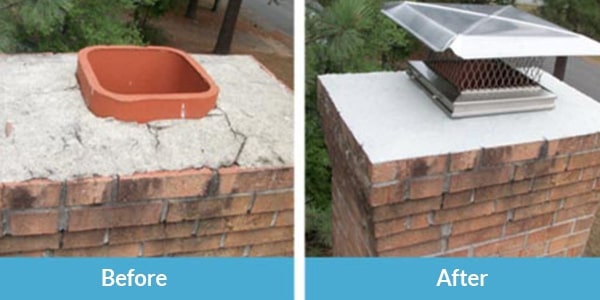
Water that enters a chimney through a cracked crown, failed flashing, missing cap, or deteriorated mortar joints does not stay in the chimney. It migrates into the surrounding roof deck, wall framing, and interior ceiling. The pattern on the Main Line: homeowners discover a water stain on a living room ceiling and call a roofer, only to discover the roof itself is intact, and the chimney is the source. By the time interior symptoms appear, the chimney damage causing them has typically been accumulating for multiple seasons.
Hynes Construction approaches chimney repair from the perspective of a full roofing and exterior contractor is not a chimney sweep company operating without roofing expertise. We repair chimneys in the context of the complete roof system. Chimney flashing repair is performed in conjunction with the surrounding roofing. Crown repair is performed with awareness of how the crown’s condition affects the shingles below. This integrated perspective is what distinguishes our chimney repair work from companies that treat chimneys as isolated structures.
About Hynes Chimney Repair Services: Hynes Construction provides professional chimney repair services for residential and commercial properties across Main Line PA – Ardmore, Bryn Mawr, Wayne, Narberth, Haverford, Havertown, Gladwyne, Wynnewood, and all surrounding communities. We handle tuckpointing and repointing, chimney flashing repair and replacement, chimney crown repair and replacement, chimney cap installation and replacement, liner repair and relining, waterproofing, and full chimney rebuilds. HICPA registered, licensed, and insured. 50+ years serving Chester, Delaware, and Montgomery Counties. Free estimates – Call 610-896-6388.
Chimney Repair Services We Offer Across the Main Line
Tuckpointing and Repointing – Mortar Joint Restoration
Tuckpointing (also called repointing) is the process of removing deteriorated mortar from between the bricks of a chimney and replacing it with fresh mortar that matches the original in composition and appearance. Mortar joints are the most vulnerable component of any masonry chimney. They absorb moisture, expand and contract through freeze-thaw cycles, and gradually erode. When mortar joints deteriorate beyond a depth of one-quarter inch, water infiltration accelerates significantly.
On Main Line, PA homes, which include hundreds of pre-1950 brick chimneys in the historic neighborhoods of Ardmore, Bryn Mawr, Narberth, and Wayne, tuckpointing is the most common chimney maintenance service required. The distinction between repointing (structural mortar replacement) and tuckpointing (which adds an aesthetic refinishing step with a contrasting mortar line to create a uniform, refined appearance) matters: tuckpointing produces a better-looking result at higher cost; repointing provides the structural correction at lower cost.
| Mortar Damage Level | Description | Recommended Action | Typical Cost Range |
|---|---|---|---|
| Minor surface erosion (1/4 inch or less) | Joint faces slightly recessed. No structural compromise. | Monitor annually. Repoint within 2-3 years. | $500 to $1,500 |
| Moderate erosion (1/4 to 3/4 inch) | Joint mortar visibly recessed. Water infiltration beginning. | Repoint now. Further deterioration is accelerating. | $1,200 to $2,500 |
| Severe erosion (more than 3/4 inch) | Deep voids in mortar joints. Water infiltration is active. Bricks loosening. | Repoint immediately. Assess bricks for spalling damage. | $2,000 to $5,000+ |
| Widespread spalling bricks | Brick face scaling and flaking. Structural integrity at risk. | Full chimney assessment. Selective brick replacement or rebuild. | $3,000 to $15,000+ |
Chimney Flashing Repair and Replacement
Chimney flashing is the metal barrier system at the joint between the chimney’s masonry and the roof’s surface. It consists of step flashing (individual pieces that step up the chimney sides with the courses of roofing), counter flashing (the reglet-embedded or surface-applied metal that laps over the step flashing), and saddle or cricket flashing (the diverter behind wide chimneys that prevents water from pooling against the chimney’s uphill face).
Chimney flashing failure is the most common cause of chimney-area roof leaks on the Main Line. Signs of flashing failure: dark staining on interior ceilings at the chimney location, visible gaps at the chimney-to-roof interface when viewed from the ground, mortar-only counter flashing that has cracked and separated, and rusted or corroded metal flashing. We repair failing flashing with correct step and counterflashing systems and replace it where the material has deteriorated beyond repair. We work in aluminum, galvanized steel, and copper for premium applications.
Chimney Crown Repair and Replacement
The chimney crown is the concrete or mortar cap that covers the top of the chimney’s masonry, sloped outward to direct water away from the flue opening and off the chimney’s exterior face. A properly formed crown is the first line of defense against water entering the chimney. When it fails, water has direct access to the flue liner, the mortar joints, and the masonry below.
Crown failure on Main Line homes is common for a specific reason: many crowns were originally formed with plain Portland cement mortar rather than a purpose-formulated elastomeric or polymer-modified crown material. Plain mortar crowns crack within 3 to 8 years under the thermal cycling and freeze-thaw stresses at the chimney top. We repair minor crown cracks with elastomeric crown sealer. We replace structurally failed crowns with properly designed crowns sloped away from the flue at the correct angle, formed with crown-specific polymer-modified concrete and sealed with elastomeric coating for long-term water resistance.
Chimney Cap Installation and Replacement
Chimney caps are the metal covers installed over the flue opening at the top of the chimney. They prevent rain and snow from entering the flue directly, exclude birds, squirrels, raccoons, and bats from nesting in the flue, prevent downdrafts that cause fireplace smoke to enter the living space, and spark arrestor screens prevent burning embers from exiting the flue and landing on the roof or landscaping. See our dedicated chimney caps and covers page for full details on cap types, materials, and installation.
Chimney Liner Repair and Relining
The chimney liner (also called the flue liner) is the conduit inside the chimney that guides combustion gases from the fireplace or appliance to the exterior. Clay tile liners are most common in Main Line pre-1980 homes; stainless steel liners are used in newer construction and in relining applications. The liner protects the chimney’s masonry walls from the corrosive byproducts of combustion and prevents heat transfer to surrounding combustible framing.
Damaged, deteriorated, or incorrectly sized liners are a serious safety concern. A cracked clay tile liner allows combustion gases and carbon monoxide to migrate into the wall assembly and potentially into the living space. An oversized liner creates draft problems and creosote accumulation. We assess liner condition through inspection and recommend repair, relining with a stainless steel flexible liner, or cast-in-place liner depending on the condition and application. Liner relining costs $900 to $3,800 depending on liner type and chimney height.
Chimney Waterproofing
Masonry chimneys are porous. They absorb water even when mortar joints are intact. Applying a professional-grade masonry waterproofing sealer to the full chimney exterior significantly reduces water absorption while maintaining the vapor permeability that allows moisture that has entered the masonry to dry outward. We use professional masonry waterproofing products rated for chimney application and not consumer-grade waterproof paint or silicone-based sealers that trap moisture and accelerate freeze-thaw damage.
Chimney Rebuild and Partial Rebuild
When a chimney has deteriorated beyond the point where repair is cost-effective severely leaning, extensive brick spalling, collapsed or crumbling mortar throughout the full height of the stack, or structural failure at the chimney base. A partial or full rebuild is required. We dismantle the deteriorated sections, assess the remaining structure, and rebuild to match the original profile using appropriate brick and mortar. Chimney rebuilds on Main Line PA homes range from $3,000 to $15,000+, depending on chimney height, the scope of the rebuild, and the access conditions.
Signs Your Main Line Chimney Needs Repair
Most chimney damage is not visible from inside the house until it is advanced. These are the external and internal indicators that warrant a professional inspection:
- Staining on interior ceilings or walls near the chimney: The most common homeowner-visible symptom of chimney-related water infiltration. By the time this appears, the leak has been active for multiple rain events. Action is needed immediately.
- White staining (efflorescence) on chimney exterior: White or gray mineral deposits on brick surfaces indicate water has moved through the masonry, dissolving and depositing mineral salts on the surface. It is a clear indicator of active water infiltration.
- Crumbling or missing mortar joints: Visible from the ground on close inspection. Any mortar joint that appears eroded, recessed, or missing is an active water entry point. Check the chimney from multiple angles with binoculars.
- Damaged or missing chimney cap: A cap that is askew, has missing mesh sections, or is absent entirely allows rain, debris, birds, and animals direct access to the flue.
- Visible cracks in the chimney crown: Crown cracks are visible from the ground on low-pitch roofs and from a ladder position. Any crack in the crown is a water infiltration path.
- Rust stains inside the firebox: Rust on the firebox floor or damper indicates water has been entering the flue from above. This indicates either a failed cap, crown, or liner.
- Deteriorated flashing at the chimney base: Check where the chimney meets the roof; for visible gaps, separated counter flashing, or rust staining on the shingles below the chimney indicate flashing failure.
- Spalling bricks: Brick faces that are scaling, crumbling, or flaking indicate freeze-thaw damage from water that has absorbed into the brick and frozen. This is a structural concern that accelerates without intervention.
Chimney Repair Cost Guide for Main Line PA (2026)
| Repair Type | Cost Range | Key Variables |
|---|---|---|
| Chimney cap installation (standard stainless steel) | $200 to $700 | Flue size, cap type, height of chimney, access difficulty |
| Chimney cap installation (copper) | $400 to $1,200 | Custom sizing, chimney height, installation complexity |
| Chimney crown repair (sealing minor cracks) | $150 to $550 | Crack extent, crown surface area, access |
| Chimney crown replacement (full) | $800 to $2,500 | Crown dimensions, material, chimney height |
| Chimney flashing repair | $300 to $1,500 | Linear footage, material (aluminum vs copper), counter-flashing condition |
| Chimney flashing replacement (full) | $1,000 to $3,500 | Chimney size, saddle required, material specification |
| Tuckpointing and repointing (per chimney) | $500 to $2,500 | Mortar damage extent, chimney height, access conditions |
| Chimney waterproofing | $300 to $900 | Chimney surface area, product specification |
| Chimney liner relining (flexible SS liner) | $900 to $3,800 | Liner diameter, chimney height, appliance type |
| Partial chimney rebuild (above roofline) | $1,500 to $5,000 | Number of courses, brick matching, height |
| Full chimney rebuild | $5,000 to $15,000+ | Height, size, material, structural assessment |
These are representative ranges for the Main Line, PA, market as of 2026. The only accurate price for your specific chimney is a written estimate from an on-site assessment. Schedule yours here. Free, no obligation, and available within 5 to 7 business days.
Seasonality – Best Time for Chimney Repair in Pennsylvania
OPTIMAL: Late Summer and Early Fall (August through October)
This is when most chimney repair work should be scheduled in Pennsylvania for two reasons:
(1) Pre-winter timing – chimneys need to be repaired before fireplace season begins. A chimney that is actively used with failed flashing or cracked crown will cause water damage throughout the heating season.
(2) Optimal mortar cure conditions – tuckpointing and crown repair mortar needs temperatures above 40 degrees Fahrenheit during application and for 24 hours of curing.
Late summer and early fall provide the best combination of dry conditions and appropriate temperatures.
SPRING (April through May): Second best window. Address winter freeze-thaw damage before summer rains begin. Assess any new cracks or joint deterioration that appeared over winter.
AVOID WINTER (November through March): Mortar work cannot be performed in temperatures below 40 degrees without heating equipment. Emergency waterproofing and cap installation can be done in any season, but comprehensive tuckpointing and crown repair should wait for warmer conditions.
Our Chimney Repair Process
01 Free On-Site Chimney Assessment: We inspect the chimney from the ground, from the roofline, and at the crown level where accessible. We assess mortar joint condition, crown integrity, cap condition, flashing system, liner condition where visible, and any signs of water infiltration on the interior. Written assessment with photographs provided at no charge.
02 Written Scope and Itemized Estimate: You receive a written, itemized estimate specifying every repair by description, material, and price. No verbal quotes. No scope changes without your written approval.
03 Safety Setup and Access: For chimneys requiring roof-level access, our crews use appropriate safety equipment, staging, and fall protection. We do not perform chimney repairs from extension ladders alone for above-roofline work with proper scaffolding or roof jacks as required.
04 Repair Execution: Each repair type like tuckpointing, flashing, crown, cap, and waterproofing — is performed in the correct sequence and with the appropriate materials for the specific substrate and conditions. Mortar color is matched to existing mortar where repointing is performed.
05 Waterproofing and Sealing: After structural repairs are complete, we apply professional masonry waterproofing sealer to the full chimney exterior. This step significantly reduces ongoing water absorption and extends the life of the new mortar work.
06 Final Inspection and Documentation: Full inspection of completed work. Written warranty documentation provided at project close.
Chimney Repair and the Insurance Claim Connection
Storm events like hail, high wind, falling debris, and ice accumulation are frequent causes of chimney damage on the Main Line. Hail can damage chimney caps, dent metal flashing components, and crack chimney crowns. Wind events can displace chimney caps entirely. Ice formation can crack crowns and expand mortar joints. All of these are covered causes of damage under most homeowner insurance policies.
Our insurance claims assistance service includes chimney damage documentation as part of the full exterior assessment. Chimney damage is one of the most commonly missed items in adjuster scopes. We ensure it is properly documented and included in the claim.
Areas We Serve for Chimney Repair
We provide chimney repair services across all 30+ Main Line communities. See our full service area.
Schedule Your Free Chimney Inspection and Estimate
DO NOT WAIT UNTIL HEATING SEASON: Chimney repair needed before fall should be scheduled in August or September at the latest. Our fall schedule fills quickly as homeowners prepare for fireplace season. Unrepaired chimneys operated through a Pennsylvania winter with failed flashing or cracked crowns cause progressive water damage that compounds with every rain event. Call 610-896-6388 now to secure your fall scheduling slot.
Chimney and Fireplace Anatomy – Understanding All Components
Understanding the components of your chimney system helps you communicate clearly with contractors and understand what needs repair. Here are all the components from the firebox at the bottom to the chimney cap at the top:
| Component | Location | Function | Most Common Failure |
|---|---|---|---|
| Hearth and hearth extension | Floor of fireplace and extension into room | Supports the firebox and provides non-combustible floor protection | Cracking from thermal expansion; non-combustible requirement not met if extended into living space without proper materials |
| Firebox | The combustion chamber inside the fireplace opening | Contains the fire; lined with refractory brick that withstands 2,000+ degrees | Cracking of refractory brick from thermal cycling; spalling from moisture infiltration |
| Smoke shelf | Horizontal ledge at base of smoke chamber | Catches falling debris and water; prevents downdrafts from reaching the fire | Accumulation of debris and creosote; rarely repaired independently |
| Damper | Metal plate above smoke shelf | Controls airflow into chimney; closed when the fireplace is not in use to prevent heat loss | Rusting shut, rusting open, or mechanical failure, one of the most common repairs |
| Smoke chamber | Funnel-shaped area above damper | Compresses combustion gases for efficient entry into the flue | Deteriorated parging (protective coating), mortar joint failure, corbeling damage |
| Flue liner | Runs full height inside chimney | Guides combustion gases out; protects masonry from heat and corrosive gases | Clay tile cracking; mortar joint failure between tiles; stainless liner corrosion |
| Chimney crown | Concrete cap at chimney top, around flue tiles | Sheds water away from chimney exterior and protects mortar joints below | Cracking from thermal cycling; improper original construction with plain mortar |
| Chimney cap | Metal cover over flue opening(s) | Excludes rain, animals, and debris; spark arresting | Corrosion, displacement by wind or animals, missing entirely |
| Chimney flashing | Metal at chimney-to-roof junction | Waterproofs the roof-chimney interface | Most common source of chimney-area leaks, failed step or counter flashing |
Damper Repair and Replacement – A Frequently Neglected Chimney Component
What Is a Chimney Damper?
The chimney damper is a metal plate or assembly located just above the firebox, at the base of the smoke chamber. Its function is critical: it controls the flow of air into the chimney when the fireplace is in use, and it closes the flue completely when the fireplace is not in use to prevent conditioned air (heated or cooled) from escaping up the chimney. An open damper in a drafty home is the equivalent of leaving a window open 24 hours a day. The U.S. Department of Energy estimates that an open damper can add $200 or more per year in energy costs in a home with active heating.
The standard throat damper (plate damper) sits directly above the firebox opening. It is made of cast iron or steel and is operated by a lever or handle from inside the firebox. In older Main Line homes, particularly pre-1950 Colonials and Victorians, original cast iron dampers have typically been in place for 50 to 80 years and are commonly found stuck open, stuck closed, or corroded beyond reliable operation.
Types of Dampers We Repair and Install
| Type | Description | When to Choose | Installed Cost Range |
|---|---|---|---|
| Throat damper (plate damper) | Traditional cast iron or steel plate at firebox top. Standard on most Main Line chimneys. | Replacement when the existing throat damper is corroded, broken, or stuck. Lower cost. | $200 to $500 |
| Top-mount damper | Rubber-gasketed metal cap installed at the chimney top, operated by a pull chain from inside the firebox. Functions as both damper and cap. | When throat damper has failed or when an energy-efficient airtight seal is a priority. The rubber gasket provides a much tighter seal than cast iron plate dampers. | $300 to $750 installed |
| Lock-top damper (Energy Top) | Specific brand of top-mount damper with a positive-locking mechanism. NFPA-approved. | Preferred by many Main Line homeowners for energy savings. A locked flue when not in use reduces heating and cooling losses significantly. | $350 to $800 installed |
Top-mount damper advantage: A top-mount damper with a rubber gasket provides an airtight seal that a traditional throat plate damper cannot match. The plate damper has gaps around its edges by design. For Main Line homeowners with high heating costs, replacing a failed throat damper with a top-mount Energy Top or a similar lock-top damper can pay back the installation cost in energy savings within 1 to 3 years.
Smoke Chamber Repair – An Often-Skipped Component
The smoke chamber is the funnel-shaped area directly above the damper that compresses and accelerates combustion gases into the flue. Its walls should be smooth and uniformly sloped to create laminar airflow. In most older Main Line chimneys, the smoke chamber was constructed with corbeled brick, a stepped, angled construction rather than a smooth slope. Corbeled smoke chambers trap creosote on the stepped surfaces and create turbulent airflow that reduces draft performance.
Smoke chamber parging is the process of applying a layer of insulating refractory mortar (typically Chamber-Tech 2000 or comparable product) to the interior of the smoke chamber, creating a smooth, uniform surface. Benefits: improved draft, reduced creosote accumulation, better thermal efficiency, and elimination of cracks and voids in the deteriorated corbeled surface where gases can escape.
Smoke chamber parging is recommended when: the smoke chamber shows cracked or deteriorated mortar, there is evidence of smoke leakage from the smoke chamber area, or when a chimney inspection reveals the corbeled construction has developed voids or cracks. Cost: $400 to $1,000 depending on smoke chamber size and access conditions.
Creosote – The Hidden Fire Hazard in Main Line Chimneys
Creosote is the residue produced by incomplete combustion of wood in a fireplace or wood stove. It condenses on the cooler surfaces of the chimney liner as combustion gases cool while rising through the flue. According to the National Fire Protection Association (NFPA), creosote accumulation in chimneys is the leading cause of home heating fires in the United States, responsible for an estimated 25% of all home heating fires annually
Three Stages of Creosote Buildup
| Stage | Appearance | Removal Method | Fire Hazard |
|---|---|---|---|
| Stage 1 (First-degree) | Light, flaky, sooty deposit. Brushes off easily. | Standard chimney sweeping with rotary brushes. | Low, standard accumulation on an active fireplace |
| Stage 2 (Second-degree) | Shiny, tar-like deposits that may be puffed up or crunchy. Harder to remove. | Rotary tools, chemical treatments applied before sweeping. | Moderate to HIGH, burns much hotter than Stage 1 |
| Stage 3 (Third-degree) | Thick, glazed, hardened coating resembling tar. May seal cracks in liner. | Chemical treatments, special removal equipment, or liner replacement may be required. | SEVERE, Stage 3 creosote fires burn at over 2,000 degrees and commonly extend to surrounding structure |
For Main Line homeowners with active wood-burning fireplaces, the NFPA and the Chimney Safety Institute of America (CSIA) both recommend annual chimney inspection and cleaning preferably in late summer or early fall before the heating season begins. Creosote accumulation depends on wood moisture content, burn temperature, frequency of use, and flue sizing. We assess the creosote stage as part of every chimney inspection and advise on the appropriate cleaning or remediation approach.
NFPA 211 Chimney Inspection Levels – What They Mean
The National Fire Protection Association Standard 211 defines three levels of chimney inspection. Understanding the level appropriate for your situation helps you make an informed decision:
| Inspection Level | What Is Inspected | When It Is Required | Typical Cost Main Line |
|---|---|---|---|
| Level 1 | Visual inspection of accessible chimney components. Interior and exterior surfaces, chimney cap, crown, visible flue, firebox, damper. No special tools. | Annual inspection when chimney use has not changed and there are no known problems. Minimum inspection for operational chimneys. | $100 to $300 |
| Level 2 | All of Level 1 plus inspection of accessible attic, crawlspace, and basement areas that adjoin the chimney structure. May include video camera inspection of the full flue length. | When buying or selling a home (required by most real estate attorneys on homes with fireplaces on the Main Line), after any chimney fire, after a natural disaster, or after a significant change in use (converting from wood to gas). | $250 to $600 |
| Level 3 | All of Level 2 plus demolition of specific building components to access concealed areas. Invasive inspection. | When a hazard is suspected that cannot be investigated at Level 1 or 2. Rarely required but critical when concealed damage is suspected after a chimney fire. | $1,000 to $3,000+, depending on scope of access required |
For Main Line homeowners buying or selling a home with a fireplace, a Level 2 inspection with full-length video camera inspection of the flue is standard practice. We coordinate Level 2 inspections with video documentation. The video record provides an objective baseline that is valuable for both the real estate transaction and any subsequent insurance claims.
Types of Chimney Liners – Materials Comparison
| Liner Type | Material | Best Application | Lifespan | Cost to Install |
|---|---|---|---|---|
| Clay tile liner | Segmented rectangular or round clay tiles. Original standard in pre-1970 masonry chimneys. | Wood-burning fireplace in a structurally sound chimney. Acceptable when tiles are intact and mortar joints are sound. | 50+ years when intact. Fail when cracked from thermal shock or freeze-thaw. | Already installed in most Main Line masonry chimney, repair is most common action |
| Stainless flexible liner (Type 316) | Corrugated stainless steel flexible tube inserted into existing chimney. | Relining any chimney where clay tiles are cracked or failed. Gas, oil, and wood-burning appliances. Most common relining approach. | 25 to 35 years (Type 316 SS). Longer in gas applications. | $900 to $3,800 depending on liner diameter and chimney height |
| Rigid stainless liner sections | Straight stainless sections joined at each flue tile height. | Straight or near-straight chimneys. Better airflow than a flexible liner. | 30 to 50 years (Type 316 SS). | $1,200 to $4,500, more labor-intensive than flexible |
| Cast-in-place liner | Refractory concrete cast around a form inside the existing chimney — creates a new smooth, monolithic liner. | When structural integrity is needed. Heavy rebuilds. Where flexible liner installation is not possible. | 50+ years. | $2,500 to $7,000+ depending on chimney height and diameter |
Masonry vs Prefabricated Chimneys – Know Your Type
| Factor | Masonry Chimney | Prefabricated (Factory-Built) Chimney |
|---|---|---|
| Construction | Brick, stone, or concrete block. Cast or mortared in place. | Metal firebox and liner inside wood-frame chase. Installed as a unit. |
| Most common era on Main Line | Pre-1975 construction. Predominant in historic Ardmore, Bryn Mawr, Narberth, and Wayne. | 1975 to present. Common in newer construction throughout Chester and Delaware Counties. |
| Typical failure mode | Mortar joint erosion, crown cracking, flashing failure, liner cracking. | Chase cover rust-through, metal liner deterioration, and wood-frame chase rot from cover failure. |
| Repair approach | Tuckpointing, crown repair, flashing, and liner relining. All established repair approaches. | Chase cover replacement, liner section replacement, and wood frame repair if the cover failed. |
| Lifespan (properly maintained) | 50 to 150+ years, original masonry chimneys can outlast the home. | 15 to 30 years for factory components. Chase framing can last as long as maintained. |
| Fire safety concern | Cracked clay tile liner, carbon monoxide, and fire risk. | Clearance violations from manufacturer specification errors, less common but serious. |
Annual Chimney Maintenance Schedule for Main Line PA Homeowners
YOUR SEASONAL CHIMNEY MAINTENANCE GUIDE – MAIN LINE PA
Late Summer (August-September): Schedule your annual chimney inspection before heating season. Best availability, best weather for mortar work, best lead time to complete repairs before first fireplace use.
Fall (October): Have your chimney swept if you burned wood and used the fireplace during the previous season. Test your damper before the first fire. Install a new chimney cap now if yours is damaged. Check that smoke detectors and carbon monoxide detectors adjacent to fireplace areas are functional.
After Each Major Storm (Year-Round): Check chimney cap is in place and undamaged. Note any water staining on ceilings near chimney. Look for efflorescence on chimney exterior. After any storm with hail, call us for a chimney assessment as part of a full storm damage inspection.
Spring (April): Inspect for new mortar joint damage that appeared over winter freeze-thaw cycling. Clean fireplace interior of ash and debris. Leave damper open for a period to allow moisture from winter to vent. Note any new efflorescence or interior staining for assessment.
Benefits of Chimney Repair vs Abandonment
Consideration | Repair the Chimney | Abandon the Chimney |
|---|---|---|
Upfront cost | $500 to $5,000 for most repairs. $5,000 to $15,000+ for a rebuild. | $500 to $2,000 for proper decommissioning and sealing. |
Long-term property value | An active fireplace adds significant value on the Main Line. Buyers respond strongly to working fireplaces. | Loss of a buyer-appealing feature. May reduce appraised value. |
What Main Line buyers expect | Most Main Line buyers at the $500,000+ price point expect working fireplaces in Colonial and Victorian homes. | Absence of a working fireplace is noted and priced in by buyers. |
Insurance implications | A maintained chimney reduces liability and is fully insurable. | Improperly decommissioned chimneys create liability and may affect coverage. |
Structural implications | Repaired and maintained, the chimney continues to protect the roof assembly and the surrounding structure. | Abandoned chimney still requires cap and flashing maintenance to prevent water infiltration. |
Our recommendation | Repair when the repair cost is reasonable relative to the chimney rebuild cost. Rebuild when structural damage is advanced and repair is not cost-effective. | Consider only when the fireplace is never used and repair is prohibitively expensive relative to property value. |
Monday through Saturday | Free Estimates | Licensed and Insured
GET FREE ESTIMATE
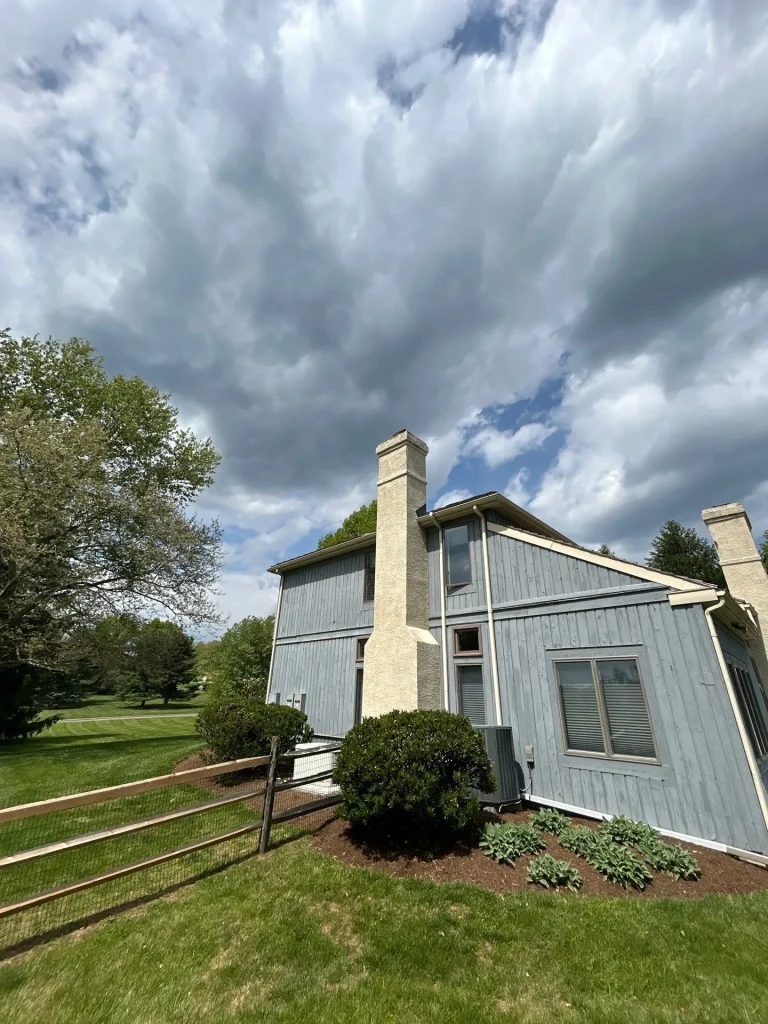
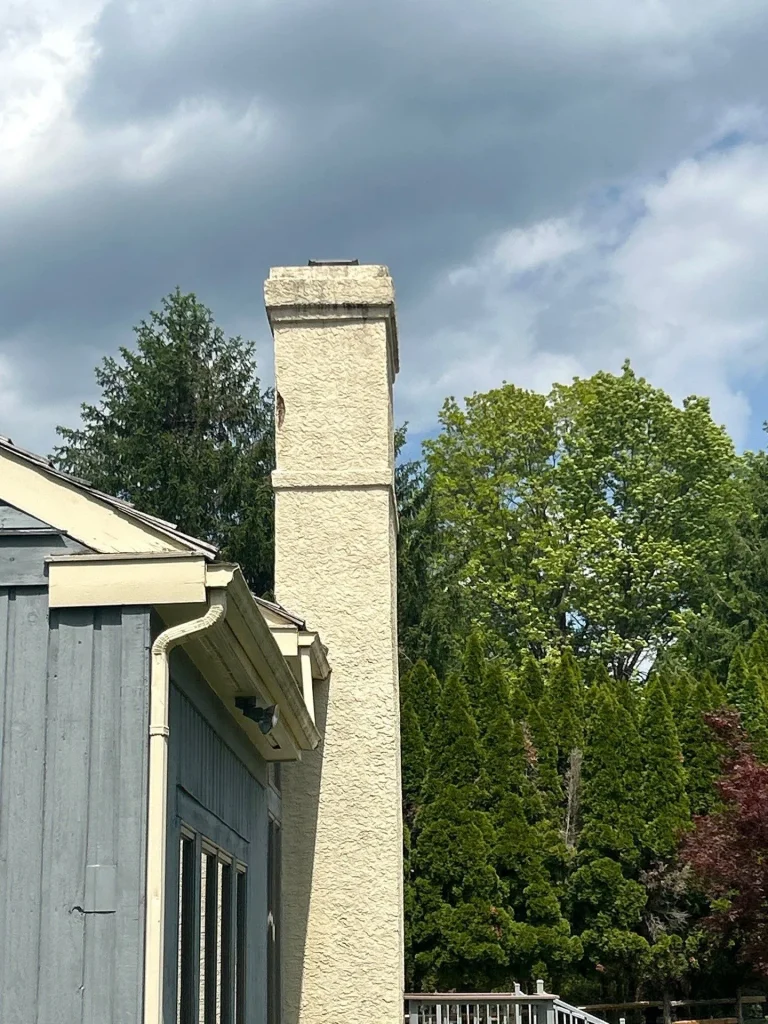
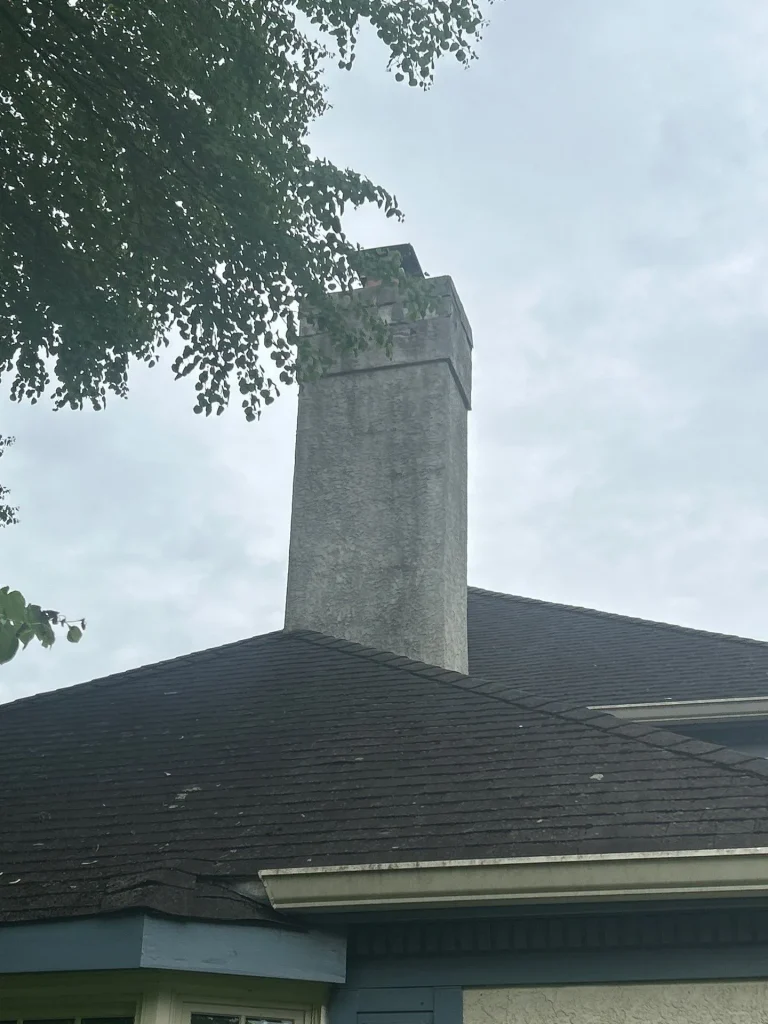
Gallery
Frequently Asked Questions
Interior symptoms: water staining on the ceiling or walls around the chimney, musty odor in rooms adjacent to the chimney, rust staining on the firebox floor or damper. Exterior symptoms: efflorescence (white mineral deposits) on chimney brick, visible mortar joint erosion, cracked or missing chimney cap, and separated counter flashing. Any one of these symptoms warrants a professional chimney inspection. Call (610) 880-3890 for a free assessment.
Chimney repair costs in the Main Line market range from $150 to $550 for minor crown sealing, $300 to $1,500 for flashing repair, $500 to $2,500 for tuckpointing and repointing, $900 to $3,800 for liner relining, and $5,000 to $15,000+ for full chimney rebuilds. The only accurate price for your specific chimney is an on-site assessment. Free written estimate. Call 610-896-6388.
Repointing removes deteriorated mortar from between bricks and replaces it with fresh mortar to restore structural integrity. This is the primary structural repair. Tuckpointing goes one step further: after repointing, a second layer of contrasting mortar is applied in a precise, thin line at the center of the joint, creating a refined, uniform appearance that makes the chimney look like it has very fine, clean mortar lines. Tuckpointing costs more but produces a better-looking result. Both accomplish the structural goal of restoring mortar joint integrity.
The National Fire Protection Association (NFPA) recommends annual chimney inspection for active fireplaces and wood-burning appliances. For gas fireplaces, inspection every 1 to 2 years is appropriate. For chimneys that are not actively used, a professional inspection every 2 to 3 years, or after any significant storm event, is recommended. In Pennsylvania’s climate with its aggressive freeze-thaw cycling, annual inspection of active fireplaces is strongly advisable. Call us in August or September to schedule your pre-season inspection.
Yes, storm-caused chimney damage is a covered peril under most homeowner insurance policies. Hail can damage chimney caps, crack chimney crowns, and dent metal flashing. Wind events can displace caps and damage exposed masonry. Ice accumulation can crack crowns. Our insurance claims assistance program includes chimney damage documentation. We ensure chimney damage is included in your adjuster’s scope. It is one of the most frequently missed items in initial adjuster estimates.
Professional tuckpointing with the correct mortar composition for the specific brick type lasts 20 to 30 years in most applications. The critical factor is mortar matching: new mortar must match the original mortar’s hardness. Using a mortar that is too hard for the brick type causes the bricks to crack rather than the mortar joints to absorb movement. Too soft a mortar erodes quickly. We assess the original mortar type before specifying replacement mortar.
Minor chimney repairs like tuckpointing, cap replacement, and crown repair are generally permit-exempt in Lower Merion Township and most other Main Line municipalities. Significant structural work, like partial or full chimney rebuilds and liner relining, may require a building permit. We determine permit requirements at the estimate-relining stage and manage all permit applications for projects that require them.
Efflorescence is the white or gray mineral deposit that appears on brick surfaces when water moves through the masonry, dissolves soluble salts from the mortar and brick, and deposits them on the surface as the water evaporates. It is not itself structurally damaging, but it is a clear indicator that water is actively moving through your chimney’s masonry. The underlying cause, such as a failed crown, mortar joints, flashing, or cap, needs to be addressed. Efflorescence that recurs after cleaning is a persistent water problem.
Chimney flashing repair depends on the condition of the existing flashing system. Minor counterflashing that has separated from its reglet can be resealed with appropriate elastomeric sealant. Step flashing that has been improperly installed (without integration into the course of shingles) must be replaced. Counterflashing that has corroded through, bent, or separated significantly is replaced with new material in aluminum, galvanized steel, or copper, depending on the specification. We assess the full flashing system and replace it rather than patch it where the material has deteriorated.
Stage 1 (light flaky soot) is normal accumulation that standard sweeping removes. Stage 2 (shiny, tar-like deposits) burns significantly hotter than Stage 1 and requires chemical treatments before sweeping.
Stage 3 (glazed, hardened, thick coating resembling tar) is a serious fire hazard. Stage 3 creosote chimney fires burn at over 2,000 degrees Fahrenheit and commonly extend to surrounding structures. Stage 3 requires specialized removal or liner replacement and should be addressed before any further fireplace use. If you have not had a chimney inspection in more than 2 years and use your fireplace regularly, call us for an assessment: 610-896-6388.
Yes, a Level 2 chimney inspection with video camera documentation of the full flue is standard practice in Main Line real estate transactions for any home with an active or potentially active fireplace. Most real estate attorneys and home inspectors on the Main Line recommend a Level 2 inspection before closing. The video record establishes the condition of the flue liner, identifies any cracks or blockages, and documents the condition of the smoke chamber and damper. Level 2 inspections on Main Line homes run $250 to $600. Call 610-896-6388 to schedule.
Mortar composition must match the original mortar’s hardness. This is the most technically important aspect of chimney tuckpointing. Type N mortar (medium strength, moderate flexibility) is appropriate for most above-grade masonry chimneys built with standard brick. Type S mortar (higher strength, less flexibility) is used for structural applications, but can cause brick cracking if used on softer historic brick. Type M mortar (highest strength) is only appropriate for below-grade applications and should never be used for historic chimney tuckpointing. We assess the original mortar type by hardness, color, and composition before specifying replacement mortar.
From the outside, a masonry chimney is brick, stone, or concrete all the way from the ground up, with visible mortar joints throughout its height. A prefabricated chimney has a wood-frame rectangular chase (typically covered in siding or stucco) with a smaller metal liner visible at the top inside the cap.
From the inside: a masonry chimney has a solid brick firebox; a prefabricated chimney has a metal firebox insert. If you are not sure, call us, as the type determines the appropriate repair approach entirely.






TESTIMONIALS
-
C
I highly recommend Peter from Hynes Construction. He did work on the flat roof of my house and did a fabulous job. He is a very professional guy, great with follow up, answers your questions and gives great suggestions based on his experience, and Hynes construction is reasonably priced. Services: Power/pressure washing, Roof repair, Roof installation, Window cleaning.
Candance Prvitt
-
C
Krissy helped me and provided a competitive quote for a new roof. After going through with 4 different quotes from other roofing companies, I decided Hynes Construction was the perfect company for the job. The roof looks beautiful and I am happy working with Hynes Team and I would recommend them to anyone doing a roof replacement! Services: Roof inspection, Roof installation, Roof repair
Marlain Tassone
-
B
Hynes Construction did a fantastic job on my roof. Krissy was professional and easy to work with. They completed my large roof in a day. The crew worked very hard and cleaned up every bit of it. I am extremely happy with my decision of choosing Hynes Construction... Thanks a lot for a wonderful job well done. Services: Roof inspection, Roof installation, Skylight installation
Brigid Goon
-
N
They are quick. Handled everything in a proper way. Hynes Team did an amazing job and were very professional and friendly. They did a great job in cleaning. The work quality is fabulous and they offer competitive pricing. Professional and on time, I would definitely recommend Hynes Construction. Service: Window cleaning
Nancy Brown
-
M
Hynes is undoubtedly the best roofing company around! Professional and experts in what they do, they are clear and will guide you in a right way. I had a leak in my kitchen which another company told me I needed to replace the whole roof which I was too scared off. Later I called Hynes Team for second opinion and they were able to repair the roof and save me from spending thousands of dollars! So thankful for their honesty Services: Roof inspection, Storm / wind damage roof repair, Roof repair
Michael Reilly
-
S
Ridge and Peter both were wonderful and easy to work with. They took the time telling me about the work required and they both were very knowledgeable. I am sure Hynes Team and the company really take good care about the people they work with. I would highly recommend Hynes for any Roof replacement projects! Services: Roof inspection, Roof installation, Roof repair
Stantec
-
J
Contacted Hynes Construction for some minor roof repairs. Hynes had someone out in no time and the repairs were done right after, they were really quick and delivered on time as they promised. I would definitely recommend them for your roofing needs! Thanks to Dan for getting our roof repaired and giving us peace of mind Service: Roof repair
Jeffer Punzalan