GET FREE ESTIMATE
Storm Door Installation Main Line PA
Storm Door Installation Main Line PA services from Hynes Construction help homeowners add year-round weather protection, ventilation flexibility, energy efficiency, and enhanced entry security to their homes. We install full-view, retractable screen, mid-view, high-view, and heavy-gauge security storm doors for homes across Ardmore, Bryn Mawr, Wayne, Haverford, Narberth, Gladwyne, and surrounding Main Line communities. Whether you want to protect a premium front entry door from Pennsylvania weather, improve airflow during spring and fall, or add an extra security barrier at your entry, our team provides properly fitted storm door installation with correct closer adjustment, weatherstripping integration, and long-term performance in mind.
Request your free estimate or call 610-896-6388.
Hynes Construction | 119 Sibley Ave, Ardmore PA 19003 | 610-896-6388 | Full-View, Retractable Screen, and Security Storm Doors | 50+ Years Local | Free Estimates
What Is a Storm Door and What Does It Do?
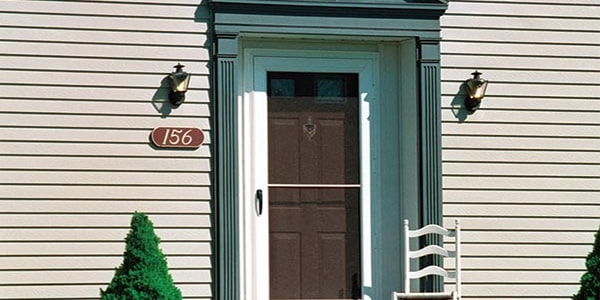
A storm door is a secondary exterior door installed in front of the primary entry door, within the same door frame. It consists of an aluminum or steel frame with one or more glass panels and a screen option, either a separate glass-screen insert system, a retractable screen, or a self-storing interchangeable panel system. Storm doors open outward, opposite to the direction of the primary entry door’s swing.
Storm doors serve four distinct functions that are particularly valuable in Pennsylvania’s climate:
- Weather protection: The space between the storm door and the primary door creates an insulating air buffer that reduces heat loss in winter. Storm doors also protect the primary door from direct exposure to rain, snow, ice, and UV radiation, extending the life of the primary door significantly.
- Ventilation control: A storm door with a screen panel (or retractable screen) allows full ventilation through the doorway with insects excluded without requiring the primary door to remain open. This is particularly valuable in Main Line PA during the spring and fall when temperatures are mild and natural ventilation is preferred over mechanical cooling.
- Energy efficiency buffer: For homes with older primary entry doors that are not highly insulated, a storm door creates an additional thermal layer that reduces drafts and heat loss meaningfully. The greatest energy benefit of a storm door occurs on older homes with solid wood or low-core primary doors.
- Security addition: Heavy-gauge security storm doors provide an additional locked barrier at the entry. A primary door and a heavy-gauge security storm door together represent a significantly more secure entry than either alone. See also our full door service page and patio doors.
Types of Storm Doors We Install
Full-View Storm Doors
Full-view storm doors have glass from top to bottom — a single large glass panel that maximizes visibility through the doorway and allows maximum light into the entry. Full-view storm doors are the most popular configuration on the Main Line for front entries where visibility and light are the priority and where the primary door itself provides a strong design statement. The glass panel is typically insulated (double-pane) on premium units. Screen options include interchangeable glass/screen inserts (remove glass, insert screen for summer) or retractable screens (screen rolls into the frame, available on demand).
Best for: Front entries on Colonial, Victorian, and Craftsman Main Line homes where the primary door has strong architectural character and maximum visibility is desired.
Mid-View Storm Doors
Mid-view storm doors have glass in the upper portion and solid panel in the lower portion — typically in a 50/50 or 60/40 proportion. The solid lower panel is more resistant to impact damage and provides slightly more privacy than a full-view unit. Mid-view configurations are appropriate for entries with small children and pets, for rear and side entries where impact resistance is valued, and for any entry where a lower-glass profile is architecturally preferred.
High-View (High-Lite) Storm Doors
High-view storm doors have glass only in the upper portion of the door — typically the top third. The majority of the door surface is solid panel. High-view storm doors are the most impact-resistant standard configuration and are appropriate for rear entry doors, side entry doors, and any location where vandalism resistance or impact protection from equipment and traffic is a concern.
Retractable Screen Storm Doors
Retractable screen storm doors have a screen that rolls into a housing within the door frame when not in use — when ventilation is desired, the screen pulls down and locks in position. The key advantage: the screen is protected from UV degradation when retracted (extending its life significantly) and is invisible when the glass is in place, maintaining the unobstructed view that full-view storm doors provide. Retractable screen doors are our most popular storm door configuration on the Main Line.
Best for: Any entry where full-view glass and an unobstructed view are desired year-round, with the added flexibility of screen ventilation when needed. Spring and fall on the Main Line, when screen ventilation through the front door is highly desirable, are when this feature gets used most.
Security Storm Doors
Security storm doors are constructed with heavier-gauge aluminum or steel frames (typically 16 to 20 gauge) and include enhanced locking features: deadbolts, heavy-duty hinges with non-removable hinge pins, and, in some configurations, expanded metal security grilles rather than conventional glass or screen. Security storm doors provide a meaningful additional barrier at the entry and are appropriate for entries where security is a primary concern, particularly ground-floor entries in locations with limited natural surveillance from the street.
Frame gauge: Standard storm doors use 1-1/4 inch to 1-1/2 inch aluminum frame profiles. Security storm doors use 2-inch or heavier profiles with steel core reinforcement. The weight and heft of the door when opening are a clear indication of the difference.
About Hynes Storm Door Services: Hynes Construction installs and replaces storm doors for residential and commercial properties across Main Line, PA. We install Andersen, Larson, and comparable premium storm doors in full-view, mid-view, retractable screen, and security configurations. All major door sizes and colors. Correct installation with full weatherstripping integration and closer adjustment. 50+ years local. Free estimates. Call 610-896-6388.
Storm Door Materials and Frame Options
Frame Material | Gauge / Strength | Finish Durability | Best Application | Installed Cost Range |
|---|---|---|---|---|
Standard aluminum (mid-grade) | A 1-1/4-inch frame. Light to moderate strength. | Baked-on enamel. Good for most applications. Touch-up needed if scratched. | Most standard residential entry doors. Front entries, side entries. | $400 to $900 |
Heavy-gauge aluminum (premium) | A 1-1/2 to 2 inch frame. High strength. More heft and durability. | Premium powder coat or baked enamel. Greater chip and scratch resistance. | Premium residential entry doors for historic Main Line homes where quality appearance matters. | $700 to $1,400 |
Steel security frame | 2 inch+ steel or steel-core aluminum. Maximum strength. | Powder coat or paint. May show wear at high-contact points faster than aluminum. | Security-priority entries, commercial-adjacent applications, ground-floor entries with limited surveillance. | $900 to $1,800 |
Aluminum with wood grain insert | Standard aluminum frame with wood-look insert panels. | The wood grain finish must be maintained. Not fully waterproof. | Historic Main Line homes where a wood appearance is architecturally preferred at the storm door location. | $600 to $1,200 |
Storm Door Glass Options
Glass Option | Description | Energy Performance | Best Application |
|---|---|---|---|
Standard clear glass (single pane) | Clear single-pane glass panel. | Basic thermal buffer. | Budget entry level. Not recommended for primary entries. |
Clear double-pane Low-E glass | Insulated glass with Low-E coating. | Best energy performance. U-factor 0.30-0.40. | Primary front entries where maximum energy efficiency is the goal. |
Tempered safety glass | Single or double pane. Shatters into harmless pieces if broken. | Standard thermal performance. | Any storm door where safety glazing is preferred, homes with small children, or pets. |
Decorative glass panels | Textured, frosted, or patterned glass. | Standard thermal performance. | Historic Main Line entries where decorative glass coordinates with the primary door. |
Is a storm door worth it for my Main Line home?
This is one of the most common questions we receive, and the answer depends on your specific home and primary door:
Your Situation | Is a Storm Door Worth It? | Reason |
|---|---|---|
Older primary door (pre-2000, solid wood or low insulation) | YES: strong benefit | The storm door creates an additional thermal buffer that meaningfully reduces drafts and energy loss from an under-performing primary door. |
Modern Energy Star primary door (post-2010) | OPTIONAL: moderate benefit | A modern insulated primary door already performs well thermally. The storm door adds ventilation flexibility and primary door protection rather than significant energy savings. |
Front entry with decorative primary door | YES: protection value | A storm door protects the primary door from direct rain, snow, UV, and physical contact, extending its life significantly. Particularly valuable on painted wood or premium fiberglass front doors. |
Entry with full exposure to prevailing weather (no covered porch) | YES: weather protection critical | An unprotected entry in Pennsylvania weather requires a storm door as primary door protection. Rain, snow, and ice directly on the primary door will degrade its performance over time. |
Entry with deep covered porch (4+ feet of roof cover) | OPTIONAL: reduced weather benefit | A deeply covered entry provides natural weather protection. A storm door primarily adds ventilation and security benefits rather than weather protection. |
Security concern at entry | YES: security benefit | A heavy-gauge security storm door adds a meaningful locked barrier. Combined with a quality primary door, it creates a two-barrier entry significantly more resistant to forced entry. |
Storm Door Colors – Matching Your Main Line Home’s Exterior
Storm door color selection should coordinate with the primary door frame color, window frame colors, and other exterior metal elements. Most premium storm doors are available in 15 to 30 standard colors, with the most popular on the Main Line:
- White and Off-White (Colonial White, Stone): The most common storm door color on the Main Line. Coordinates with white trim and window frames on Colonial and Victorian homes.
- Black and Dark Bronze: Growing strongly in popularity on Main Line homes with navy, forest green, or charcoal primary doors and dark window frames. Creates a crisp, contemporary exterior palette.
- Sandstone and Almond: Coordinates with beige and tan aluminum window frames common on 1980s and 1990s Main Line construction.
- Terratone and Brown: Coordinates with Andersen windows in the Terratone finish, common on 1990s and 2000s construction.
- Charcoal Gray: Growing in popularity on contemporary and transitional Main Line homes with mixed-material exteriors.
Storm Door Installation – What We Include
Every Hynes storm door installation includes the following:
- Assessment of the primary door frame for plumb and square: a storm door installed on an out-of-square frame will not close and seal correctly.
- Correct Z-bar expander sizing and installation: The metal expander that fills the gap between the storm door frame and the primary door frame must be fitted correctly to prevent air infiltration at the jamb.
- Installation of the door closer (standard single closer or enhanced double closer for high-traffic entries).
- Adjustment of the door sweep and threshold seal against the primary door threshold.
- Installation of all hardware, handle, latch, keyed lock, and safety chain or door stop.
- Final operational test, door closing smoothly, latching correctly, and sealing properly against the frame and primary door.
Storm Door Cost Guide for Main Line PA (2026)
| Storm Door Type | Cost Range Installed | Key Variables |
|---|---|---|
| Standard full-view, non-retractable screen (32-36 inch) | $400 to $750 | Frame gauge, brand, color, glass specification |
| Full-view with retractable screen (32-36 inch) | $600 to $1,100 | Retractable mechanism quality, frame gauge, brand |
| Mid-view storm door (32-36 inch) | $380 to $800 | Frame gauge, panel material, glass type |
| High-view (high-lite) storm door | $350 to $750 | Frame gauge, solid panel material |
| Security storm door (heavy-gauge) | $800 to $1,800 | Frame gauge (2 inch+ steel/aluminum), locking system, glass specification |
| Storm door with Low-E double-pane glass | Add $100 to $250 to base cost | Insulated glass unit vs standard single pane |
| Larger storm door (over 36 inch wide) | Add $100 to $300 to standard cost | Non-standard sizing and custom frame fabrication |
Free written estimate. Call 610-896-6388 or request online.
Storm Door Seasonality – Best Time to Install
Year-Round Installation – No Seasonal Restriction
Storm door installation is not constrained by outdoor temperature or weather conditions the way exterior painting or chimney masonry work is. We install storm doors year-round.
OPTIMAL: Fall (September-October) – Best timing is before Pennsylvania’s winter heating season. A storm door installed before November begins immediately reduces drafts and energy loss through the primary door during the most demanding heating months.
SPRING (April-May): Second most popular timing. Storm doors installed in spring are available for screen ventilation use immediately through the mild spring and summer.
WINTER: Off-season installation with best scheduling availability. A storm door installed in January or February provides immediate energy benefit for the remainder of the heating season.
Storm Door Installation Benefits for Pre-1978 Main Line Homes
Many of the most desirable Main Line homes, the pre-war Colonials of Ardmore and Bryn Mawr, the Victorian homes of Narberth and Wayne, and the Craftsman bungalows of Wynnewood and Overbrook have original or early-replacement solid wood entry doors that do not have modern insulating cores. These doors are typically well-maintained and architecturally appropriate for the home, but their thermal performance is significantly below what a modern insulated door unit would provide.
For these homes, a storm door is often the most cost-effective thermal improvement available at the entry, it creates an insulating air buffer in front of the existing primary door, eliminates direct rain and snow contact with the primary door surface, and provides screen ventilation without needing to open the primary door. The alternative replacing the original primary door raises issues of architectural compatibility, historic district approval, and the loss of original fabric on a historic home.
See our certifications page and about us page for our 50+ year track record serving these homes across the Main Line.
Areas We Serve for Storm Door Installation
We install storm doors across all 30+ Main Line communities. See our full service area.
Schedule Your Free Storm Door Estimate
PROTECT YOUR PRIMARY DOOR THIS WINTER: A storm door installed this fall protects your primary door from direct winter weather and reduces drafts immediately. Call 610-896-6388 for a same-week estimate appointment; storm door installations are typically completed in a single visit within 2 hours.
Storm Door Energy Savings – The Numbers for Main Line PA Homes
Storm doors provide measurable energy savings for most Main Line homes, though the magnitude depends heavily on the condition of the primary door. Here is the practical energy impact data:
| Primary Door Condition | Energy Saving from Storm Door | Annual Dollar Savings Estimate | Payback Period |
|---|---|---|---|
| Solid wood pre-1978 door (no insulating core) | Up to 45% reduction in heat loss at that entry point. | $85 to $200 per year depending on home size and energy costs. | 2 to 5 years at $400-$700 storm door installed cost |
| 1990s-era entry door with degraded weatherstripping | 25 to 35% reduction in infiltration at entry. | $50 to $120 per year. | 4 to 8 years |
| Modern Energy Star entry door (post-2010) | 10 to 15% marginal improvement at entry. | $20 to $50 per year. | 10 to 20 years: value is in primary door protection, not energy savings |
| Front entry fully exposed to prevailing winter wind (no porch) | Up to 50% reduction in wind-driven infiltration at that entry. | $100 to $250 per year on a Main Line Colonial with a large, exposed entry. | 2 to 4 years |
Source note: Energy savings estimates based on U.S. Department of Energy data on storm door energy performance for existing single-family homes in the Northern climate zone. Actual savings vary by home size, energy costs, heating system type, and entry door exposure.
Storm Door vs Screen Door – Understanding the Difference
| Factor | Storm Door | Screen Door |
|---|---|---|
| Primary function | Weather protection, energy buffer, security addition. Designed for all four seasons. | Insect exclusion with ventilation. Designed for warm-season use. |
| Material | Heavy-gauge aluminum or steel frame with glass panel and optional screen. | Lightweight aluminum, wood, or fiberglass frame with screen panel only. |
| Glass panel | Yes, the glass panel provides weather protection in winter and allows a view year-round. | No glass panel. Screen only, no weather protection. |
| Winter use | YES: Glass provides a thermal buffer and weather barrier. | NO, not designed for cold-weather use. The screen provides no thermal protection. |
| Security | Moderate to high depending on locking mechanism. | Minimal screen material provides no meaningful security. |
| Cost installed | $400 to $1,800, depending on specifications. | $200 to $600 depending on material and size. |
| Best for | Primary entry on any main line home used year-round. | Secondary entries and back doors where seasonal ventilation only is the goal. |
| Our recommendation | Storm door with retractable screen, best of both worlds year-round. | A screen door is only acceptable for rarely-used secondary entries where weather protection is not needed. |
Storm Door Brand Comparison – Andersen vs Larson vs ProVia
| Brand | Most Popular Models | Frame Quality | Screen Options | Price Range (Installed) | Best For Main Line |
|---|---|---|---|---|---|
| Andersen | 3000 Series, 4000 Series, 3000 Series Retractable | Heavy-gauge aluminum. Excellent fit and finish. Reliable closer system. | Retractable screen on 4000 Series. Interchangeable on 3000 Series. | $500 to $1,200 | Most Main Line homes. Widest color and size selection. Strong retailer support. |
| Larson | Escape Series, Tradewinds, Brisa Security | Heavy-gauge aluminum. Strong frame profiles. Wide security door selection. | Retractable screen on select models. Security grille option. | $450 to $1,600 | Homes where security is the primary concern. Best security storm door selection. |
| ProVia (Spectrum series) | Spectrum Full View, Spectrum Mid-View, Secura Security | Premium heavy-gauge aluminum. Excellent sealing performance. | Interchangeable and retractable options. | $600 to $1,500 | Premium Main Line homes where installation quality and finish durability are priorities. |
| EMCO | 200 Series, 400 Series | Mid-grade aluminum. Adequate for standard applications. | Interchangeable glass/screen on most models. | $350 to $900 | Budget-conscious applications where value is the priority over premium finish quality. |
Our standard specification for main line residential storm door installations: Andersen 4000 Series with a retractable screen or Larson Tradewinds depending on color and size requirements. For security applications: Larson Brisa or ProVia Secura in a heavy-gauge steel frame. We discuss brand options at the estimate and match the product to your specific entry door size, color requirements, and performance priorities.
Monday through Saturday | Free Estimates | Licensed and Insured
Self-Storing vs Retractable Screen Storm Doors – The Difference Explained
This terminology causes significant confusion because the terms are sometimes used interchangeably but describe different mechanisms:
- Interchangeable (insert) storm door: Has a full-height glass panel and a full-height screen panel that are stored separately; you physically swap the glass for the screen (or vice versa) seasonally. The panel not in use is stored in the garage or basement. Least convenient but most affordable.
- Self-storing storm door: Has a glass panel that slides up and a screen panel in the lower portion that slides down to meet it both panels are contained within the door at all times. You slide the glass up and the screen down for ventilation and reverse for winter. No separate storage required.
- Retractable screen storm door: A single full-view glass door with a screen that rolls into a housing within the door frame when not in use. To ventilate, pull the screen down from the housing and lock it in position. To restore the glass view, release the screen, and it retracts into the housing. The screen is never removed. never stored and protected from UV degradation when retracted. This is the most convenient and most expensive configuration.
- Our recommendation: Retractable screen doors for front entries where the full-view glass appearance year-round matters most. Self-storing doors for rear entries where switching between glass and screen is a seasonal routine and the fully glass-view appearance is less critical.
Storm Doors on Rear and Side Entries – Not Just the Front Door
Storm doors are often thought of as a front entry upgrade, but rear and side entry doors are frequently the most-used exterior doors on a Main Line home, and storm doors provide real value at those locations as well:
- Rear entry doors (to deck or garage): A storm door on the rear entry door protects the primary door from direct rain and snow exposure. For entries that open onto an uncovered deck, the rear door receives as much weather exposure as the front entry. A mid-view or high-view storm door in a durable configuration is appropriate for rear entries with high foot traffic.
- Mudroom and garage entry doors: A storm door on the garage-to-house entry provides additional fire separation and weather protection, particularly in attached garages where the temperature differential between the garage and living space is significant in winter.
- Side entry doors: Side entry doors on Colonial and Victorian Main Line homes are frequently in wind-exposed locations that receive significant weather. A storm door extends the life of the side entry primary door and reduces air infiltration at this secondary entry point.
Annual Door Maintenance Checklist for Main Line PA Homeowners
SEASONAL DOOR MAINTENANCE GUIDE Spring (April): Inspect weatherstripping for compression set or tears. Check threshold seal contact. Clean door frame channels. Lubricate hinges and locking hardware with silicone spray. Check door sweep condition. Inspect storm door glass for any winter impact damage.
Summer (June): Check wood doors for swelling that makes closing difficult; plane if needed in dry weather. Clean patio door tracks and lubricate rollers. Check screen condition.
Fall (September-October): Replace weatherstripping if not done in spring. Check and reseal exterior caulk at the door frame perimeter. Test all locks for proper engagement. Install storm door glass for winter if using a self-storing or interchangeable type. Check the door sweep seal at the threshold.
After Every Major Storm: Inspect entry and patio door glass for hail damage. Check the storm door frame for wind damage. Check patio door track for debris accumulation.
GET FREE ESTIMATE
Frequently Asked Questions
A full-view storm door has glass from top to bottom of the door panel with maximum visibility and light. A mid-view storm door has glass in the upper portion and a solid panel in the lower portion. Full-view doors are more popular on front entries where aesthetics and visibility are the priority. Mid-view doors are more impact-resistant at the lower panel area and are preferred for entries with high foot traffic, small children, and pets, and rear or side entries where impact durability is valued over maximum glass area.
A retractable screen storm door has a screen that rolls into a housing within the door frame when not in use. When you want ventilation, you pull the screen down, and it locks in position. When you want a full glass view, the screen retracts and is invisible. The benefits: the screen is protected from UV degradation when stored (lasting significantly longer than exposed conventional screens), the view through the glass is completely unobstructed when the screen is retracted, and the door functions elegantly in all seasons. The premium over a standard interchangeable-insert storm door is $150 to $300. For a front entry that will see daily use year-round, the retractable screen is worth the investment.
Standard full-view storm door installation in the Main Line market runs $400 to $750 for a mid-grade unit. A full view with a retractable screen runs $600 to $1,100. Security storm doors with heavy-gauge frames run $800 to $1,800. Free written estimate. Call 610-896-6388.
Moderately, not significantly. A modern insulated primary door (post-2010 Energy Star specification) already performs well thermally. Adding a storm door provides a secondary thermal buffer that reduces drafts further, but the incremental energy savings on an already-efficient primary door are small. The primary benefits of a storm door on a modern primary door are screen ventilation flexibility, weather protection for the primary door surface (particularly valuable on premium painted or wood-finish primary doors), and security additions. If your primary door is already energy-efficient, choose the storm door for its non-thermal benefits.
For standard residential applications on the Main Line, Andersen storm doors (particularly the 3000 and 4000 series) and Larson storm doors offer the best combination of heavy-gauge aluminum construction, smooth-operating retractable screens, and a wide color selection. Both are available in full-view, mid-view, and retractable screen configurations. For security storm doors, we specify Larson Brisa and comparable heavy-gauge units with multi-point locking. Brand selection also depends on the primary door frame size and profile. We confirm compatibility during the estimate visit.
Standard storm doors are manufactured in 32-inch, 34-inch, and 36-inch widths and 80-inch height. Non-standard openings, common on historic Main Line homes with 30-inch or 38-inch primary doors or with 84-inch or 96-inch heights, require either a custom-fabricated storm door or careful selection of a standard product that can be trimmed. We measure every opening precisely and specify the correct product for the actual door opening dimensions.
Storm doors can be installed on most standard exterior door openings. The key requirements: the primary door frame must have adequate structural integrity to support the storm door frame attachment (typically 1.5 inches of solid wood at the stops), the rough opening must be plumb and square enough to allow the storm door to hang and swing correctly, and there must be adequate clearance at the threshold for both the primary door and the storm door to operate without contact. We assess these conditions during the free estimate visit.
Most storm door installations are completed in 2 to 3 hours by a two-person crew. This includes removal and disposal of the existing storm door (if applicable), installation of the Z-bar expander, hanging the storm door on hinges, installation of the closer, installation of all hardware, and final adjustment and testing. If the primary door frame requires repair or shimming before installation, additional time is required.
Yes, some storm door manufacturers offer pet door inserts that replace the lower screen insert in an interchangeable-panel storm door with a framed pet door flap. These are available in small, medium, and large pet sizes. A pet door in the storm door allows pet access through the storm door while the primary door remains closed. For a permanent installation, we can specify storm doors pre-configured with pet door inserts at the time of installation.
Yes, to a moderate degree. The air space between the storm door and the primary door provides some additional sound attenuation beyond the primary door alone. This is particularly noticeable at entries facing traffic corridors, driveways, and other noise sources. The level of noise reduction from a storm door is less than that from laminated glass in the primary door or from double-pane insulated glass in the storm door itself, but it is measurable and appreciated by homeowners on busy Main Line streets.
Yes. Storm door replacement is one of our most commonly requested services; damaged or aging storm doors are replaced with new units in the same or an updated configuration. We remove and dispose of the old door, assess the primary door frame condition before installing the new unit, and complete the installation in a single visit. If the old storm door frame has caused damage to the primary door frame, we address that as part of the installation scope. Free estimate. Call 610-896-6388.
For Main Line homes with older primary entry doors (pre-2000, solid wood or early low-core doors), a quality storm door can reduce heat loss at that entry by up to 45%, translating to an estimated $85 to $250 per year in energy savings depending on home size and energy costs. Payback period: 2 to 5 years on a $500 to $700 installed cost. For homes with modern Energy Star-rated primary doors, the energy savings are more modest (10 to 15% marginal improvement at the entry), but the storm door still provides value through primary door protection and ventilation flexibility.
A storm door has a glass panel and is designed for four-season use; it provides weather protection, an insulating air buffer in winter, and screen ventilation in summer. A screen door has a screen panel only, no glass, and is designed only for warm-season insect exclusion. Screen doors provide no weather protection, no meaningful insulation, and no security. For primary entries on Main Line homes, a storm door is almost always the right specification. Screen-door-only is appropriate only for secondary entries used exclusively for warm-weather ventilation.
Both are high-quality brands appropriate for Main Line residential applications. Andersen (particularly the 4000 Series with a retractable screen) is our most common specification for front entries; it offers the broadest color range, a reliable retractable screen mechanism, and strong fit-and-finish quality. Larson is our preferred brand for security applications; the Larson Brisa and Tradewinds security doors have the best heavy-gauge construction and locking options in the storm door category. For a standard full-view retractable screen storm door at a front entry: Andersen. For a security storm door at a lower-visibility entry: Larson. We confirm the right product for your specific opening at the estimate visit.
No, storm doors are designed for standard hinged-door openings and cannot be installed over sliding patio door openings or French patio door openings. Patio doors have their own screen systems (sliding screen panels on sliding doors, hinged or retractable screens on French patio doors). If you need additional weather protection at a patio door opening, the solution is a higher-performance patio door with better weatherstripping and thermal performance, not a storm door. Call (610) 880-3890 to discuss patio door performance upgrades.
Yes, some storm door manufacturers offer pet door panel inserts that can be installed in the lower panel area of a mid-view or high-view storm door or as a replacement for the lower portion of a full-view storm door. These units include a flap sealed with flexible weatherstripping. Andersen and Larson both offer pet door-compatible configurations in standard sizes. For full-view storm doors, a pet door panel replaces the lower 20-inch section of the glass panel. Pet door panel inserts reduce the door’s overall thermal performance slightly but are a practical option for households where pet access is a priority.
Storm doors are manufactured in standard widths: 30 inches, 32 inches, 34 inches, and 36 inches. Standard height is 80 inches. The storm door frame must match the primary door frame width. Measure the width of the primary door slab (not the frame) to determine the correct storm door width. Height is typically standard at 80 inches. We measure precisely at the estimate visit. Do not purchase a storm door before we measure. Non-standard openings (common on pre-1950 Main Line homes with 28-inch or 38-inch primary doors) require custom-sized storm doors or careful product selection.





TESTIMONIALS
-
C
I highly recommend Peter from Hynes Construction. He did work on the flat roof of my house and did a fabulous job. He is a very professional guy, great with follow up, answers your questions and gives great suggestions based on his experience, and Hynes construction is reasonably priced. Services: Power/pressure washing, Roof repair, Roof installation, Window cleaning.
Candance Prvitt
-
C
Krissy helped me and provided a competitive quote for a new roof. After going through with 4 different quotes from other roofing companies, I decided Hynes Construction was the perfect company for the job. The roof looks beautiful and I am happy working with Hynes Team and I would recommend them to anyone doing a roof replacement! Services: Roof inspection, Roof installation, Roof repair
Marlain Tassone
-
B
Hynes Construction did a fantastic job on my roof. Krissy was professional and easy to work with. They completed my large roof in a day. The crew worked very hard and cleaned up every bit of it. I am extremely happy with my decision of choosing Hynes Construction... Thanks a lot for a wonderful job well done. Services: Roof inspection, Roof installation, Skylight installation
Brigid Goon
-
N
They are quick. Handled everything in a proper way. Hynes Team did an amazing job and were very professional and friendly. They did a great job in cleaning. The work quality is fabulous and they offer competitive pricing. Professional and on time, I would definitely recommend Hynes Construction. Service: Window cleaning
Nancy Brown
-
M
Hynes is undoubtedly the best roofing company around! Professional and experts in what they do, they are clear and will guide you in a right way. I had a leak in my kitchen which another company told me I needed to replace the whole roof which I was too scared off. Later I called Hynes Team for second opinion and they were able to repair the roof and save me from spending thousands of dollars! So thankful for their honesty Services: Roof inspection, Storm / wind damage roof repair, Roof repair
Michael Reilly
-
S
Ridge and Peter both were wonderful and easy to work with. They took the time telling me about the work required and they both were very knowledgeable. I am sure Hynes Team and the company really take good care about the people they work with. I would highly recommend Hynes for any Roof replacement projects! Services: Roof inspection, Roof installation, Roof repair
Stantec
-
J
Contacted Hynes Construction for some minor roof repairs. Hynes had someone out in no time and the repairs were done right after, they were really quick and delivered on time as they promised. I would definitely recommend them for your roofing needs! Thanks to Dan for getting our roof repaired and giving us peace of mind Service: Roof repair
Jeffer Punzalan