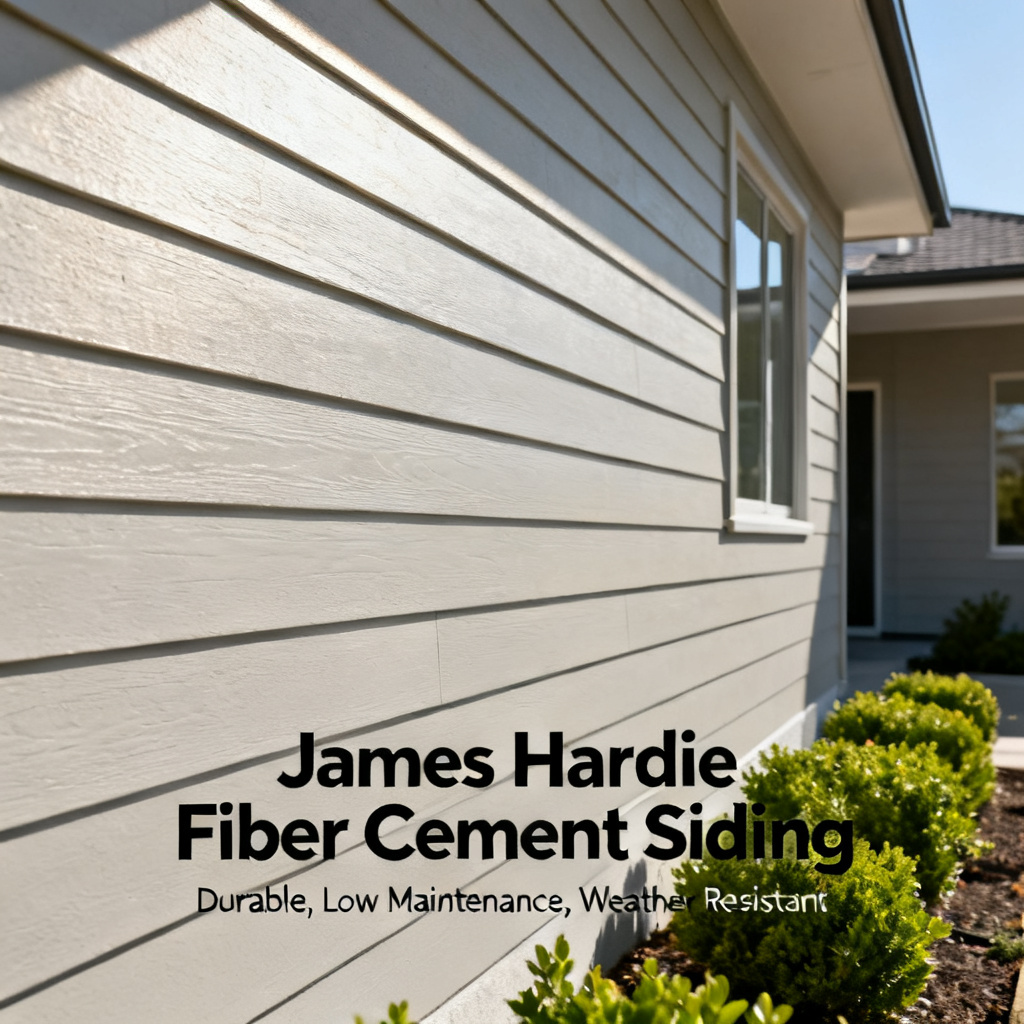
James Hardie siding cost Mainline homeowners can expect in 2026 ranges from $10 to $14 per square foot installed in Wynnewood, Narberth, and across the Main Line compared to $6 to $9 per square foot for vinyl. Overall, James Hardie siding cost Main Line projects typically total around $28,000 for a 2,500-square-foot home versus roughly $17,500 for vinyl. The premium delivers 30 to 50+ years of service life vs. vinyl’s 20 to 25 years, along with better freeze-thaw performance, fire resistance, and a higher-end appearance that holds value in this market.
If you have been comparing siding quotes and wondering whether the premium for James Hardie over vinyl is justified, and how the James Hardie siding cost that Mainline homeowners pay impacts long-term value. This post gives you a clear, data-backed answer, including where vinyl actually wins. If you are still early in your research, our guide on fiber cement siding vs. vinyl siding and our re-siding planning checklist will help you evaluate the bigger picture before making a final decision.
Thinking About James Hardie Siding But Unsure if It’s Worth the Investment?
Before you spend thousands on new siding, make sure you are choosing the right material for your home and budget. Our experts will compare James Hardie vs. vinyl siding, explain the real installation costs, expected lifespan, warranty benefits, and whether fiber cement is the best long-term investment for your Main Line home.
Call Hynes Construction today at 610-896-6388 for your FREE siding consultation and detailed written estimate.
What James Hardie Fiber Cement Siding Is and Why It Dominates This Category
Fiber cement is a composite building material made from Portland cement, silica sand, and cellulose fiber. These components are combined under high pressure and heat into boards and panels that are dimensionally stable, non-combustible, and not affected by moisture, wood-boring insects, or the freeze-thaw cycling that degrades wood siding.
James Hardie pioneered the commercial fiber cement market in the 1980s and now holds approximately 90 percent of it. The term ‘HardieBoard’ has become generic in the same way ‘Kleenex’ refers to any facial tissue. Not all fiber cement is manufactured by James Hardie, and quality varies significantly. When contractors in Wynnewood and Narberth quote fiber cement, ask specifically which manufacturer.
James Hardie manufactures in regional plants and produces formulations calibrated to local climates through their HardieZone technology. Products destined for the Northeast are engineered for freeze-thaw conditions, which is directly relevant to Wynnewood and Narberth, where Pennsylvania’s 50 to 70 annual freeze-thaw cycles place specific demands on exterior cladding. For a broader look at how freeze-thaw cycling damages exterior building materials, see our post on how freeze-thaw cycles expose hidden failures in Pennsylvania homes.
James Hardie vs. Vinyl Siding on the Main Line: The Honest Comparison
Cost
Vinyl wins on installed cost. There’s no arguing this. For a 2,500-square-foot Wynnewood Colonial, vinyl at $6 to $9 per square foot installed runs approximately $17,500. James Hardie, at $10 to $14 per square foot installed, runs approximately $28,000. That’s a $10,500 gap on a comparable home. For a detailed breakdown of what drives siding replacement costs on the Main Line, see our spring siding repair cost guide for Main Line PA homeowners.
What changes the calculation is the lifecycle horizon. Vinyl typically requires full replacement at 20 to 25 years. James Hardie fiber cement is documented to last 30 to 50-plus years with the same application. At the 30-year mark, the Narberth home with vinyl siding is on its second installation. The home with Hardie is not.
The return on investment numbers tell a similar story: James Hardie siding in Pennsylvania recoups approximately 85 percent of the installed cost at resale. Vinyl recoups approximately 65 percent. On a $28,000 Hardie project, that’s roughly $23,800 in documented value at sale. On a $17,500 vinyl project, approximately $11,400. The Hardie installation adds about $12,000 more in net resale value against its higher cost.
Freeze-Thaw Performance
This is where the performance gap between fiber cement and vinyl is most visible in Pennsylvania’s climate. Vinyl expands and contracts significantly with temperature changes, far more than fiber cement. Over 50 to 70 annual freeze-thaw cycles, this movement stresses joints, fasteners, and trim pieces. Vinyl installed in 2005 on a Wynnewood home often shows the consequences clearly by 2025: buckling at seams, joint separation at corners, and brittleness from UV degradation that makes cold-weather impact cracking more likely. Our post-winter siding inspection guide covers exactly what to look for when assessing this kind of degradation on your current siding.
James Hardie fiber cement has a significantly lower thermal expansion coefficient than vinyl and is not subject to the brittleness that develops in aging vinyl. It doesn’t warp, crack from freeze-thaw movement, or degrade from UV exposure in the way vinyl does over 20-plus years in Pennsylvania conditions.
Fire Resistance
James Hardie fiber cement is non-combustible. It meets the ASTM E136 non-combustibility standard and does not ignite, melt, or contribute to flame spread. Vinyl is combustible and can melt or ignite in a fire event. For attached homes common in Narberth’s older neighborhoods, non-combustible siding is a material safety advantage.
Pest Resistance
The cellulose fiber in James Hardie siding is bound in a cement matrix, making it inorganic from a pest perspective. Carpenter bees, woodpeckers, and termites that damage wood siding find no material to exploit in fiber cement. Vinyl is also pest-resistant, so this is not a differentiator between the two, but it does differentiate both from wood siding, which remains a common comparison point on Main Line properties with historic character requirements.
Appearance and Architectural Compatibility
Wynnewood and Narberth are communities with substantial pre-war and mid-century housing stock, and buyer and appraiser expectations in these neighborhoods include exterior materials that read as quality. James Hardie fiber cement is available in profiles that authentically replicate cedar lap siding, cedar shingles, board and batten, and more. The surface texture and visual weight of HardiePlank are noticeably different from vinyl at close inspection, and in Main Line appraisal comparisons, that difference is visible in the results. Our overview of siding material options for Main Line homes covers how these profiles compare in context with the region’s housing stock.
James Hardie’s ColorPlus Technology, available on most product lines, is a factory-applied finish baked onto the fiber cement under controlled conditions. It comes with a 15-year color warranty covering both the finish and the labor to reapply if failure occurs. This eliminates the first repainting cycle and reduces the first 15 years of ownership to essentially zero maintenance on the siding surface.
James Hardie Product Lines: What’s Specified Most Often in Wynnewood and Narberth
HardiePlank Lap Siding
The most specified James Hardie product on the Main Line. HardiePlank is available in multiple widths (typically 5.25 to 8.25 inch exposure) and two primary textures: Cedarmill, which replicates the grain of cedar siding, and Smooth. For Wynnewood and Narberth Colonials and Tudors, Cedarmill is most architecturally consistent. Available with ColorPlus factory finish or in primed form for field painting.
HardieShingle Siding
Individual fiber cement shingles that replicate the appearance of cedar shake. Common on Craftsman bungalows and properties with historic design guidelines that require the shingle profile. HardieShingle is approved by many historic review boards as an appropriate alternative to wood shingles, including for properties in communities with preservation requirements.
HardiePanel Vertical Siding
Board and batten profile for contemporary and farmhouse-style homes. Less common in Wynnewood’s and Narberth’s older neighborhoods, but specified frequently on newer construction in Wayne and Devon.
How Pennsylvania’s Building Code Treats Fiber Cement vs. Vinyl
Pennsylvania follows the International Residential Code (IRC) with state amendments, and the code treatment of exterior cladding materials has direct implications for product selection, especially on Main Line properties where attached homes, historic designations, and mixed-use zoning create layered regulatory environments. For permit-related context specific to Main Line jurisdictions, our post on what Main Line homeowners need to know about permits covers how local townships and boroughs handle residential improvement applications.
Non-Combustibility Classification
Under the IRC and Pennsylvania’s Uniform Construction Code (UCC), exterior wall coverings are classified by combustibility. James Hardie fiber cement carries a non-combustible designation under ASTM E136, which matters specifically in two situations common on the Main Line: homes on properties with reduced setbacks from neighboring structures and attached or semi-detached dwellings where fire spread between units is a code concern. In these contexts, a non-combustible cladding can satisfy code provisions that vinyl cannot.
Vinyl siding is classified as a combustible material under building code and in some municipality-specific overlay codes, particularly older borough codes that Narberth and other incorporated Main Line communities maintain independently alongside the UCC. If your project involves a zoning variance, a historic board approval, or an addition that changes the structure’s fire separation requirements, material combustibility affects your permit path.
Wind Resistance and Fastening Requirements
Pennsylvania’s Uniform Construction Code specifies fastening requirements for exterior cladding based on wind exposure zone. While most of the Main Line falls in a relatively moderate wind zone compared to coastal areas, James Hardie’s installation specifications require stainless steel or hot-dipped galvanized fasteners that exceed minimum code requirements. This over-engineered fastening pattern isn’t incidental. It’s part of what James Hardie’s 30-year warranty requires, and it results in an installation that holds better in high-wind events than a code-minimum vinyl installation.
Historic District and Borough Overlay Codes
Wynnewood is an unincorporated community within Lower Merion Township, while Narberth is a self-governing borough. This distinction matters because Narberth Borough enforces its own property maintenance code alongside the state UCC, and some exterior alterations require a zoning certificate or building permit, whereas Lower Merion handles similar work administratively. Both jurisdictions have reviewed and accepted James Hardie fiber cement as a compliant replacement for wood cladding. The HardiePlank Cedarmill profile, in particular, has been accepted in documentation submitted to the Lower Merion Historical Commission for properties under advisory review.
| Note for permit applicants: Always confirm the current code interpretation with your local building office before project commencement. Permit requirements for siding replacement vary by jurisdiction and scope of work. Hynes Construction manages permit applications as part of full project scopes. |
What ‘Certified James Hardie Installer’ Means and Why It Matters in This Market
James Hardie has a preferred and elite installer program that requires contractors to complete specific installation training. This matters because fiber cement installation is meaningfully different from vinyl installation. Fiber cement weighs approximately 300 pounds per 100 square feet (vs. 60 to 70 pounds for vinyl), requires diamond-blade cutting (dry-cutting generates silica dust requiring respiratory protection), and needs specific fastening patterns to maintain warranty compliance. Before signing with any siding contractor, our guide on questions to ask your siding contractor before signing identifies the specific vetting questions that separate certified installers from general siding crews.
Improper installation of James Hardie siding voids the manufacturer’s warranty. This is not theoretical: water infiltration at improperly detailed joints, paint adhesion failures from improper primer application, and fastener corrosion from using non-compatible hardware are all documented failure modes that occur when fiber cement is installed by crews trained on vinyl. See also our detailed look at the benefits of hiring a professional contractor for siding installation and the most common mistakes to avoid when hiring a siding contractor.
Hynes Construction is a certified James Hardie installer. When we spec Hardie for a Wynnewood or Narberth home, we install it per the manufacturer’s specifications and register the warranty on your behalf. See our fiber cement siding page for full details on what certified installation includes.
The Trim Question: Why AZEK and Hardie Trim Work Together
One of the most common specification questions on Main Line Hardie projects is what to use for exterior trim: fascia boards, corner boards, window surrounds, and frieze boards. James Hardie makes its own trim product, HardieTrim, but a significant portion of certified installers, including Hynes Construction, spec AZEK PVC trim alongside HardiePlank siding for most applications. Here’s the honest breakdown of why.
HardieTrim: What It Is
HardieTrim is fiber cement trim manufactured by James Hardie, available in smooth and textured profiles. It’s primed and field-painted, dimensionally stable, and compatible with HardiePlank in terms of fastening and joint treatment. HardieTrim carries James Hardie warranty coverage and is a straightforward same-manufacturer specification.
AZEK PVC Trim: Why It Gets Specified
AZEK cellular PVC trim is the most commonly specified trim alternative to HardieTrim on Main Line fiber cement projects, and it’s not an arbitrary preference. AZEK trim is fully cellular PVC; it contains no wood fiber, no cellulose, and no cementitious material. This means it cannot absorb moisture under any condition, eliminating the primary failure mode of wood trim (rot at end grain, joints, and penetrations) and the secondary failure mode of fiber cement trim (moisture absorption at improperly sealed cuts and end grain in high-exposure locations like windowsills).
At corner boards, window surrounds, and horizontal trim runs, the locations most exposed to driving rain and ice damming on Pennsylvania homes, AZEK’s zero moisture absorption is a material advantage over both HardieTrim and painted wood. AZEK is paintable, holds paint well when properly prepped, and is available in profiles that match standard architectural details on Colonial, Tudor, and Craftsman homes in Wynnewood and Narberth.
The Compatibility Case for Pairing Both
James Hardie fiber cement and AZEK PVC trim are designed around different material properties, but they are fully compatible in a correctly detailed installation. The joint between Hardie siding and AZEK trim is managed with compatible caulking (James Hardie specifies paintable elastomeric caulk at all trim-to-siding joints), and the color match between a factory ColorPlus Hardie field and a painted AZEK trim board is straightforward to achieve.
The practical specification that most Main Line certified installers land on: HardiePlank for field siding (where the ColorPlus factory finish delivers the maintenance advantage), AZEK for all trim elements in high-moisture-exposure positions, and HardieTrim where profiles or architectural details aren’t available in AZEK. This is not a cost-cutting specification—AZEK trim is comparable in price to HardieTrim. It’s a durability-first decision on the elements most likely to fail first on a 30-year installation.
| Trim specification note: Ask your installer to identify specifically what trim product is included in the quote and why. Trim material selection affects both the long-term maintenance profile and the warranty coverage of individual components. |
James Hardie Warranty: What the 30-Year Non-Prorated Coverage Actually Covers
James Hardie’s 30-year non-prorated limited warranty is a significant differentiator from vinyl, which typically carries 20 to 25-year limited warranties that are often prorated, meaning coverage decreases annually as the product ages. Understanding exactly what the Hardie warranty covers is essential for homeowners making a long-term investment decision. For a broader look at how manufacturer warranties work in the context of Main Line home improvement projects, our post on roofing warranties explained for Greater Philadelphia homeowners covers the same prorated vs. non-prorated distinction in the roofing context.
What the 30-Year Structural Warranty Covers
The James Hardie 30-year non-prorated limited warranty covers the fiber cement substrate against defects in materials and manufacturing workmanship. Specifically, it covers:
- Cracking, breaking, rotting, and delaminating of the fiber cement substrate due to manufacturing defects
- Fungal decay and damage from wood-boring insects (the material itself, not consequential property damage)
- Structural performance: the board maintains its dimensional stability and structural integrity under normal conditions
“Non-prorated” means that if a covered defect is identified in year 28 of the warranty period, James Hardie’s obligation is the same as it would be in year 2, full replacement of defective material. This is meaningfully different from prorated warranties, which scale coverage down each year.
What the ColorPlus Finish Warranty Covers
ColorPlus factory finish carries a separate 15-year limited warranty covering the paint system applied at the manufacturing facility. This warranty specifically covers:
- Peeling, cracking, and chipping of the factory-applied finish
- Fading beyond the stated tolerance levels under normal weathering
- Labor costs to reapply the finish if a covered failure is verified. This is the most significant practical element of the ColorPlus warranty and is not standard in competitor product warranties
Field-painted James Hardie (primed boards painted on-site) does not carry a factory finish warranty. The paint contractor’s warranty applies instead.
What the Warranty Does Not Cover
Reading the exclusions is essential. The James Hardie warranty does not cover:
- Damage resulting from improper installation. This is the most common basis for warranty claim denial, and it reinforces the case for using a certified installer who installs per James Hardie’s published installation specifications
- Consequential damages (damage to other property caused by a product failure)
- Color changes or fading on field-painted installations (only ColorPlus is covered for finish)
- Damage from acts of nature beyond normal weathering: hail impact, flooding, fire, hurricane-force wind
- Normal wear, chalking, and minor surface oxidation within stated tolerance levels
How Warranty Registration Works
The James Hardie warranty is not automatically active. It requires registration within a specified period after installation. Certified installers register the warranty on the homeowner’s behalf as part of the installation process. Hynes Construction registers all Hardie projects with the manufacturer at project completion and provides the homeowner with written confirmation of registration and warranty terms. An unregistered installation may still have warranty claims evaluated by James Hardie, but registered installations have a clear, documented record that simplifies the claims process if it’s ever needed.
Not Sure If Your Home Is Ready for James Hardie Siding? Let Our Experts Evaluate It First.
The success of a James Hardie siding project depends on much more than the siding itself. Hidden moisture damage, deteriorated sheathing, improper flashing, or previous stucco issues can all affect your installation and warranty. Our experienced team will inspect your home’s exterior, identify any underlying concerns, explain your siding options, and provide honest recommendations before any work begins.
Call Hynes Construction today at 610-896-6388 to schedule your FREE siding evaluation and estimate.
James Hardie Siding After Stucco Remediation on the Main Line
One of the most common applications for James Hardie siding in Wynnewood and Narberth is as the replacement cladding after EIFS stucco remediation. Many Main Line homes from the 1985 to 2005 era have EIFS (synthetic stucco) that is now 20 to 40 years old and experiencing moisture failures. For a full explanation of what EIFS failure looks like and how it’s assessed, see our guide to EIFS stucco remediation on the Main Line and our overview of stucco repair vs. stucco remediation — what’s best for your home.
After EIFS removal and underlying damage repair, homeowners need a cladding replacement that will not create the same moisture management problems. James Hardie fiber cement, installed over a proper water-resistive barrier with correctly flashed windows and penetrations, drains, and dries appropriately. It doesn’t trap moisture the way EIFS can when flashings fail. For Wynnewood and Narberth homeowners dealing with stucco issues, Hardie is consistently the replacement of choice. Our post on stylish alternatives when replacing stucco with siding covers the full range of cladding options considered after remediation, with Hardie as the primary recommendation.
For the full details on how remediation and Hardie replacement work together as a combined project, see our stucco remediation vs. siding replacement guide for Main Line homeowners.
Energy Efficiency and Hardie Siding: What Homeowners Need to Know
Energy efficiency is a frequent question in Hardie vs. vinyl conversations on the Main Line, and the honest answer is more nuanced than marketing materials from either side tend to suggest. For a broader context on whole-home energy performance, our post on maximizing energy efficiency through proper insulation covers the wall assembly and attic insulation decisions that have the highest measurable impact.
Siding Material Alone Does Not Add Meaningful Insulation
Neither James Hardie fiber cement nor vinyl siding provides meaningful thermal insulation value on its own. HardiePlank’s R-value is approximately 0.37 per inch, and vinyl siding’s R-value is similarly low; both are negligible compared to the R-13 to R-21 insulation typically in a Pennsylvania home’s wall cavity. The choice between Hardie and vinyl based on the material’s R-value alone is not a meaningful energy decision.
Where the Energy Efficiency Decision Actually Lives: Insulated Sheathing
The real energy efficiency opportunity during a siding project is not in the cladding material itself. It’s in what goes behind it. A siding replacement project is one of the few times in a home’s lifecycle when the exterior wall assembly is accessible and insulated sheathing can be added or upgraded cost-effectively. Adding 1-inch rigid foam insulation board (R-5 to R-6) behind new siding during a full replacement project can measurably reduce thermal bridging through wall studs and improve whole-wall R-value.
James Hardie siding is fully compatible with insulated sheathing installations. The fastening specifications account for the additional substrate depth, and the installation sequence for fiber cement over rigid foam is well-documented in James Hardie’s technical literature. Vinyl is also compatible with insulated sheathing, but the heavier weight of fiber cement creates a more stable installation over thicker foam without the flex concerns that can affect vinyl over soft substrates.
Air Sealing at the WRB Layer
The water-resistive barrier (WRB) installed behind fiber cement siding, as required per James Hardie’s specifications, also serves as the air barrier layer in the wall assembly. A properly installed WRB with lapped seams, taped penetrations, and flashed windows reduces air infiltration, which is the primary driver of energy loss in older Main Line homes. The certified installation standard for Hardie requires correct WRB detailing in a way that a basic vinyl installation does not mandate to the same degree.
For Wynnewood and Narberth homes from the 1930s to the 1970s. The core vintage in these neighborhoods, the WRB installation during a Hardie siding project, is often the first continuous air barrier the home has ever had. The energy improvement from correct air sealing alone on these homes can exceed what any amount of insulation added to an unsealed wall would provide. Our post on winterizing your home’s exterior envelope covers the full set of air sealing decisions at the siding, stucco, and window seal layer.
The Practical Energy Advice for Main Line Homeowners
If energy efficiency is a meaningful goal for your siding project, the order of priority is the following:
(1) air sealing at the WRB layer during installation,
(2) insulated sheathing if the project budget and wall thickness allow for it, and
(3) cladding material choice, which is the least impactful of the three.
A correctly installed James Hardie project with proper WRB detailing will outperform an equivalent vinyl project from an air sealing standpoint, but the bigger gains are in the assembly choices behind the cladding.
| Energy note: Ask your installer whether the WRB installation includes taped seams and properly flashed window and door penetrations. These details cost little additional labor but have the most meaningful impact on air sealing performance. |
Is James Hardie the Right Choice for Your Wynnewood or Narberth Home?
James Hardie makes the most sense when you plan to stay in the home for 15 or more years, when the architectural character of your home is a priority in an appraisal-sensitive market, when fire resistance matters (attached homes, homes near wooded areas), when you are replacing after stucco remediation and want a proven moisture-management system, or when you are preparing for a sale and want the highest ROI exterior improvement.
Vinyl makes more sense when the budget is the primary constraint and the immediate cost difference outweighs long-term lifecycle considerations, when the home will be sold within 10 years before the replacement cycle, the difference between materials is relevant, or when the home’s price point and neighborhood comps do not reward a premium siding investment.
For most Wynnewood and Narberth homeowners in the $500,000 to $1,200,000 home value range, James Hardie is the stronger investment on both lifecycle economics and market positioning. Contact Hynes Construction for a free written estimate for your specific property. Also see our complete overview of siding your home and our guide on what is the best time of year for siding replacement in Pennsylvania if you are planning your project timeline.
The Installation Timeline: What Wynnewood and Narberth Homeowners Should Plan For
Understanding the full project timeline from first contact to final walkthrough helps Main Line homeowners plan around a siding project without surprises. James Hardie installation takes longer than vinyl at every stage, and the reasons are material, not contractor efficiency. Our guide on important questions to ask your siding contractor includes timeline and scheduling questions worth raising during the estimate process.
Phase 1: Estimate and Scope (1 to 2 Weeks)
A certified Hardie installation starts with a written scope document, not just a price per square foot. The scope covers: existing siding removal method, WRB specification and brand, substrate inspection protocol, trim material specification (HardieTrim vs. AZEK), ColorPlus color selection, window and door flashing detail, fastener specification, and warranty registration process. This is meaningfully more detailed than a vinyl siding estimate, and it should take more than one site visit for a thorough project.
For Wynnewood and Narberth homes with architectural complexity, multiple-story changes, masonry integration, dormers, or historic detail requirements, expect the estimate process to take two to three weeks and involve measurement confirmation and architectural review.
Phase 2: Material Lead Time (2 to 6 Weeks)
James Hardie is not a stocked product at standard lumber yards. ColorPlus orders are factory-specific and typically require 3 to 6 weeks’ lead time from order placement to delivery. Primed fiber cement (field-painted specification) has better regional availability but still requires ordering in project-specific quantities with a 1 to 3 week lead time. AZEK trim products are generally available within 1 to 2 weeks from regional distributors. For guidance on timing your project to avoid peak-season delays, our post on the best time of year to replace your siding covers seasonal availability and scheduling factors specific to Pennsylvania.
Phase 3: Active Installation (5 to 12 Working Days)
A 2,000 to 2,500-square-foot Main Line home with a full siding replacement takes a certified Hardie crew 5 to 10 working days under normal conditions. Add 2 to 3 days for projects with the following:
- Three or more stories with scaffolding setup and breakdown
- Significant masonry integration (stone first-floor water table requiring careful flashing)
- Complex roofline geometry (multiple dormers, hip sections, shed dormers)
- Discovery of substrate damage during existing siding removal (common on homes with EIFS history or original wood siding)
The installation sequence for a certified Hardie project runs: existing siding removal and substrate inspection; any necessary substrate repair (sheathing replacement, moisture remediation); WRB installation; trim installation (corner boards, window surrounds, frieze); HardiePlank field installation starting at the bottom course; caulking at all joints and penetrations; final inspection; and warranty registration. Each stage has hold points—caulking is not applied until field installation is complete on a section, not piecemeal during installation.
Phase 4: Post-Installation (1 to 3 Days)
After active installation, touch-up caulking and paint are applied on field-painted projects. ColorPlus projects still require caulk touch-up at all trim-to-siding joints. Final cleanup, debris removal, and site restoration typically take one additional crew day. Warranty registration is completed by the installer within the project close-out period. Hynes Construction provides written confirmation of registration with the project completion documentation.
Weather Considerations in Pennsylvania
James Hardie fiber cement can be installed in a wider range of weather conditions than vinyl. It does not become brittle in cold temperatures the way vinyl can. However, certified installation does require temperature minimums for caulk application (most joint compounds require a minimum of 40 degrees Fahrenheit for application and cure), and WRB tape adhesion is affected by cold. In practical terms, Hardie installation in November and early December is feasible on the Main Line; installation during a January cold snap with sustained temperatures below freezing is not advisable.
Spring and fall remain the preferred installation seasons on the Main Line, not because the material requires it, but because mild temperatures support better caulk curing, paint adhesion on field-painted work, and more consistent crew scheduling.
| Planning tip: If you’re targeting a specific completion date, particularly for a home sale, back-plan from that date using the phase timeline above. A May closing date for a project requiring ColorPlus materials realistically means initiating the project in February to account for material lead times and spring crew scheduling. |
Frequently Asked Questions: James Hardie Siding in Wynnewood, Narberth, and the Main Line
Q: How much does James Hardie siding cost in Wynnewood, PA, in 2026?
For a typical Wynnewood home with 2,000 to 2,500 square feet of siding surface, James Hardie HardiePlank installed with a ColorPlus finish runs approximately $24,000 to $35,000 in 2026. The installed cost is $10 to $14 per square foot, depending on story height, existing siding removal complexity, trim detail, and ColorPlus vs. primed specification. Story height and architectural complexity increase cost. See our full siding cost guide for Main Line homeowners for a detailed breakdown of what drives pricing on these projects.
Q: How does James Hardie fiber cement compare to vinyl for a Narberth Colonial?
On a Narberth Colonial, James Hardie’s HardiePlank Cedarmill profile is architecturally more appropriate, more durable in Pennsylvania’s freeze-thaw climate, and offers a higher resale ROI. Vinyl costs roughly $10,000 to $15,000 less upfront on a typical home but typically requires replacement at 20 to 25 years, while Hardie does not. For homeowners planning to stay 15-plus years or in a market where siding appearance affects appraisal comparisons, Hardie is the more defensible investment. Read our full fiber cement vs. vinyl siding comparison for a deeper side-by-side analysis.
Q: What is the difference between HardiePlank and vinyl siding?
HardiePlank is a fiber-cement composite of Portland cement, silica sand, and cellulose fiber. Vinyl is polyvinyl chloride. Key differences: HardiePlank is noncombustible; vinyl is combustible. HardiePlank has lower thermal expansion, so it handles freeze-thaw cycling better. Vinyl costs less upfront. HardiePlank lasts 30-plus years with minimal maintenance; vinyl typically lasts 20 to 25 years. HardiePlank recoups approximately 85 percent of cost at resale versus vinyl’s 65 percent.
Q: Does James Hardie siding require painting, and how often?
James Hardie, with a ColorPlus factory-applied finish, carries a 15-year color warranty covering both the finish and the labor to reapply if failure occurs. No painting is needed for at least 15 years. After 15 years, Hardie can be repainted like any other paintable surface, at a typical cost of $3,000 to $6,000 for an average Main Line home. Field-painted Hardie (primed boards painted on-site) should be repainted every 7 to 10 years.
Q: Is James Hardie siding approved for historic homes in Narberth and Wynnewood?
Many historic review boards in the Philadelphia area have approved James Hardie fiber cement as an appropriate alternative to original wood siding, particularly HardiePlank Cedarmill and HardieShingle profiles. Approval depends on the specific historic district and the profiles specified. Narberth Borough does not have formal historic district overlay zoning covering most residential properties, but neighborhood character guidelines influence what local appraisers consider appropriate. HardiePlank Cedarmill in appropriate profiles generally satisfies these expectations.
Q: How long does James Hardie siding installation take on a Wynnewood or Narberth home?
A typical 2,000 to 2,500-square-foot Main Line home takes 5 to 10 working days for a certified installation crew. Fiber cement is heavier than vinyl (300 lbs per square vs. 60-70 lbs) and requires specific cutting equipment, so installation takes longer than vinyl. Projects with significant trim work, multiple-story changes, or stone masonry integration require additional time. Factor in 2 to 6 weeks for material lead time on ColorPlus orders before the installation window begins.
Q: Can James Hardie siding be installed over existing siding?
James Hardie recommends removing existing siding for the best results. Removal allows inspection for hidden moisture damage and proper water-resistive barrier installation, and ensures a flat surface for fiber cement. Installing over existing siding can trap moisture, create an uneven surface visible in the finished result, and void the manufacturer’s warranty. For Main Line homes where siding condition is likely to affect underlying sheathing, removal and inspection are particularly important. Our guide on siding repair vs. siding replacement covers when removal and full replacement is clearly the right call vs. targeted repair.
Q: What is James Hardie ColorPlus Technology?
ColorPlus is James Hardie’s factory-applied finish system, where color is applied in a controlled manufacturing environment and baked onto the fiber cement substrate. It comes with a 15-year finish warranty covering both the color and the labor for reapplication. ColorPlus eliminates the need for field painting at installation, provides a more consistent color application than field painting, and is the specification that removes all maintenance from the siding surface for the first 15 years of ownership.
Q: What makes Hynes Construction a qualified James Hardie installer on the Main Line?
Hynes Construction is a certified James Hardie installer with 50-plus years of experience working on Main Line properties in Wynnewood, Narberth, Ardmore, Bryn Mawr, and surrounding communities. Certified installers complete James Hardie’s specific training program covering material handling, fastening specifications, joint detailing, and warranty compliance. We register your warranty with James Hardie at project completion. For more on what to look for when evaluating any siding contractor, see our guide on important questions to ask your siding contractor.
Q: Does Hynes offer financing for James Hardie siding projects?
Yes. Financing options include 0-percent interest plans for qualified homeowners. The premium for James Hardie over vinyl, typically $8,000 to $12,000 on a Main Line home, financed at 0 percent over 36 months, adds approximately $250 to $330 per month. Over the same period, the elimination of repainting costs ($3,000 to $6,000 for field-painted surfaces) and the extended service life before replacement are relevant to the total cost comparison.
Stay updated with more real cost insights and project comparisons like this. Check out our Facebook and Instagram for the latest updates, tips, and real homeowner projects.
Ready to Upgrade Your Main Line Home with James Hardie Siding?
Whether you are replacing aging vinyl, planning a stucco remediation project, or investing in a long-lasting exterior upgrade, Hynes Construction has over 50 years of experience helping Main Line homeowners choose and install the right siding solution. From accurate pricing and certified James Hardie installation to warranty registration and financing options, we will guide you through every step of the project with honest advice and expert craftsmanship.
Call Hynes Construction today at 610-896-6388 for your FREE estimate and discover whether James Hardie siding is the right investment for your home.

(President, Hynes Roofing and Siding)
With over 35 years experience in the roofing and siding industry, Michelle Hynes has built a business from 2 people into over 45 people and 19 trucks!