Deck Contractors in Main Line, PA
Custom Deck Installation, Repair & Replacement
A professionally built deck extends your living space, improves safety, and adds long-term value to your home. If you are looking for deck contractors in Main Line, PA, choosing a team that understands local building codes, material performance, and Pennsylvania weather conditions is critical. At Hynes Construction, we provide expert deck installation, deck replacement, and deck repair services designed for durability, safety, and long-term performance across Ardmore and the Main Line.
At Hynes Construction, we provide deck installation, deck replacement, and deck repair services throughout Ardmore, the Main Line, Delaware County, Montgomery County, and Chester County. From custom wood decks to low-maintenance composite systems, our experienced team delivers structurally sound, code-compliant decks built to last.
Deck Installation & Repair Services in Ardmore & the Main Line
Homes across the Main Line, including Ardmore, Lower Merion, Bryn Mawr, Villanova, Wayne, and surrounding communities, require decks that balance appearance, safety, and performance.
Our deck contractors understand:
- Local building codes and permit requirements
- Structural load and safety standards
- Material performance in Pennsylvania’s climate
Whether you are planning a new deck, replacing an aging structure, or restoring an existing deck, we tailor every project to your home’s layout, usage needs, and long-term goals.
Our Deck Installation, Repair & Replacement Services
- Custom Deck Installation: New wood, composite, or PVC decks designed for durability and visual appeal
- Deck Replacement: Remove and rebuild unsafe or outdated decks to modern standards
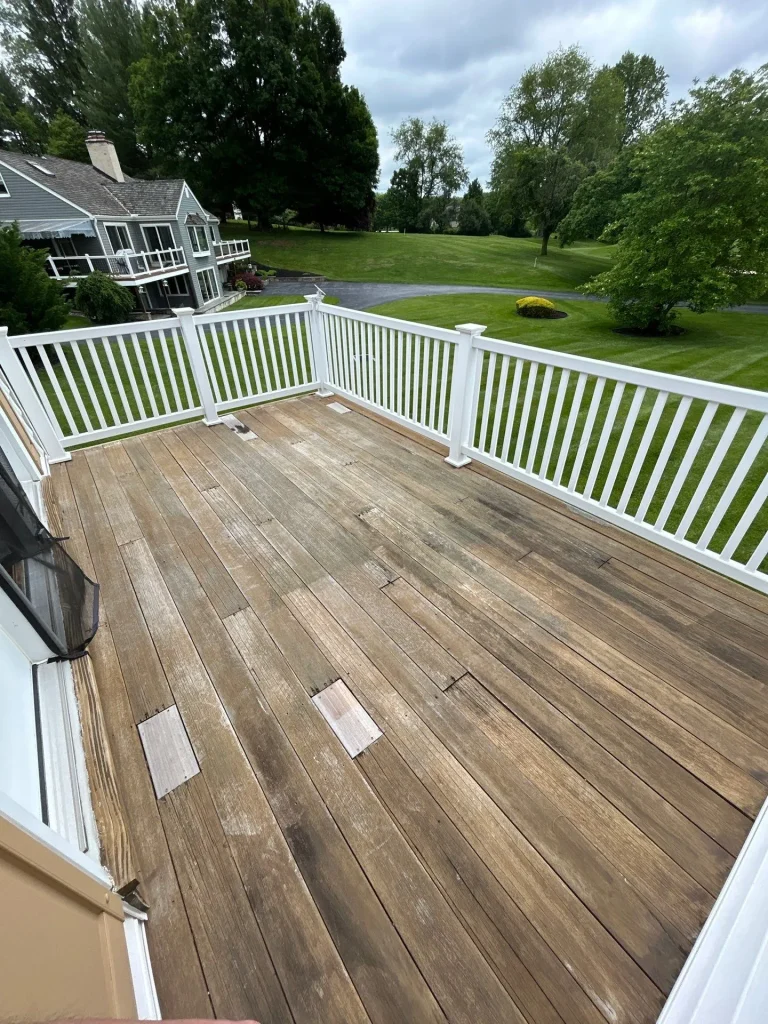
- Deck Repair & Restoration: Structural repairs, board replacement, refinishing, and safety upgrades
- Custom Deck Design: Layouts, railings, stairs, and features tailored to your home
- Weatherproofing & Sealing: Protection against moisture, rot, UV exposure, and seasonal damage
Not sure which option is right for your deck? Our experts provide clear, honest recommendations based on safety and value.
Signs Your Deck Needs Repair or Replacement
Many deck issues are not obvious until safety is compromised. Common warning signs include:
- Loose, warped, or splintering boards
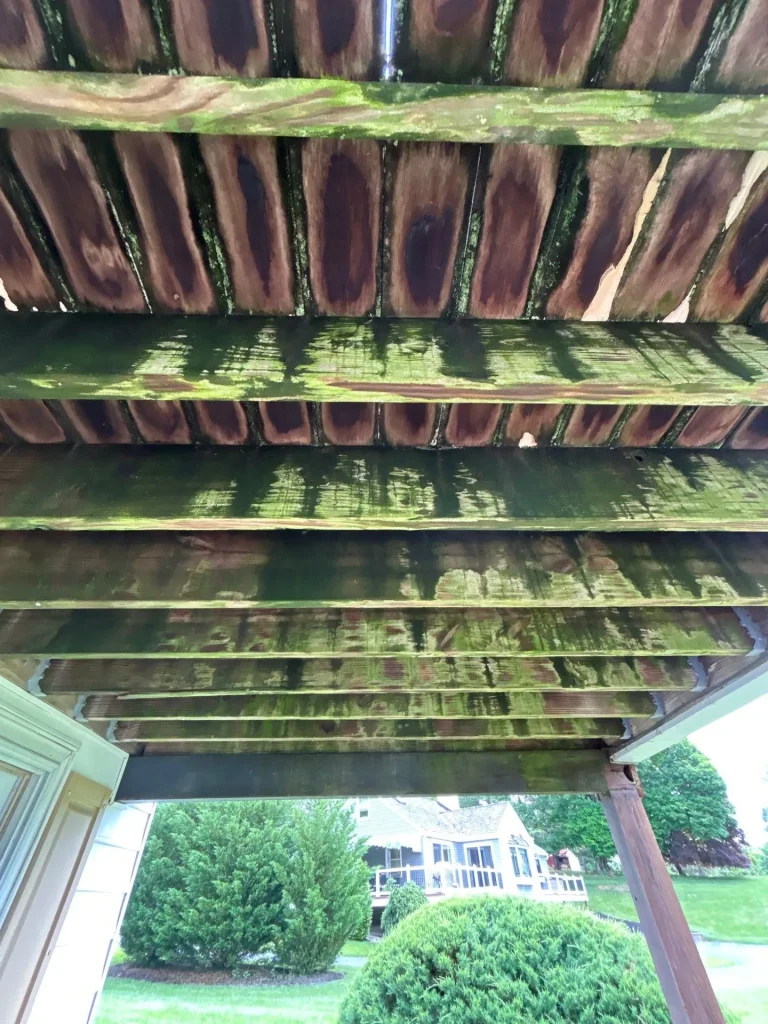
- Soft spots or visible rot
- Rusted or failing fasteners
- Wobbly railings or stairs
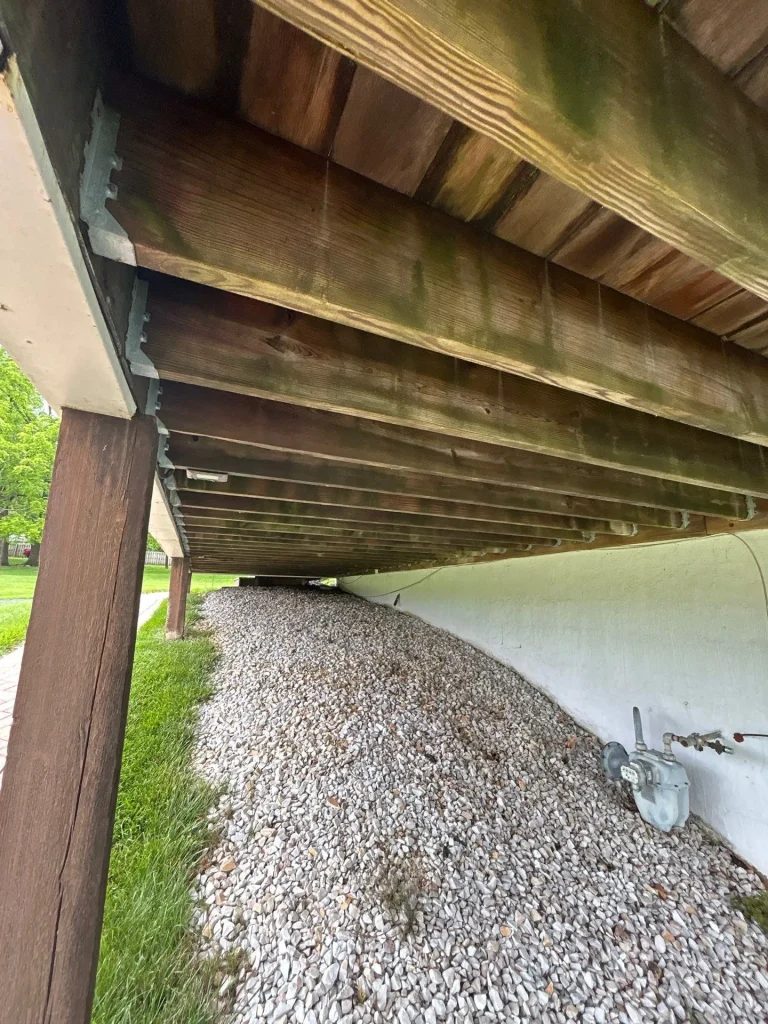
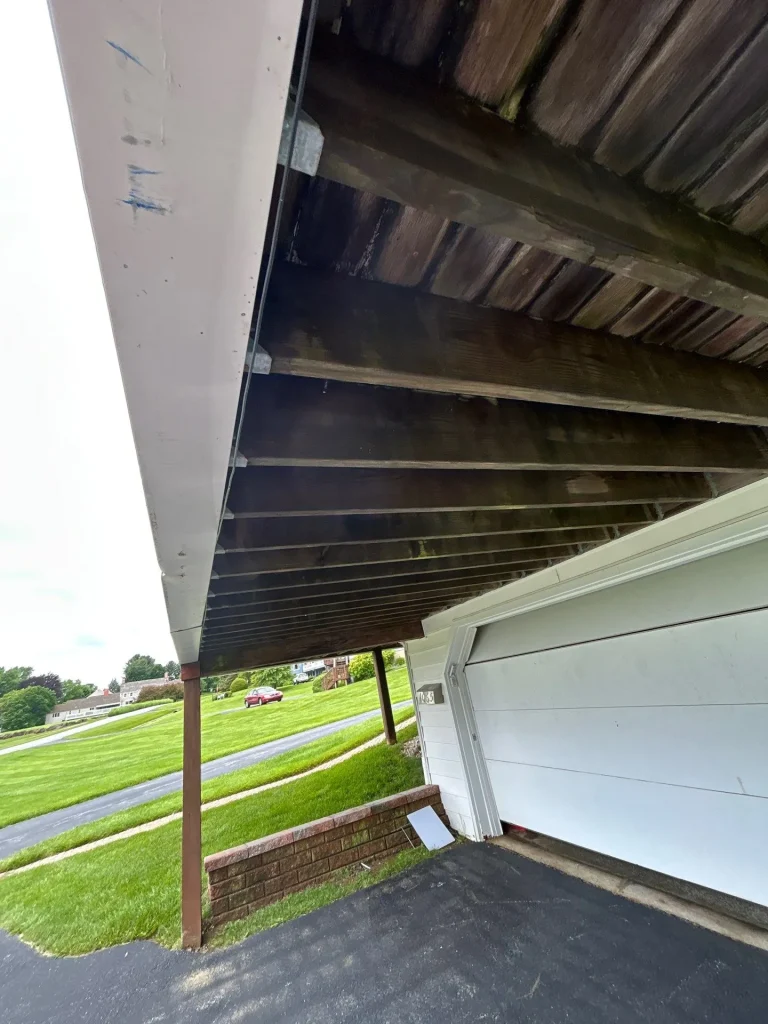
- Sagging structure or poor drainage
- Failing ledger board connections
If structural integrity is compromised, repair alone may not be enough. Our inspections help homeowners determine the safest and most cost-effective solution.
Deck Repair vs Deck Replacement – What’s Right for Your Home?
Choosing between deck repair and full replacement depends on age, damage extent, and material condition.
- Deck repair may be appropriate when damage is localized and the structure is sound.
- Deck replacement is often recommended when framing is compromised, codes are outdated, or long-term durability is a concern.
We evaluate your deck thoroughly and provide honest recommendations based on safety, budget, and long-term value, and not upsells.
Choosing the Right Deck Material for Pennsylvania Homes
Material selection directly impacts maintenance, lifespan, and appearance.
Wood Decking
- Natural appearance
- Requires sealing & maintenance
Composite Decking
- Low maintenance
- Resistant to rot, moisture, and insects
- Ideal for PA weather conditions
PVC Decking
- Maximum durability
- Excellent moisture resistance
We help homeowners select materials based on usage, exposure, and long-term goals.
Get Up to $1,000 OFF Your Custom Deck Build
Discount applies to qualifying projects. Terms & conditions apply. Transform your backyard with custom built deck designed for beauty, durability, and outdoor enjoyment.
Why Homeowners Trust Hynes Construction for Deck Projects?
Deck construction requires precise structural planning, code compliance, and material expertise. Homeowners across the Main Line trust Hynes Construction because we approach every deck project with safety, craftsmanship, and long-term performance in mind.
- Licensed & Insured Professionals
- Experienced in Residential & Commercial Decking
- Premium, Weather-Resistant Materials
- Custom Designs Aligned With Home Architecture
- On-Time, On-Budget Execution
- Eco-Conscious Material Options Available
Do you want to check our other services related to home improvement? You can explore our other services like -
Deck Installations & Restorations – See Our Certifications & Affiliations!
Our certifications and industry affiliations reflect our commitment to safety, professionalism, and industry best practices. Every deck project is completed by trained professionals who follow current building standards and manufacturer guidelines.
Gallery
Frequently Asked Questions
We offer wood, composite, and PVC decking. Each material has unique benefits related to durability, maintenance, and appearance. We help you choose the best option based on your needs and environment.
Most deck projects take anywhere from several days to a few weeks, depending on size, complexity, and permitting requirements. A clear timeline is provided before construction begins.
Cosmetic tasks may be DIY, but structural issues should always be handled by a professional to ensure safety and code compliance.
Composite decking resists rot, warping, and fading, requires minimal maintenance, and performs well in Pennsylvania’s climate.
Regular cleaning and periodic sealing (for wood decks) help preserve appearance and structure. We also offer maintenance and restoration services.
Yes. We are fully licensed and insured, meeting all safety and professional standards.
Yes. We design decks based on your home’s layout, usage needs, and aesthetic preferences.
Restaurants, apartment buildings, offices, and multi-unit properties can all benefit from professionally designed commercial decks built for higher traffic and safety standards.



TESTIMONIALS
-
C
I highly recommend Peter from Hynes Construction. He did work on the flat roof of my house and did a fabulous job. He is a very professional guy, great with follow up, answers your questions and gives great suggestions based on his experience, and Hynes construction is reasonably priced. Services: Power/pressure washing, Roof repair, Roof installation, Window cleaning.
Candance Prvitt
-
C
Krissy helped me and provided a competitive quote for a new roof. After going through with 4 different quotes from other roofing companies, I decided Hynes Construction was the perfect company for the job. The roof looks beautiful and I am happy working with Hynes Team and I would recommend them to anyone doing a roof replacement! Services: Roof inspection, Roof installation, Roof repair
Marlain Tassone
-
B
Hynes Construction did a fantastic job on my roof. Krissy was professional and easy to work with. They completed my large roof in a day. The crew worked very hard and cleaned up every bit of it. I am extremely happy with my decision of choosing Hynes Construction... Thanks a lot for a wonderful job well done. Services: Roof inspection, Roof installation, Skylight installation
Brigid Goon
-
N
They are quick. Handled everything in a proper way. Hynes Team did an amazing job and were very professional and friendly. They did a great job in cleaning. The work quality is fabulous and they offer competitive pricing. Professional and on time, I would definitely recommend Hynes Construction. Service: Window cleaning
Nancy Brown
-
M
Hynes is undoubtedly the best roofing company around! Professional and experts in what they do, they are clear and will guide you in a right way. I had a leak in my kitchen which another company told me I needed to replace the whole roof which I was too scared off. Later I called Hynes Team for second opinion and they were able to repair the roof and save me from spending thousands of dollars! So thankful for their honesty Services: Roof inspection, Storm / wind damage roof repair, Roof repair
Michael Reilly
-
S
Ridge and Peter both were wonderful and easy to work with. They took the time telling me about the work required and they both were very knowledgeable. I am sure Hynes Team and the company really take good care about the people they work with. I would highly recommend Hynes for any Roof replacement projects! Services: Roof inspection, Roof installation, Roof repair
Stantec
-
J
Contacted Hynes Construction for some minor roof repairs. Hynes had someone out in no time and the repairs were done right after, they were really quick and delivered on time as they promised. I would definitely recommend them for your roofing needs! Thanks to Dan for getting our roof repaired and giving us peace of mind Service: Roof repair
Jeffer Punzalan