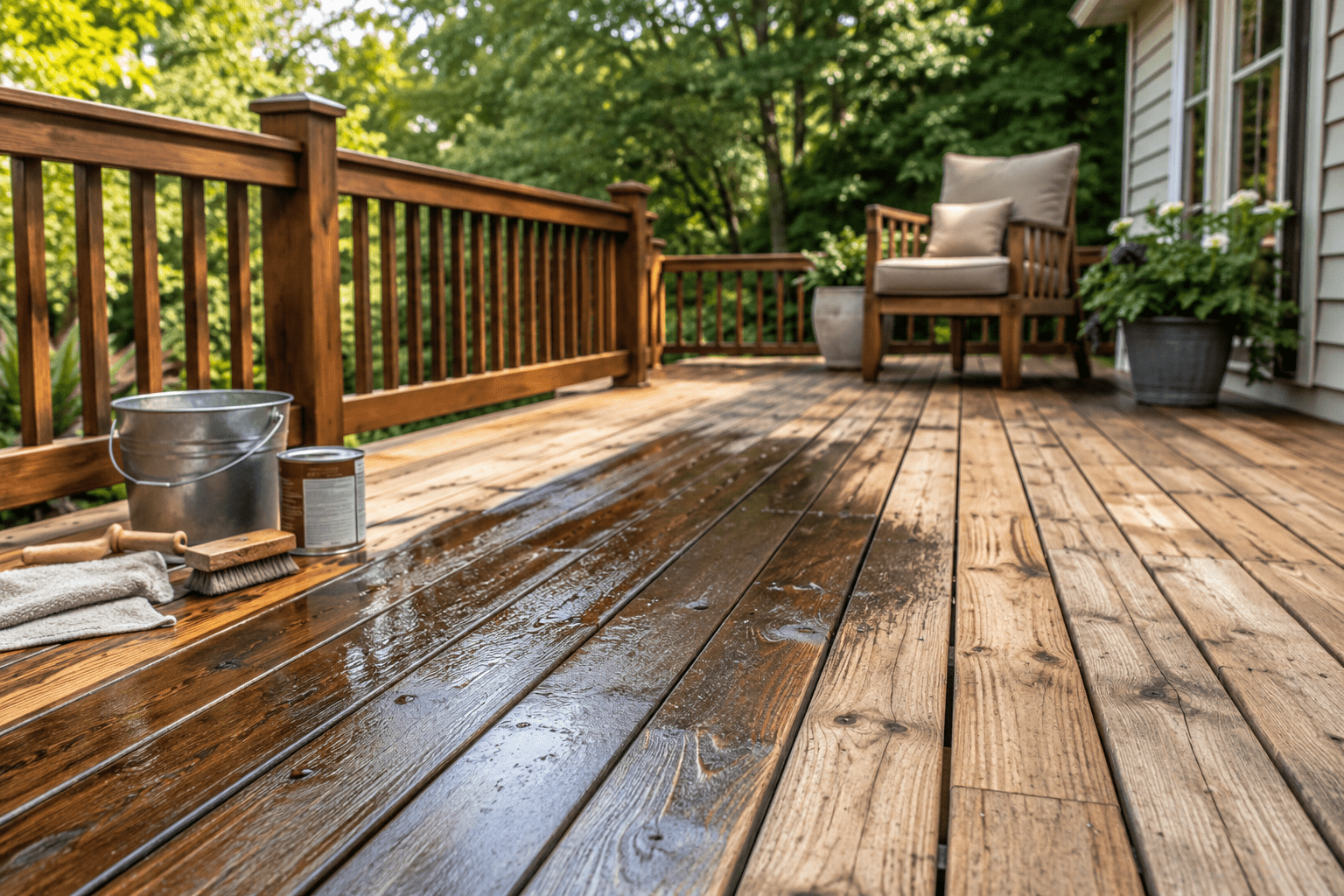
A well-planned approach to deck maintenance Main Line, PA, is essential because decks in this region face more environmental stress than most homeowners realize when they first install them. Pennsylvania’s climate delivers everything a deck can be subjected to: humid summers with afternoon thunderstorms, UV-intense afternoons that bleach and degrade wood surfaces, temperature swings of 60 degrees Fahrenheit or more between seasons, 50 to 70 freeze-thaw cycles per winter, and heavy snow loads followed by prolonged wet conditions in spring. A deck that is maintained consistently through these conditions can last 25 to 40 years, depending on the material. A deck that is neglected often shows significant deterioration within 8 to 10 years.
The good news is that proper deck maintenance does not require extensive time or expertise. It requires knowing what to look for, when to do it, and what products and techniques actually work for the materials your deck is made from. This guide covers the complete maintenance framework for both wood and composite decks on the Main Line, organized by season and by maintenance task.
Is Your Deck Ready for Another Pennsylvania Season?
Before spending money on stains or sealants, make sure your deck is still structurally sound. Our team will inspect the decking, railings, framing, ledger board, and support posts to identify any hidden safety concerns before they become costly repairs.
Schedule your FREE Deck Inspection today or call us directly at (610) 896-6388 to speak with a Hynes Construction deck specialist.
Why Deck Maintenance Matters More on the Main Line
The combination of Pennsylvania’s freeze-thaw cycling and the humid conditions of the Mid-Atlantic creates a specific deterioration pattern for wood decks that accelerates when maintenance is neglected. Water enters wood through end grain, through surface checks that develop with seasonal movement, and through any cracks in protective sealant or stain that are not addressed promptly. Once inside the wood, water drives biological decay. Mold and mildew colonize the surface. Wood-boring insects follow moisture into compromised wood. Structural members that are framed close to the ground accumulate moisture between the joist and the ledger area and begin to soften from the inside.
On composite decks, the risks are different but real. Mold and mildew colonize composite surfaces in shaded and low-air-circulation areas. Stains from tannins, food, and bird droppings can become permanent if not cleaned regularly. Hardware at post bases and joist hanger connections corrodes over time in Pennsylvania’s damp conditions. And like wood decks, the framing beneath a composite surface is still wood and remains vulnerable to the same moisture and decay risks.
For homeowners wondering whether their deck needs maintenance attention right now, our deck water resistance and protection guide and deck safety inspection guide provide the baseline assessment framework.
Spring Deck Maintenance: The Most Important Season
Spring is the highest-priority maintenance window for Main Line decks, and it is the season that most directly determines how your deck will perform through the summer. After a Pennsylvania winter of freeze-thaw cycling, snow loading, and prolonged wet conditions, the deck has been under more stress than at any other point in the year.
Spring Cleaning
Begin with a thorough cleaning as soon as temperatures are consistently above 50 degrees Fahrenheit and rain events are no longer leaving ice on the deck surface. For wood decks, use a deck cleaner appropriate for your wood type, following the manufacturer’s dilution and application instructions. Apply with a stiff-bristled brush or a pump sprayer and rinse thoroughly. For composite decks, use the cleaner recommended or approved by your deck’s manufacturer. For Trex, TimberTech, and AZEK, generic deck cleaners can void warranty coverage if they are not approved products.
Clean between the board gaps to remove leaves, debris, and organic matter that accumulates over winter. Organic debris trapped between boards holds moisture against the board edges and accelerates both wood decay and composite staining. A flat pry bar or stiff brush pulled through the gaps removes this material effectively.
Spring Structural Inspection
Once the deck is clean, conduct a systematic structural inspection before the outdoor season begins:
- Ledger board: Check from below and from the side for any visible separation between the ledger and the house, any soft spots when pressed firmly, or any staining that indicates water infiltration behind the ledger flashing.
- Posts: Check each post at the base, particularly at the grade line, if wooden posts touch or approach the ground. Insert a screwdriver firmly into the wood at the base of the post. Any penetration beyond one-quarter inch indicates soft, deteriorated wood that must be addressed immediately.
- Joists and beams: From below the deck, push upward on joists to confirm they are seated in their hangers. Look for any checking, splitting, or discoloration that indicates moisture infiltration.
- Decking boards: Walk every board, pressing firmly with your foot. Soft or spongy boards have lost structural integrity. Note any boards with deep checks or splits that require replacement.
- Railings: Push each railing section laterally with both hands. Railing should have no perceptible movement. Check post connections at the rim joist and at the base rail.
- Hardware: Check all joist hangers, post bases, and structural hardware for rust, corrosion, or loss of fastener engagement. Corroded joist hangers should be replaced before they fail.
Sealing and Staining Wood Decks
Wood decks on the Main Line require resealing or restaining every two to three years to maintain effective moisture protection. The right timing for resealing is when water no longer beads clearly on the wood surface. If water absorbs into the wood within 30 seconds of contact, the sealant has lost its effectiveness, and reapplication is needed.
Before applying new sealant or stain, the deck must be clean and dry. New sealant over dirty or damp wood will seal in the contaminants and will not bond properly to the wood surface. Sand away any raised grain from the cleaning process before application. Apply sealant with a brush rather than a roller where possible, working it into end grain and board edges, which are the primary water entry points on deck boards.
For older decks that have accumulated multiple coats of incompatible products, stripping back to bare wood before applying a new protective system produces a more durable result than applying a new product over the existing coating. Our guide on how often to treat a wooden deck covers the frequency and process in detail.
Summer Deck Maintenance: Ongoing Care During Peak Use
Regular Cleaning During the Season
Summer use brings grilling residue, food spills, pollen accumulation, and foot traffic that all require regular attention. For wood decks, sweep weekly and wash down as needed with a garden hose. Grilling areas benefit from a mat or pad beneath the grill to catch grease drips that can stain and degrade wood. For composite decks, food and grease spills should be cleaned promptly before they have time to penetrate into the surface texture.
Checking for Mold and Mildew
Shaded areas of the deck, particularly beneath pergolas, under furniture, and in corners where air circulation is low, are prone to mold and mildew growth in summer humidity. Check these areas monthly during the humid months of July and August. Light mold growth on composite decks can be treated with a manufacturer-approved cleaner before it becomes established. Heavy or recurring mold growth on a composite deck often indicates inadequate drainage or air circulation and may require addressing the drainage condition rather than just repeatedly cleaning the surface.
Furniture and Accessory Management
Leaving rubber-backed furniture legs or rubber mats on composite decking for extended periods in summer heat causes staining that can be difficult or impossible to remove. Use deck-specific furniture pads and avoid placing rubber-backed items directly on composite surfaces for weeks at a time. Move planters periodically to prevent staining beneath them and to allow the deck surface beneath to dry.
Fall Deck Maintenance: Preparing for Winter
Fall maintenance prepares the deck for the most damaging season it will face. The tasks completed in October and November determine how much deterioration occurs through the winter months.
Leaf and Debris Clearing
Remove accumulated leaves promptly in the fall. Leaves that sit on deck surfaces over winter hold moisture against the wood or composite, promote biological growth, and can stain surfaces. On wood decks, wet leaves sitting against the wood through multiple freeze-thaw cycles accelerate surface deterioration. Clear both the surface and the spaces between boards.
Furniture and Accessories
Store or cover all deck furniture, planters, and accessories for winter. Furniture left on the deck through Pennsylvania winters takes unnecessary wear, and heavy items can create stress concentrations on deck boards when snow and ice add weight above them.
Drainage Check
Confirm that the deck surface drains properly by running a hose across it. Water should move across the surface and off the edge without pooling in any area. Pooled water on a wood deck will freeze and cause accelerated damage to the board surface. On composite decks, pooled water accelerates surface staining and algae growth in spring. Address any low areas that collect water before winter arrives.
Final Inspection Before First Freeze
Walk the deck one more time before the first hard freeze and address any loose fasteners, split boards, or soft wood that was identified during the year but not yet repaired. Entering winter with known structural deficiencies allows them to deteriorate further through freeze-thaw cycling rather than being corrected while conditions still allow repair work.
Winter Deck Care: What You Should and Should Not Do
Pennsylvania winters require specific care practices for decks that many homeowners are not aware of:
- Snow removal: Light snow can be left to melt on its own unless weight accumulation becomes significant. For heavy snowfall, use a plastic shovel rather than a metal shovel that can scratch composite surfaces and damage wood. Sweep snow rather than scraping, and work with the direction of the boards rather than across them.
- Ice management: Do not use rock salt (sodium chloride) on composite decking. Rock salt causes corrosion of metal hardware and can damage composite surfaces. Use calcium chloride sparingly on wood decks and avoid any deicing product on composite unless it is specifically approved by the deck manufacturer. Kitty litter or sand provides traction without chemical damage.
- Shoveling safety: Assess the deck’s structural condition before loading it with people shoveling. A deck that has unknown structural issues is at greater risk under the combined weight of snow load and multiple people.
Hynes Construction maintains and repairs decks throughout Chester, Delaware, and Montgomery Counties. Our deck services page covers everything from routine maintenance to full deck replacement.
Composite Deck Maintenance: Specific Considerations
Composite decking requires different maintenance from wood and has specific care requirements that vary by manufacturer and product line. Our complete composite deck maintenance guide for Trex, TimberTech, and AZEK on the Main Line covers the full manufacturer-specific care protocols.
The key principles for composite maintenance:
- Use only approved cleaning products. Generic deck cleaners and pressure washing at high PSI can damage or void warranty coverage on premium composite products.
- Address staining promptly. Tannin staining from wet leaves, rust staining from metal hardware or furniture, and food staining are all much easier to remove when fresh than after they have set.
- Inspect and maintain the wood subframe. The composite boards do not rot, but the pressure-treated wood framing beneath them does. Annual inspection of joists, beams, and ledgers is equally important on composite decks as on wood decks.
When Deck Maintenance Turns Into Deck Repair
Consistent maintenance prevents most deck deterioration, but it does not prevent all of it. Some conditions progress beyond what regular maintenance can address:
- Multiple boards with soft spots, deep checking, or splits across the deck surface
- Any soft spot or screwdriver penetration beyond one-quarter inch at post bases
- Visible separation between the ledger and the house structure
- Corroded joist hangers with visible metal loss
- Railings with any lateral movement under firm pressure
These conditions require professional repair, not maintenance products. Our deck replacement cost and decision guide helps homeowners determine whether targeted repair or full replacement is the more economical solution at different stages of deterioration.
Not Sure if Your Deck Needs Maintenance or a Full Repair?
Loose railings, soft boards, rotting posts, or structural movement are warning signs that shouldn’t be ignored. Our experienced team can determine whether a simple repair will solve the problem or if replacement is the safer long-term investment.
Call Hynes Construction today at (610) 896-6388 or book your FREE deck assessment for honest, professional recommendations with no pressure, just expert advice.
Frequently Asked Questions
How often should I seal or stain my wood deck on the Main Line?
Wood decks on the Main Line should be resealed or restained every two to three years, or whenever water no longer beads clearly on the surface. Pennsylvania’s freeze-thaw cycling and humid summers deplete protective finishes faster than in milder climates. Neglecting to reseal when the finish fails allows moisture to enter the wood, accelerating the checks, splitting, and structural deterioration that lead to premature deck replacement.
Can I use a pressure washer to clean my composite deck?
With caution, yes. Many composite deck manufacturers permit pressure washing at low PSI settings (typically 1500 to 3000 PSI maximum) with a fan-tip nozzle held at least 8 inches from the surface. High-pressure or zero-degree nozzles can damage composite surfaces and may void the product warranty. Always check your specific manufacturer’s cleaning guidelines before pressure washing. For Trex, TimberTech, and AZEK, our composite deck maintenance guide covers the approved cleaning specifications.
What is the best way to remove mold and mildew from a deck on the Main Line?
For wood decks, a deck cleaning solution containing oxygenated bleach (sodium percarbonate) effectively removes mold and mildew without the chlorine bleach-related damage risk. Apply with a stiff brush, allow dwell time per product instructions, and rinse thoroughly. For composite decks, use only manufacturer-approved cleaners, as aggressive cleaning products can damage the composite surface or void the warranty. Recurring mold in the same locations often indicates a drainage or ventilation problem that should be addressed structurally.
How do I know if my deck needs repair versus just maintenance?
Soft wood at post bases, visible separation between the ledger board and the house, corroded joist hangers, or railings with lateral movement under firm pressure all indicate structural issues that require professional repair. Maintenance products address surface conditions. They cannot restore structural integrity to compromised wood. When in doubt, schedule a professional inspection from Hynes Construction.
Is rock salt safe to use on a composite deck in winter?
No. Rock salt and sodium chloride-based deicers corrode metal hardware and can damage composite surfaces. Use calcium chloride products sparingly if chemical deicing is necessary, and verify that any deicing product is approved by your composite deck’s manufacturer. For traction without chemical risk, sand or kitty litter is a safe alternative on both wood and composite decks.
How should I prepare my deck for winter on the Main Line?
Before first frost: clear all leaves and debris from the surface and between boards, store or cover all furniture and accessories, confirm that the deck surface drains properly without pooling, and complete any repairs identified during the season. A deck that enters winter with known structural deficiencies deteriorates more through freeze-thaw cycling than one that enters in good condition.
What causes deck boards to cup or bow on the Main Line?
Board cupping and bowing on wood decks is almost always caused by uneven moisture absorption. Boards absorb moisture from rain and humidity and release it unevenly based on sun exposure, shade, and airflow. Ensuring consistent board gaps for drainage and ventilation, maintaining the protective sealant on the top surface, and using deck boards with moisture-resistant end-grain treatment reduces cupping. Severely cupped boards that are also split or checking should be replaced rather than flattened.
Can deck maintenance extend the life of an older deck?
Yes, significantly. Consistent maintenance can add five to ten years to the service life of a wood deck compared to one that is neglected. However, maintenance cannot restore structural integrity to wood that has already been significantly compromised. For decks showing multiple structural issues, a professional assessment from Hynes Construction will honestly tell you whether continued maintenance is the right investment or whether replacement provides better value.
Should I hire a professional for deck maintenance or do it myself?
Routine cleaning and annual inspections are tasks most homeowners can handle themselves with the right products and knowledge. The structural inspection portion requires an honest assessment and the willingness to act on what you find. Professional deck maintenance service from Hynes Construction includes a systematic structural inspection alongside the cleaning and maintenance tasks, which gives homeowners confidence that the structural condition has been evaluated properly rather than just the surface appearance.
How do I contact Hynes Construction for a deck maintenance assessment?
Call us at 610-896-6388 or use our contact page to schedule a free assessment. Our team serves homeowners in Ardmore, Wayne, Bryn Mawr, Havertown, and communities throughout Chester, Delaware, and Montgomery Counties. We can assess your deck’s current condition, provide a maintenance plan, and address any structural concerns that require professional repair.
See recent deck repair and maintenance projects on Facebook and Instagram.
Protect Your Deck Before Small Problems Become Expensive Repairs
Regular maintenance is the easiest way to extend the life of your deck and avoid unexpected structural repairs. Whether you own a traditional wood deck or a modern composite deck, Hynes Construction provides professional inspections, maintenance, repairs, and complete deck replacements throughout the Main Line.
- Free Deck Assessments
- Expert Repairs & Maintenance
- Wood & Composite Deck Specialists
- Serving Chester, Delaware & Montgomery Counties
Schedule your FREE consultation today or call (610) 896-6388 today to keep your deck safe, beautiful, and built to last.

(President, Hynes Roofing and Siding)
With over 35 years experience in the roofing and siding industry, Michelle Hynes has built a business from 2 people into over 45 people and 19 trucks!