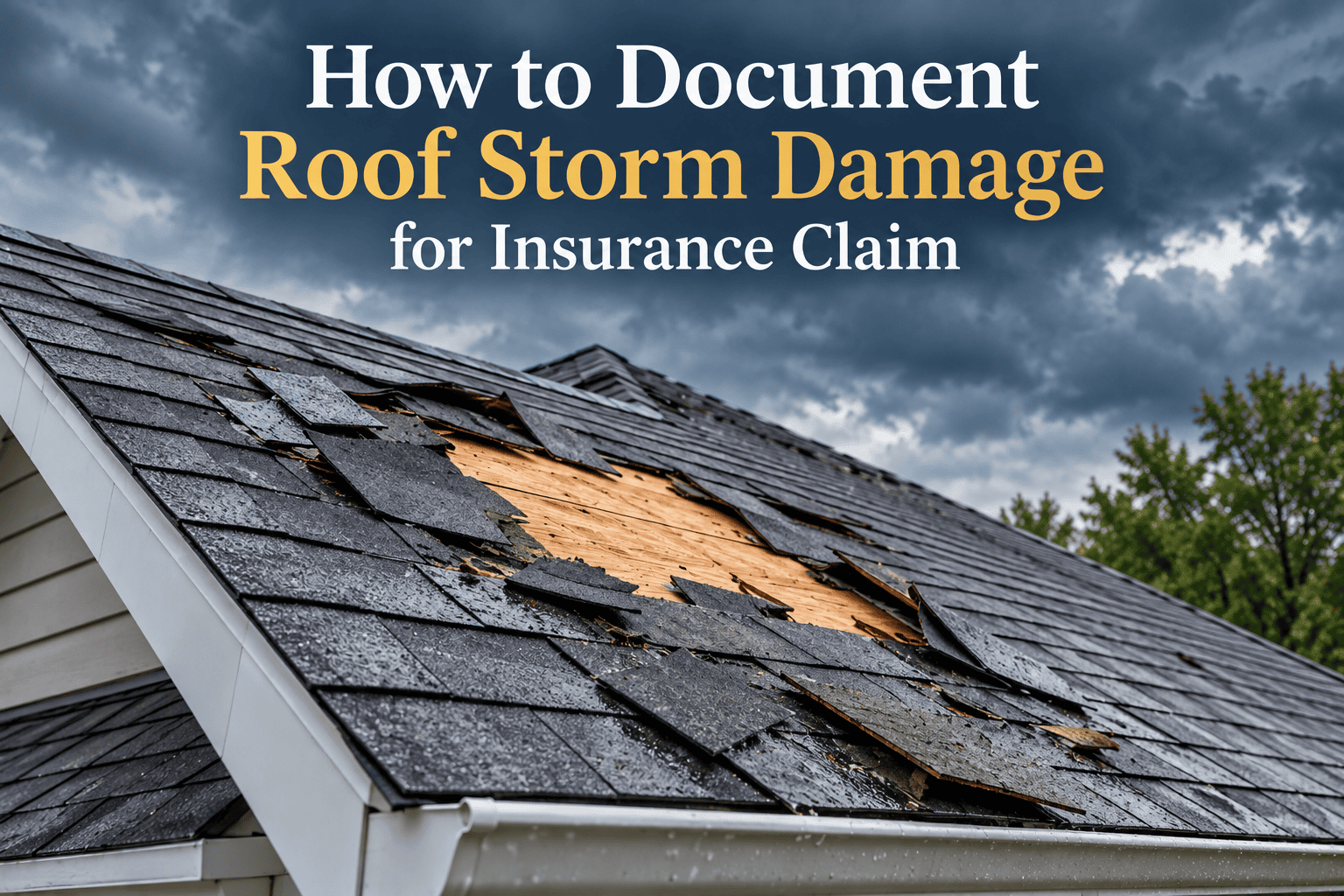
If a storm has just moved through your neighborhood, knowing how to document roof storm damage for insurance claim can make a real difference in how smoothly your claim moves forward. Good documentation will not guarantee approval, but it gives your insurance company clear evidence of what happened and when, which supports a stronger claim.
This article walks through what to do immediately after a storm, what to photograph, and what to avoid before your insurance inspection. If you discover active damage, the emergency roof repair page outlines how Hynes Construction can help stabilize your home right away, and the Hynes Construction home page has more on the company’s full range of services for Main Line homeowners.
Storm Damage? Do Not File Your Claim Until You Document These 7 Things
A storm can leave roof damage that is easy to see and damage that is not visible from the ground. Before making permanent repairs or filing your insurance claim, make sure you have a clear record of what happened.
Use this quick checklist before your insurance inspection:
- Photograph the roof and all visible exterior damage
- Document missing, lifted, cracked, or dented shingles
- Photograph damaged gutters, siding, windows, and other exterior areas
- Document interior leaks, stains, and water damage
- Record the date of the storm and when you discovered the damage
- Save receipts for temporary repairs and emergency supplies
- Keep copies of contractor inspection reports and other documentation
Not sure whether your roof has storm damage? Call Hynes Construction at 610-896-6388 for a professional storm damage inspection.
Do not climb onto the roof yourself. Let a professional safely inspect areas you cannot see from the ground.
What to Do Immediately After Roof Storm Damage
Your safety comes first. Before you think about documentation or insurance, take these steps:
- Stay off the roof and away from any areas with visible structural damage.
- Check for active leaks inside the home, particularly in the attic and top-floor ceilings.
- Take reasonable steps to prevent further damage, such as placing a bucket under an active leak or covering a broken window.
- Contact appropriate professionals, including a roofing contractor for an inspection and your insurance company to begin the claims process.
- Begin documenting the damage as soon as it is safe to do so, since conditions can change quickly after a storm.
How to Document Roof Storm Damage for an Insurance Claim
Thorough documentation gives your insurance adjuster a clear picture of the damage and helps support your claim. At a minimum, homeowners should record the following.
Photos. Take clear, well-lit photos of every area of visible damage, both close up and from a distance.
Videos. A short video walkthrough of the exterior and any affected interior spaces can capture details that still photos might miss.
Date and time. Note when you first noticed the damage and when you took your photos and videos.
Storm details. Record the type of storm, such as hail, high wind, or heavy rain, and the approximate date it occurred.
Visible damage. Document missing or damaged shingles, dented gutters, and any debris on the roof or in the yard.
Interior damage. If water has entered the home, photograph ceiling stains, wall damage, or damp insulation.
What Roof Damage Should You Photograph?
When documenting your roof after a storm, focus your camera on these common damage points.
- Missing shingles
- Lifted or curled shingles
- Cracks in shingles or roofing material
- Hail impact marks, which often appear as small dents or bruises
- Damaged flashing around chimneys, vents, or skylights
- Dented or detached gutters and downspouts
- Damaged roof accessories, such as vents or exhaust caps
- Visible leaks or water stains on the interior ceiling
How to Take Better Roof Damage Photos and Videos
The quality of your documentation matters as much as the quantity. Keep these tips in mind.
Wide shots. Capture the entire roof section or side of the home to show the overall condition.
Close-ups. Take detailed shots of specific damage, such as an individual dent, crack, or missing shingle.
Multiple angles. Photograph damage from multiple angles to give a complete picture.
Property context. Include some photos that show the damage in relation to the rest of the home, such as an address marker or a recognizable landmark, to establish location.
Interior photos. Document any water intrusion, staining, or damaged belongings inside the home.
Avoid unsafe roof access. Do not climb onto the roof yourself to get closer photos. A professional inspection can document elevated or hard-to-see areas safely.
How to Document Hail, Wind, and Water Damage
Different types of storm damage tend to leave different signs, and documenting each type accurately can help support your claim.
Hail damage often shows up as small, circular dents or bruises on shingles, dents on metal roofing or gutters, and cracked or split roofing material. Photograph the dent patterns and, where safe, place a common object like a coin near the damage for scale.
Wind damage frequently appears as missing, lifted, or torn shingles, exposed underlayment, and damaged flashing. Note the direction the damage appears to have come from and photograph any debris blown onto the property.
Water damage can be harder to see from the ground. Look for interior ceiling stains, sagging drywall, or damp insulation in the attic, and photograph these areas along with any exterior signs, such as pooling water or damaged gutters that may have contributed to the intrusion.
Because these three types of damage can overlap during a single storm, it is worth documenting each category separately rather than lumping all the photos together. Labeling your photo folders by damage type, or noting the type of damage in your written log, can make it easier for an adjuster or contractor to understand what they are looking at.
Homeowners are sometimes surprised to learn that an approved claim does not always mean the full replacement cost is paid out immediately. Many policies factor in depreciation, meaning older roofing materials may be valued at less than the cost of brand-new materials. Some policies include replacement cost coverage that reimburses the depreciated amount first, with an additional payment released once repairs are completed. Reviewing your specific policy, or asking your insurance agent to explain how your coverage handles depreciation, can help you understand what to expect financially before repairs begin.
What Other Property Damage Should You Document?
Storm damage often extends beyond the roof. Be sure to document other affected areas of the property as well.
- Siding, including cracks, dents, or missing sections
- Gutters and downspouts
- Windows, including cracked glass or damaged screens
- Doors, including exterior storm doors
- Chimney, including cracked masonry or damaged caps
- Interior water damage from any point of entry
- Other visibly affected exterior areas, such as fencing or outbuildings
What Should Be Included in Your Storm Damage Documentation?
A well-organized documentation file makes the claims process easier for both you and your insurance adjuster. Consider putting together a checklist that includes:
- Photos and videos of all damaged areas
- The date of the storm
- Written notes describing what you observed and when
- Receipts for any emergency supplies or temporary repairs
- Records of any temporary repairs made to prevent further damage
- A copy of any professional inspection report
- Documentation provided by your roofing contractor
Storm damage documentation is most useful when it is gathered as close to the event as possible. Weather that follows the initial storm, such as additional rain or wind, can worsen existing damage or make it harder to tell what happened during the original event versus afterward. Taking photos and videos promptly helps preserve an accurate record of the damage as it existed right after the storm. It also helps to keep a simple written log alongside your photos, noting the date of each set of photos, any changes you observe over the following days, and any conversations you have with your insurance company or contractor. This kind of running record can be useful if questions come up later in the claims process.
What Not to Do Before an Insurance Inspection
A few common mistakes can complicate your claim if you are not careful.
- Do not make unnecessary permanent repairs before the insurance adjuster has inspected the damage.
- Do not discard damaged materials, such as shingles or gutters, before the inspection is complete.
- Do not exaggerate the extent of the damage in your documentation or communication with your insurer.
- Do make reasonable temporary repairs, such as tarping an active leak, to prevent further damage while you wait for the inspection.
Understanding the Pennsylvania Roof Insurance Claim Process
While every policy and insurer is different, most roof insurance claims in Pennsylvania follow a similar general process.
- Policy review. Confirm what your policy covers and any relevant deductibles.
- Claim notification. Contact your insurance company to report the damage and begin the claim.
- Inspection. An adjuster visits the property to assess the damage.
- Documentation. You provide your photos, videos, and notes to support the claim.
- Coverage determination. The insurer reviews the claim and determines what is covered under your policy.
- Repair or restoration. If approved, repair or replacement work moves forward.
It is important to understand that thorough documentation does not guarantee claim approval. Coverage decisions depend on your specific policy terms and the insurer’s assessment of the damage.
When Should You Call a Professional Storm Damage Contractor?
A qualified contractor can support your claim and help you understand the scope of the damage. Consider reaching out for:
- Emergency roof repair if you have active leaks or exposed areas of the home
- Storm damage inspection to identify damage that may not be visible from the ground
- Hail damage assessment to document impact patterns that could be missed in a general review
- Insurance restoration assistance to help provide documentation and a professional scope of repairs
You can review the hail damage roofing services. Hynes Construction offers, learn more about the company’s certifications and affiliations, or explore how the company supports homeowners through the insurance claims process.
Frequently Asked Questions
What should I do first after storm damage to my roof?
Prioritize safety, check for active leaks, and take reasonable steps to prevent further damage. Once it is safe, begin documenting the damage with photos and notes.
How do I document roof damage for an insurance claim?
Take clear photos and videos of all visible damage, note the date and details of the storm, and keep records of any temporary repairs. Thorough, organized documentation supports your claim.
What pictures should I take after hail damage?
Photograph dents on shingles, gutters, and metal surfaces, along with wide shots showing the overall roof condition. Close-ups that clearly show impact marks are especially helpful.
Should I call my insurance company or a roofing contractor first?
Both should be contacted promptly. A contractor can help stabilize the property and document damage, while your insurer needs to be notified to begin the claims process.
Can I repair my roof before the insurance adjuster comes?
Reasonable temporary repairs to prevent further damage are appropriate. Avoid permanent repairs or replacement until after the adjuster has inspected the property.
Does homeowners insurance cover wind and hail damage?
Coverage depends on your specific policy. Reviewing your policy or speaking with your insurance agent is the best way to understand what is included.
What should I do if my roof is leaking after a storm?
Take steps to reduce interior damage, such as placing containers to catch water, and contact a contractor for emergency repair while documenting the situation for your insurer.
How long do I have to file a roof insurance claim in Pennsylvania?
Timeframes vary by policy and insurer. Check your specific policy documents or contact your insurance company directly for the applicable deadline.
Can a roofing contractor help document storm damage?
Yes. A contractor can perform a professional inspection, identify damage that may not be visible from the ground, and provide documentation that supports your claim.
Will documenting roof damage guarantee my insurance claim is approved?
No. Documentation supports your claim, but approval depends on your policy terms and the insurer’s evaluation of the damage.
Think Your Roof Was Damaged by the Storm? Get It Documented Before the Damage Gets Worse
Roof damage is not always obvious after a storm. Missing shingles, hail impacts, damaged flashing, and water entry can be difficult to identify from the ground. Waiting can also allow additional rain or wind to make the damage worse.
Hynes Construction can inspect your roof, document visible storm damage, and help you understand the scope of repairs needed before you move forward with restoration.
If you are dealing with hail damage, wind damage, roof leaks, or other storm-related damage in the Main Line area, call Hynes Construction at 610-896-6388.
Call 610-896-6388 today to schedule your storm damage inspection.
Document, Inspect, Notify, Review, Repair
Following a clear process after storm damage can help your claim move forward with fewer complications: document the damage, get a professional inspection, notify your insurer, allow the review to take place, and move into repair or restoration once coverage is determined. Documentation supports a stronger claim, but it does not promise a specific outcome.
If your roof has been affected by a recent storm, contact Hynes Construction to schedule a professional storm damage inspection and get help documenting the condition of your home.

(President, Hynes Roofing and Siding)
With over 35 years experience in the roofing and siding industry, Michelle Hynes has built a business from 2 people into over 45 people and 19 trucks!