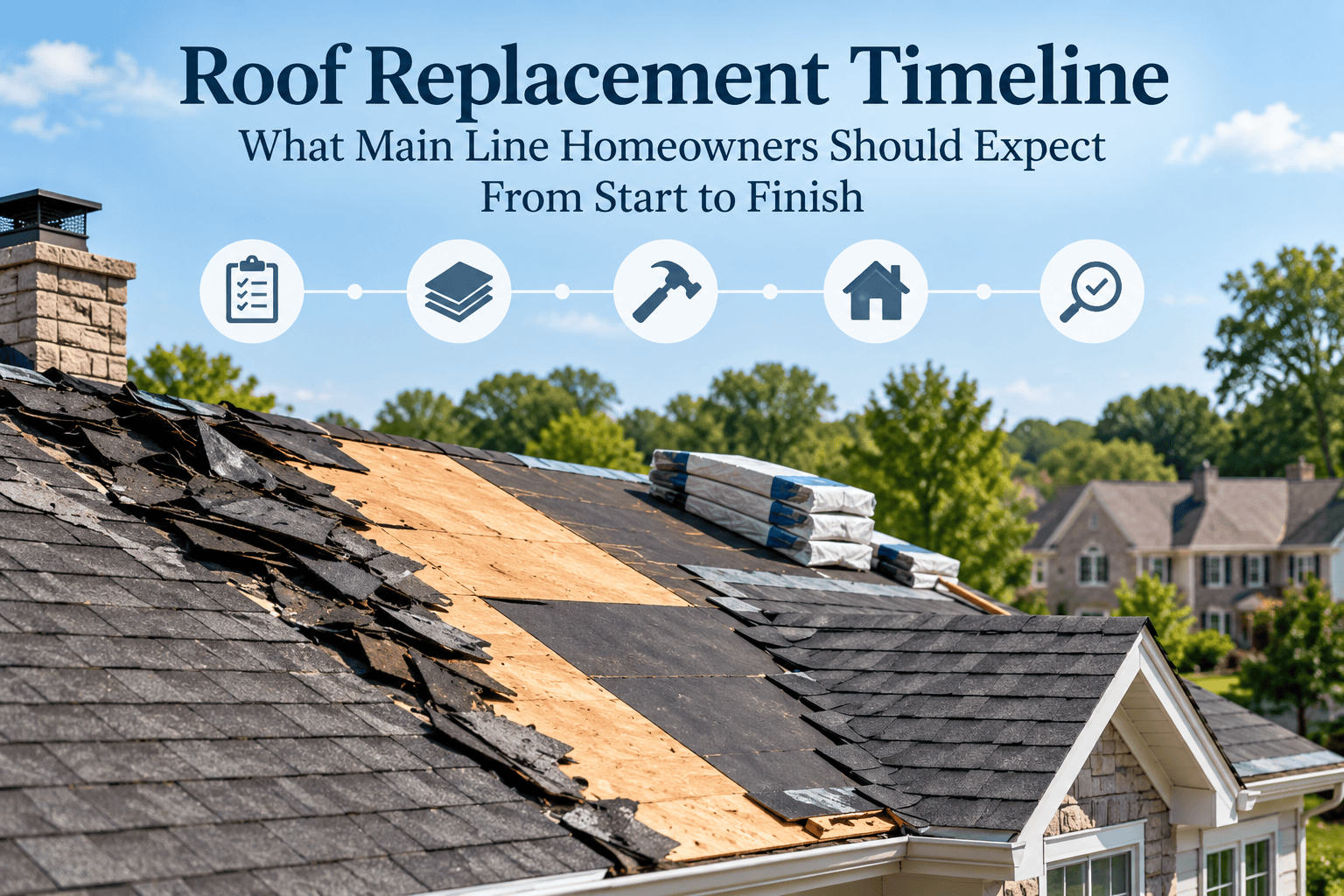
Most residential roof replacements take between one and three days once installation actually begins, but the full roof replacement timeline, from the first phone call to the final cleanup, usually spans a few weeks. If you are planning a roof replacement in Ardmore, Bryn Mawr, or anywhere else on the Main Line, understanding what happens at each stage can help you plan around the project instead of being caught off guard by it.
This article walks through what happens before installation begins, what happens on installation day, and what can push a project longer than expected. If you want a closer look at the process itself, the roof installation and replacement page outlines the services involved in more detail, and the Hynes Construction home page gives a broader look at the exterior services available to Main Line homeowners.
Planning a Roof Replacement? Get a Clear Project Timeline Before You Start
Not sure whether your roof replacement will take one day, several days, or longer? Every home is different, and factors such as roof size, pitch, roofing material, weather, and hidden decking damage can affect the schedule.
Call Hynes Construction at 610-896-6388 to discuss your roof replacement project and get a professional assessment of what your project may involve, including the expected installation timeline, materials, and next steps.
Call Hynes Construction today at 610-896-6388 to get started.
How Long Does a Roof Replacement Take?
For an average single-family home, the physical installation of a new roof typically takes one to three days. Larger homes, steep rooflines, or more complex roof shapes can extend that to four or five days.
It helps to separate two different things homeowners often lump together:
- Actual installation time. This is the number of days a crew is physically on your roof removing old material and installing new material.
- The entire project timeline. This includes the inspection, estimate, material ordering, scheduling, permits where required, installation, and final cleanup.
A homeowner asking “how long does a roof replacement take” is often really asking about the entire project, not just the days a crew spends on the ladder. Both matter when you are planning around the work, especially if you need to arrange time off, coordinate with family, or manage pets during the process.
What Happens Before Your Roof Replacement Begins?
Before any shingles come off, several steps typically take place. These steps can add anywhere from a few days to a few weeks to your overall roof replacement process, depending on scheduling and the scope of work.
Initial inspection. A contractor examines the current roof condition, checks for leaks, and looks for signs of underlying damage.
Roof assessment. This includes measuring the roof, evaluating the pitch and complexity, and identifying features like chimneys, skylights, or valleys that may require extra attention.
Estimate. Based on the assessment, you receive a written estimate outlining scope of work, materials, and cost.
Material selection. You choose the roofing material and color, which can affect availability and lead time.
Project planning. The contractor plans crew size, equipment, dumpster placement, and property protection measures.
Scheduling. Your project is placed on the calendar, which can depend on weather, crew availability, and how far out the contractor is booked.
Permits and approvals. Some townships along the Main Line require permits for roof replacement. Your contractor should confirm whether this applies to your property and handle the application if needed.
The Roof Replacement Process: Step by Step
Once your project reaches installation day, the roof replacement process generally follows a consistent sequence.
- Site preparation. Crews set up ladders, staging areas, and safety equipment and typically place a dumpster or trailer for debris.
- Protecting property. Landscaping, walkways, and outdoor items near the home are covered or moved to reduce the risk of damage from falling debris.
- Removing existing roofing. Old shingles, underlayment, and any damaged flashing are stripped away.
- Inspecting the roof deck. With the old roofing removed, the crew inspects the plywood or wood decking underneath for rot, soft spots, or water damage.
- Addressing damaged areas. Any compromised decking is repaired or replaced before new roofing goes down.
- Installing underlayment and flashing. A water-resistant underlayment is installed, along with new flashing around chimneys, vents, and roof edges.
- Installing new roofing. The new shingles, metal panels, or other roofing material are installed according to manufacturer specifications.
- Cleanup and final inspection. Crews use magnetic sweepers to collect stray nails, remove debris, and complete a final walkthrough with you.
How Long Does Each Roof Replacement Step Take?
While every property is different, homeowners often want a general sense of how time is distributed across the project. Site preparation and property protection usually take a few hours at the start of the first day. Tear-off of the old roofing can take anywhere from a few hours to most of a day, depending on how many layers of existing shingles are present and the size of the roof.
Deck inspection and any necessary repairs vary the most, since the amount of hidden damage is not known until the old roofing is removed. Installing underlayment, flashing, and new roofing material is often the longest continuous phase of the project. Final cleanup and inspection typically take place at the end of the last day.
It is not possible to promise an exact number of hours for each step without seeing the specific roof, since roof size, pitch, material, and any decking issues all affect the pace of the work.
What Can Delay a Roof Replacement in Pennsylvania?
Several factors can extend a roof replacement timeline beyond the original estimate.
- Rain. Roofing work generally cannot continue safely during active rain, which can pause a project for a day or more.
- High winds. Strong winds can make it unsafe to install certain materials, particularly shingles, until conditions improve.
- Extreme temperatures. Very hot or very cold weather can affect how certain roofing materials seal and perform, sometimes requiring adjusted scheduling.
- Hidden decking damage. Rot or water damage discovered under the old roofing often requires additional repair time that was not part of the original scope.
- Roof complexity. Multiple roof planes, steep pitches, dormers, and valleys all add time compared to a simple, low-pitch roof.
- Material availability. Certain colors, styles, or specialty materials may have longer lead times, especially during high-demand seasons.
- Chimneys, skylights, and dormers. Each of these features requires additional flashing work and careful detailing.
- Permit issues. If a township requires an inspection at a certain stage, scheduling that inspection can add time to the process.
How Different Roofing Materials Can Affect the Timeline
The type of roofing material you choose plays a role in how long installation takes. Hynes Construction works with several roofing systems, including asphalt shingles, metal roofing, and tile.
Shingles are the most common residential roofing material and are generally straightforward to install on standard roof shapes, which is one reason they tend to be a popular choice for Main Line homes.
Metal roofing often involves more detailed measurement, cutting, and seaming work than shingles, which can affect the schedule depending on the specific system and roof design.
Tile roofing is heavier and typically requires additional structural considerations and specialized installation techniques.
It is not accurate to say that one material always takes a specific number of days, since roof size, complexity, and crew experience all factor into the actual timeline. A contractor can give you a more specific estimate once they have assessed your particular roof and chosen material.
How to Prepare Your Home for Roof Replacement
A little preparation before installation day can help the project go smoothly.
- Move vehicles away from the driveway and out of the direct work area.
- Store or cover outdoor furniture, grills, and decor near the house.
- Remove fragile items from attic shelving, since vibration from the work can sometimes dislodge loose items.
- Make arrangements for pets, since noise and open access points can be stressful or unsafe for them.
- Plan for children to be away from the immediate work area during the day.
- Trim back landscaping that may interfere with ladder placement or falling debris.
- Confirm driveway and yard access so crews and equipment can move efficiently.
- Expect noticeable noise throughout the day, particularly during tear-off.
Can You Stay Home During a Roof Replacement?
Most homeowners can stay home during a roof replacement, though it is worth knowing what to expect. The process involves consistent noise from tear-off, hammering, and equipment, along with vibration that can be noticeable throughout the house, especially on upper floors.
For safety, certain areas near ladders, dumpsters, and material staging may be temporarily off-limits. Families with young children or pets sensitive to noise sometimes prefer to be away from the home, particularly during the loudest portions of tear-off. If you work from home or have a household member who needs a quiet environment during the day, planning to be elsewhere for at least part of the project is worth considering.
What Should Be Included in a Roof Replacement Estimate?
A thorough roof replacement estimate should outline the full scope of work so there are no surprises once the project begins. Look for these items in a written estimate:
- Removal and disposal of the existing roof
- Roofing material and quantity
- Underlayment
- Flashing around penetrations and edges
- Ventilation components
- An allowance or process for addressing decking damage if discovered
- Labor
- Cleanup and debris removal
- Warranty information
- Permit costs, where applicable
Reviewing an estimate line by line, rather than focusing only on the total price, helps you understand exactly what is included and what might result in an additional cost if conditions change once the old roof comes off.
How to Choose a Main Line Roofing Contractor
Selecting the right contractor affects both the quality of the work and how smoothly your project timeline unfolds. Before comparing estimates, it helps to review the full range of roofing services a contractor offers, since a company with broader roofing experience is often better equipped to handle unexpected issues that come up during a project. Consider the following when evaluating roofing contractors serving the Main Line area:
- Experience with homes similar in age and style to yours.
- Credentials, including relevant licensing for your municipality.
- Insurance, both liability and workers’ compensation, to protect you if something goes wrong during the project.
- Product quality and the manufacturer relationships the contractor maintains, which you can review on the certifications and affiliations page.
- A written scope of work rather than a verbal agreement.
- Clear communication throughout the estimate and project process.
- Warranty details, both for materials and workmanship.
- Local experience, since a contractor familiar with Main Line homes and township requirements can often anticipate issues before they become delays.
If cost is a factor in your decision, it is worth reviewing available financing options before comparing contractors, so you are comparing similar payment structures.
Frequently Asked Questions
How long does a roof replacement take?
Installation typically takes one to three days for an average home, though larger or more complex roofs can take longer. The full project, including inspection, estimate, and scheduling, usually spans a few weeks from start to finish.
How long does it take to replace a roof on a typical home?
Most single-story homes with a standard roof shape can be completed in one to two days once installation begins. Steeper pitches, multiple roof planes, or additional square footage can extend that timeframe.
Can a roof be replaced in one day?
Some smaller or simpler roofs can be completed in a single day. Larger homes, complex rooflines, or roofs where decking damage is discovered typically require additional time.
How long does a roof replacement take in Pennsylvania?
Timelines are similar to national averages, though Pennsylvania weather, including rain and seasonal temperature swings, can affect scheduling and the pace of work at different times of year.
Can I stay home during a roof replacement?
Most homeowners can remain home, though the process involves significant noise and some temporary restrictions on outdoor access near the work area.
What happens during a roof replacement?
The existing roof is removed, the decking is inspected and repaired as needed, new underlayment and flashing are installed, and new roofing material is applied, followed by cleanup and a final inspection.
What should I do to prepare my house for a new roof?
Move vehicles, secure outdoor items, protect attic belongings from vibration, and make arrangements for pets and children during the workday.
What happens if damaged decking is found?
If rot or water damage is discovered under the old roofing, the affected sections of decking are repaired or replaced before new roofing is installed, which can add time to the project.
What is the best time of year to replace a roof?
Roofing can typically be done in most seasons, though extreme heat, cold, or wet weather can affect scheduling and installation conditions. A contractor can advise on timing based on your specific project.
How long does the entire roof replacement process take?
From the initial inspection through final cleanup, most projects take a few weeks, factoring in the estimate, material ordering, scheduling, and installation itself.
Ready to Plan Your Roof Replacement? Talk With a Local Roofing Contractor
Knowing the typical roof replacement timeline is helpful, but your home’s actual project schedule depends on the condition and design of your roof. A professional evaluation can help identify potential issues before work begins and give you a clearer understanding of the work involved.
If you are considering a roof replacement in Ardmore, Bryn Mawr, Villanova, Wayne, Haverford, or elsewhere on the Main Line, call Hynes Construction at 610-896-6388 to discuss your project.
Call 610-896-6388 today to schedule your roof evaluation and take the next step toward your new roof.
Getting Started With Your Roof Replacement
A roof replacement timeline depends on your home, the material you choose, and conditions that are not always known until the project is underway. The best way to get an accurate estimate for your property is a professional roof evaluation. If you are ready to discuss your roof, contact Hynes Construction to schedule an assessment and get a clear picture of what your specific project will involve.

(President, Hynes Roofing and Siding)
With over 35 years experience in the roofing and siding industry, Michelle Hynes has built a business from 2 people into over 45 people and 19 trucks!