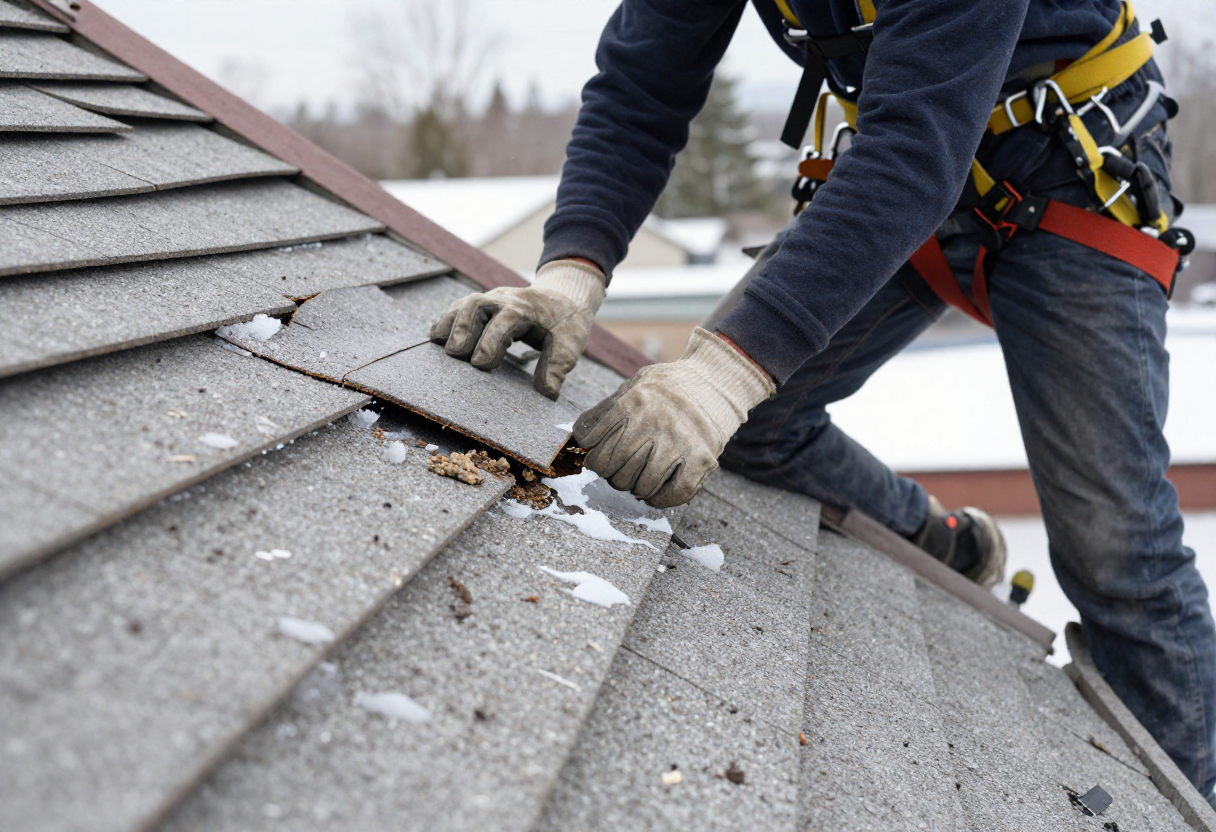
Winter can quietly damage your roof in ways that are not immediately visible. Snow loads, ice buildup, and repeated freeze-thaw cycles weaken materials over time, often causing problems that only appear weeks later. A Spring Roof Inspection Post-winter damage assessment helps identify hidden structural issues early, preventing leaks, mold growth, and costly repairs before seasonal storms arrive. If your home experienced snow or freezing temperatures this winter, scheduling a professional spring roof inspection is the safest way to evaluate damage and protect your property.
By the time spring arrives, your roof may already be compromised in ways that are not immediately obvious from the ground.
A spring roof inspection is not routine maintenance. It is a critical structural assessment that detects winter damage early, prevents costly repairs, and protects your home from seasonal storms that follow.
This comprehensive guide explains:
✔ What winter really does to your roof
✔ Why spring inspections are essential
✔ How to identify hidden damage
✔ What professionals check during inspection
✔ How inspections protect home value and insurance coverage
✔ When to schedule service
✔ How to choose the right roofing professional
If your home experienced snow, freezing temperatures, or ice buildup this winter, this guide will help you understand exactly what to do next.
Why Spring Roof Inspection Is the Most Important Maintenance Task of the Year
Many homeowners assume that if their roof survived winter without leaks, everything is fine. Unfortunately, roofing damage rarely appears immediately.
Winter damage is often delayed and progressive.
During winter, water can become trapped beneath shingles or inside structural components. When spring temperatures rise, that trapped moisture begins moving, expanding, and spreading, often triggering leaks weeks or months after winter ends.
Spring also introduces:
- Heavy rainfall
- Rapid snowmelt
- Strong winds
- Temperature expansion of roofing materials
All of these conditions stress areas that were already weakened during winter.
A timely inspection helps identify damage before spring storms turn small vulnerabilities into major failures.
If you suspect your roof may have experienced seasonal stress, consider scheduling a professional spring roof inspection to identify hidden issues early and prevent structural deterioration.
What Winter Actually Does to Your Roof (Beyond What You Can See)
Understanding why spring inspection matters begins with understanding how winter affects roofing systems.
Most homeowners think snow weight is the main problem. In reality, the greatest threat is the repeated freeze-thaw cycle.
Here’s what happens over the winter season:
Snow Accumulation Creates Continuous Structural Pressure
Wet snow is extremely heavy. When snow sits on a roof for extended periods, it places sustained load stress on:
- Rafters
- Roof decking
- Fasteners
- Support framing
Even if the roof does not collapse, structural fatigue can develop.
Heat Loss Causes Uneven Melting
Warm air escaping from the attic melts snow unevenly. Meltwater flows downward and refreezes at colder roof edges.
This creates ice dams that trap water above them.
Freezing Water Expands and Forces Separation
When trapped water freezes, it expands. That expansion:
- Lifts shingles
- Widens nail holes
- Cracks sealants
- Separates flashing joints
Each freeze-thaw cycle slightly enlarges openings in the roofing system.
Repeated Expansion Weakens Materials
These cycles may repeat dozens of times during winter. Over time, small cracks become pathways for moisture intrusion.
To better understand how winter conditions create progressive roofing damage, review our winter storm roof damage checklist, which explains how seasonal stress develops step by step.
Why Roof Damage Often Appears Weeks After Winter Ends
One of the most confusing aspects of winter damage is delayed symptoms.
Water that enters the roofing system during winter may remain frozen or trapped. Once temperatures rise:
- Ice melts and flows deeper into structures
- Materials expand, opening gaps
- Insulation absorbs moisture
- Interior leaks begin
This is why many homeowners first notice roof problems during early spring rains — not during winter itself.
Damage is not always visible from the outside. Some of the most serious roofing issues develop silently within attic spaces or wall cavities.
Exterior Warning Signs
- Missing or curling shingles
- Granules are collecting in gutters
- Bent flashing around chimneys or vents
- Sagging roof lines
- Debris buildup in roof valleys
- Damaged vent seals
Interior Warning Signs
- Ceiling discoloration
- Peeling paint near the upper walls
- Damp attic insulation
- Mold or mildew odors
- Visible moisture on rafters
Subtle Structural Indicators
- Higher heating or cooling costs
- Persistent humidity
- Uneven indoor temperatures
If you notice any of these symptoms, your home may require emergency roof repair to prevent further interior damage.
What a Professional Spring Roof Inspection Includes
A true post-winter inspection is a detailed structural evaluation and not just a visual glance.
Homeowners often rely on professional roof inspection services because trained experts can detect hidden problems that are impossible to identify from ground level.
A comprehensive inspection typically includes the following:
Structural Integrity Assessment
Inspectors examine:
- Roof decking stability
- Rafter alignment
- Load stress indicators
- Signs of sagging or deformation
Shingle and Surface Evaluation
Professionals check for:
- Cracks and blistering
- Sealant failure
- Exposed fasteners
- Granule loss
- Wind uplift damage
Flashing and Penetration Inspection
These areas are common leak points:
- Chimneys
- Skylights
- Vent pipes
- Wall intersections
Even minor separation can allow water intrusion.
Drainage System Review
Gutters and downspouts must move water efficiently.
Inspectors look for:
- Blockages
- Improper slope
- Ice damage
- Loose connections
Attic and Ventilation Analysis
Proper airflow prevents future ice dams.
Inspectors evaluate:
- Vent balance
- Moisture levels
- Insulation condition
- Mold presence
Moisture Detection Testing
Advanced inspections may include thermal imaging or moisture meters to detect hidden water within roofing layers.
If you suspect winter damage, contact Hynes Construction to schedule a detailed post-winter roof assessment.
The Real Cost of Skipping a Spring Roof Inspection
Many homeowners postpone inspections to save money. In reality, delayed detection is far more expensive.
Undetected roof damage leads to:
Moisture Migration
Water spreads horizontally through insulation and framing, affecting areas far from the entry point.
Mold Growth
Mold can develop within 24–48 hours in damp conditions.
Structural Wood Rot
Persistent moisture weakens decking and support framing.
Expanded Repair Scope
Minor repairs can escalate into major structural restoration.
Early inspection is one of the most cost-effective home maintenance decisions you can make.
Why Spring Storms Make Winter Damage Worse
Spring introduces new stress before winter damage is repaired.
Common seasonal threats include:
- Heavy rain saturates weakened areas
- Strong winds are lifting loose shingles
- Temperature swings expand material cracks
- Debris impact from storms
A compromised roof is significantly more vulnerable to spring weather events.
DIY Roof Checks vs Professional Inspection
Homeowners can perform basic visual checks, but many critical issues remain hidden.
What Homeowners Can Safely Observe
- Visible shingle damage
- Gutter blockages
- Ceiling stains
- Exterior debris
What Requires Professional Expertise
- Subsurface moisture
- Structural stress
- Flashing failure
- Ventilation imbalance
Attempting to walk on a winter-stressed roof can also be dangerous.
How Spring Roof Inspections Protect Home Value
Roof condition plays a major role in property value.
Benefits of documented inspections include:
- Maintenance history for buyers
- Early repair documentation
- Reduced negotiation during resale
- Extended roof lifespan
Homes with consistent maintenance records often sell faster.
Insurance Advantages of Timely Post-Winter Inspection
Insurance providers expect homeowners to act promptly after damage occurs.
A professional inspection helps by:
- Establishing damage timelines
- Providing photo documentation
- Demonstrating preventive action
For guidance, review information about roof insurance claim assistance to understand how proper documentation supports claims.
Why Local Experience Matters for Post-Winter Roof Assessment
Roofing stress varies by climate, snowfall levels, and seasonal temperature patterns.
Homeowners in Ardmore, Pennsylvania, experience freeze-thaw cycles that create specific structural risks.
Working with experienced local professionals ensures inspection methods reflect regional weather patterns.
For example, Hynes Construction specializes in identifying hidden winter damage and providing detailed post-season evaluations tailored to local conditions.
To request an inspection or assessment, contact the team for expert evaluation and repair guidance.
What Happens After a Spring Roof Inspection
Inspection results typically fall into one of three categories:
No Immediate Repairs Needed
Minor wear only, continued monitoring recommended.
Preventive Maintenance Required
Small repairs prevent future problems.
Examples:
- Flashing resealing
- Shingle replacement
- Gutter adjustment
Structural or Moisture Repairs Required
More extensive work is needed to restore integrity.
Early detection keeps repair costs manageable.
When to Schedule Your Spring Roof Inspection
Best timing:
✔ After final snowmelt
✔ Before heavy spring rains
✔ When temperatures remain above freezing
Scheduling early allows time for repairs before summer storms.
If you want to protect your home from seasonal damage, schedule your spring roof inspection today and address problems before they escalate.
Homeowner Pre-Inspection Checklist
Before scheduling service, check for:
- Ceiling stains
- Exterior shingle damage
- Blocked gutters
- Attic moisture
- Unusual odors
Documenting concerns helps inspectors identify high-risk areas quickly.
Stay Connected for Roofing Tips and Seasonal Updates
For seasonal maintenance advice, project updates, and homeowner education, follow the roofing team on:
- Facebook
https://www.facebook.com/HynesRoofingSiding/ - Instagram
https://www.instagram.com/hynesroofingsiding/
Final Thoughts: Why Spring Roof Inspection Is Essential
Winter rarely leaves roofing systems unchanged. Snow loads, ice expansion, and freeze-thaw stress gradually weaken structural components, often without immediate warning.
A spring inspection allows homeowners to:
✔ Detect hidden moisture
✔ Prevent structural deterioration
✔ Avoid emergency repairs
✔ Protect property value
✔ Maintain insurance compliance
The transition from winter to spring is the most important maintenance window of the year. Acting early ensures long-term structural protection and peace of mind.
Frequently Asked Questions
1. How soon after winter should I schedule a roof inspection?
Ideally, within the first few weeks after the snow has fully melted and temperatures stabilize above freezing. Early inspection prevents spring storms from worsening hidden damage.
2. Can winter roof damage exist even if I don’t see leaks?
Yes. Many forms of winter damage remain hidden inside roofing layers or attic spaces and may not cause visible leaks until months later.
3. Is a spring roof inspection necessary every year?
Yes. Annual inspection helps detect gradual wear, prevent structural deterioration, and extend the lifespan of your roofing system.
4. Will insurance cover damage found during a spring inspection?
Coverage depends on policy terms, but documented inspections and prompt action significantly improve claim approval likelihood.
5. What is the most common type of winter roof damage?
Ice dam formation and freeze-thaw expansion are among the most common causes of hidden structural damage and moisture intrusion.
6. How long does a professional roof inspection take?
Most residential inspections take 45 minutes to 2 hours, depending on roof size, complexity, and whether advanced moisture testing is required.

(President, Hynes Roofing and Siding)
With over 35 years experience in the roofing and siding industry, Michelle Hynes has built a business from 2 people into over 45 people and 19 trucks!