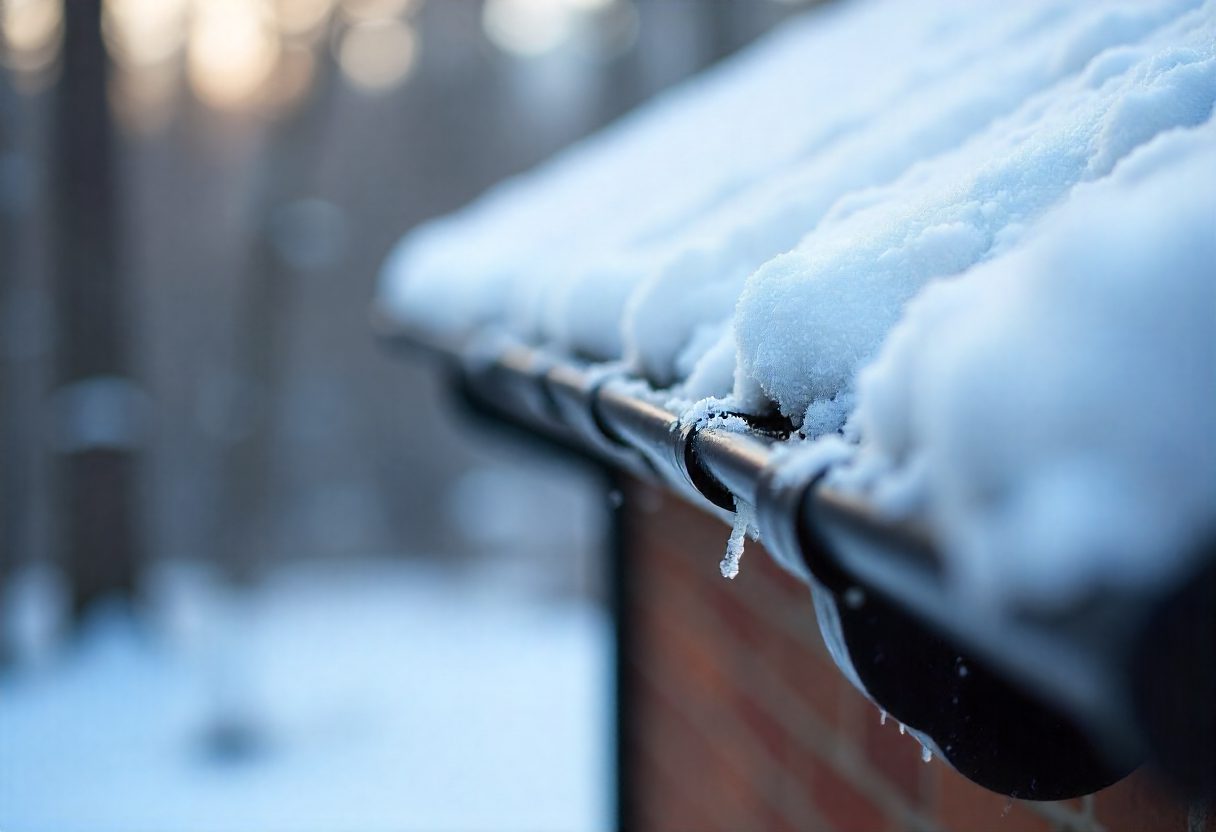
Winter Gutter Problems in Pennsylvania: Repair, Installation & Maintenance Guide
For homeowners in Ardmore and across the Main Line, the gutter system is the unsung hero of the home’s exterior envelope. It is the critical defense that channels thousands of gallons of water away from your roof, siding, and foundation. However, the unique climate of Pennsylvania, characterized by heavy snow and relentless freeze-thaw cycles, turns this hero into a major vulnerability during the winter months. A failing gutter system is not just a nuisance; it is a direct pathway to costly damage, including foundation cracks, basement flooding, and severe roof leaks.
This comprehensive guide from Hynes Construction, your local Ardmore exterior experts, details the three most common winter gutter problems, explains why they occur in our specific climate, and provides a clear guide for repair, installation, and maintenance to protect your home this season.
The Three Major Winter Gutter Threats in
Pennsylvania
The combination of cold temperatures and moisture creates a perfect storm for gutter failure. Understanding these threats is the first step toward effective prevention.
1. The Ice Dam Connection: When Gutters Become Blockages
The most destructive winter gutter problem is its role in the formation of ice dams. An ice dam is a ridge of ice that forms at the edge of a roof, preventing melting snow from draining into the gutter. This trapped water then backs up under the shingles, leading to severe roof leaks and interior water damage.
The primary cause of an ice dam is heat loss from the attic, which melts the snow on the main roof surface. However, the reason the water cannot escape is often a clogged or frozen gutter. When leaves and debris accumulate in the fall, they trap water. This water freezes solid, turning the gutter into a solid block of ice. This blockage acts
The solution begins with ensuring your gutters are completely clear before the first freeze. This is a crucial step in preventing the formation of ice dams, which we have previously detailed in our guide, Ice Dams, Roof Leaks & Attic Moisture: The Three Most Damaging Winter Roofing Problems Homeowners Face. The solution begins with ensuring your gutters are completely clear before the first freeze.
2. Structural Failure: Sagging, Pulling Away, and Warping
The weight of snow and ice is immense. A cubic foot of packed snow can weigh up to 20 pounds, and a cubic foot of ice weighs over 57 pounds. When a gutter system is clogged, it can quickly fill with a mixture of ice and snow, placing hundreds of pounds of strain on the fascia board and the gutter hangers.
In the Ardmore area, where we experience significant snowfall, this strain frequently causes:
Sagging: The gutter begins to dip in the middle, compromising the pitch needed for proper drainage.
Pulled Hangers: The weight tears the hangers out of the fascia board, causing the gutter to pull away from the house.
Warping: The expansion of ice within the trough can permanently warp the gutter material, especially vinyl or thin aluminum, leading to permanent damage.
This structural failure exposes the roofline to water damage, which is why a thorough inspection of the entire exterior envelope is essential before winter, as discussed in our article, Winterizing Your Home’s Exterior Envelope: Siding, Stucco, and Window Seals That Save Energy & Damage. This preventative approach is key to avoiding costly winter repairs.
3. The Freeze-Thaw Cycle and Seam Failure
Pennsylvania’s winter is defined by its temperature swings. A day of melting snow followed by a night of hard freeze creates the destructive freeze-thaw cycle. This cycle is particularly damaging to sectional gutters, which rely on sealant at every joint and end cap.
Water seeps into the tiniest gaps in the sealant. When it freezes, it expands, forcing the seams apart. This process repeats daily, progressively widening the gaps until the
gutter begins to leak profusely. These leaks often go unnoticed until the water has created a trench in the flowerbed below or, worse, saturated the ground right next to the foundation. This is the same mechanism that causes severe damage to other exterior materials, as we explored in our guide on the destructive Freeze-Thaw Cycle Roof Damage: How Winter Temperature Swings Expose Hidden Roofing Failures.
The Gutter Maintenance Guide for Ardmore Homeowners
Effective winter protection requires a proactive approach focused on three key areas: cleaning, inspection, and prevention.
Phase 1: Essential Fall Cleaning (Late October/Early November)
The single most important maintenance task is ensuring your gutters are completely free of debris before the first hard freeze.
| Step | Action | Why It Matters for PA Winters |
| 1. Clear Debris | Remove all leaves, twigs, and shingle granules by hand or with a gutter scoop. | Prevents water from being trapped and freezing, which is the root cause of ice dams. |
| 2. Flush Test | Use a garden hose to flush the gutters, checking for leaks and ensuring water flows smoothly. | Confirms the pitch is correct and identifies any hidden blockages in the downspouts. |
| 3. Downspout Check | Ensure downspouts are completely clear. Use a plumber’s snake or a strong jet of water to dislodge any clogs. | A blocked downspout will cause water to back up and freeze in the gutter trough. |
Phase 2: Professional Inspection and Repair
While cleaning is a DIY task, a professional inspection is crucial to catch structural issues that can only be fixed by a stucco repair contractor or a roofing specialist.
Check the Pitch: Gutters must have a slight downward slope (pitch) toward the downspout. If they are level or slope away, water will pool and freeze. Hynes Construction can adjust the pitch or reinstall sections as needed.
Inspect Hangers: Check for loose, bent, or missing hangers. We recommend upgrading to heavy-duty hidden hangers, which provide superior support against the heavy ice loads common in our region.
Sealant Repair: For sectional gutters, all seams should be inspected and resealed with a high-quality, weather-resistant sealant to prevent the freeze-thaw cycle from causing leaks.
Follow us on Facebook and Instagram to know more about home improvement and gutter cleaning-related insights.
Phase 3: Installation and Upgrades for Long-Term Protection
For homes with chronic gutter problems, a full system upgrade may be the most cost-effective long-term solution.
Seamless Gutters: The Pennsylvania Advantage
Sectional gutters are prone to failure because they have seams every 10 feet. Seamless gutters, custom-fabricated on-site by Hynes Construction, eliminate these weak points. With fewer seams, there are fewer places for water to leak and freeze, making them far more resilient to the freeze-thaw cycle.
Gutter Guards: A Maintenance Reduction Tool
While no gutter guard is maintenance-free, a high-quality guard system can significantly reduce the amount of debris that enters the trough. This is particularly beneficial in the fall, allowing homeowners to focus on other critical exterior prep tasks, such as those outlined in our guide, Storm Prep for Late Fall: How to Protect Your Roof, Deck, and Exterior Before the First Big Snow.
Heat Cables: Targeted Ice Dam Prevention
For areas prone to severe ice dams, professionally installed heat cables (or de-icing cables) can be a targeted solution. These cables are installed along the roof edge and inside the gutters and downspouts. They warm the surface just enough to melt a channel for water to drain, preventing the ice dam from forming.
The Cost of Neglect: Why Proactive Gutter Care Pays Off
The cost of a professional gutter cleaning and inspection is minimal compared to the damage caused by failure.
| Problem Caused by Gutter Failure | Estimated Repair Cost | Prevention Cost (Annual Maintenance) |
| Ice Dam-Related Roof Leak | 500−5,000 (depending on interior damage) | 150−350 |
| Foundation Crack/Basement Leak | 15,000 2, 000− | 0(DIY )−350 (Pro) |
| Fascia/Soffit Rot | 2,500 500− | 150−350 |
| Landscape Erosion | 1,500 500− | $0 (Downspout Extension) |
As your trusted local stucco contractor and exterior specialist, Hynes Construction understands that every component of your home’s exterior works together. A healthy gutter system protects your roof, your siding, and your foundation. Don’t let a simple maintenance issue turn into a major winter disaster.
Contact Hynes Constructiontoday for a comprehensive gutter inspection and to discuss seamless gutter installation options.
Frequently Asked Questions (FAQs)
Q1: Can I use a pressure washer to clean my gutters?
A: We strongly advise against using a pressure washer to clean your gutters. While it may seem effective, the high pressure can easily damage the gutter material, loosen the hangers, and, most critically, strip the protective asphalt granules from your roof shingles. This granule loss accelerates shingle aging and reduces the roof’s ability to shed water, leading to premature failure. Stick to a low-pressure garden hose for flushing and manual removal of debris.
Q2: Are there specific gutter materials that perform better in the Pennsylvania winter?
A: Yes. While vinyl is the cheapest option, it becomes brittle in extreme cold and is prone to cracking under ice load. Aluminum is the most common and cost-effective choice, but it must be heavy-gauge (0.032” thickness) to resist warping from ice. Copper is the most durable and resistant to the freeze-thaw cycle, but it is also the most expensive. For the Ardmore climate, we recommend heavy-gauge seamless aluminum with hidden hangers for the best balance of durability and value.
Q3: How does my attic’s ventilation directly affect my gutters?
A: Your attic’s ventilation is the primary defense against ice dams, which are the biggest threat to your gutters. Poor ventilation allows warm air to escape from your living space into the attic, melting the snow on the roof. This melted water then flows down and refreezes in the cold gutter trough, forming the ice dam. Proper, balanced ventilation (intake at the soffit, exhaust at the ridge) keeps the attic temperature near the outside temperature, preventing the snow from melting in the first place. This concept is critical to understanding winter roof health, as detailed in our guide on Winter Attic Ventilation Problems: How Poor Airflow Leads to Condensation, Mold & Premature Roof Rot.
Q4: My gutters are pulling away from the house. Is this a repair or a replacement issue?
A: If only a few hangers are loose and the gutter trough itself is not warped, it is often a repair issue that involves re-securing the gutter with stronger, longer fasteners (often hidden hangers). However, if the gutter is sagging significantly, holding standing water, or if the fascia board behind it is soft or rotted, it indicates a deeper structural problem. In this case, the gutter must be removed, the fascia board repaired or replaced, and a new, properly pitched gutter system installed.
Q5: Can I install gutter guards over existing clogged gutters?
A: No, installing gutter guards over clogged gutters will only trap the existing debris and water, accelerating the formation of ice and increasing the risk of structural failure. Before any guard system is installed, the gutters must be thoroughly cleaned, flushed, and inspected for proper pitch and hanger integrity. A professional installation includes this essential prep work.

(President, Hynes Roofing and Siding)
With over 35 years experience in the roofing and siding industry, Michelle Hynes has built a business from 2 people into over 45 people and 19 trucks!