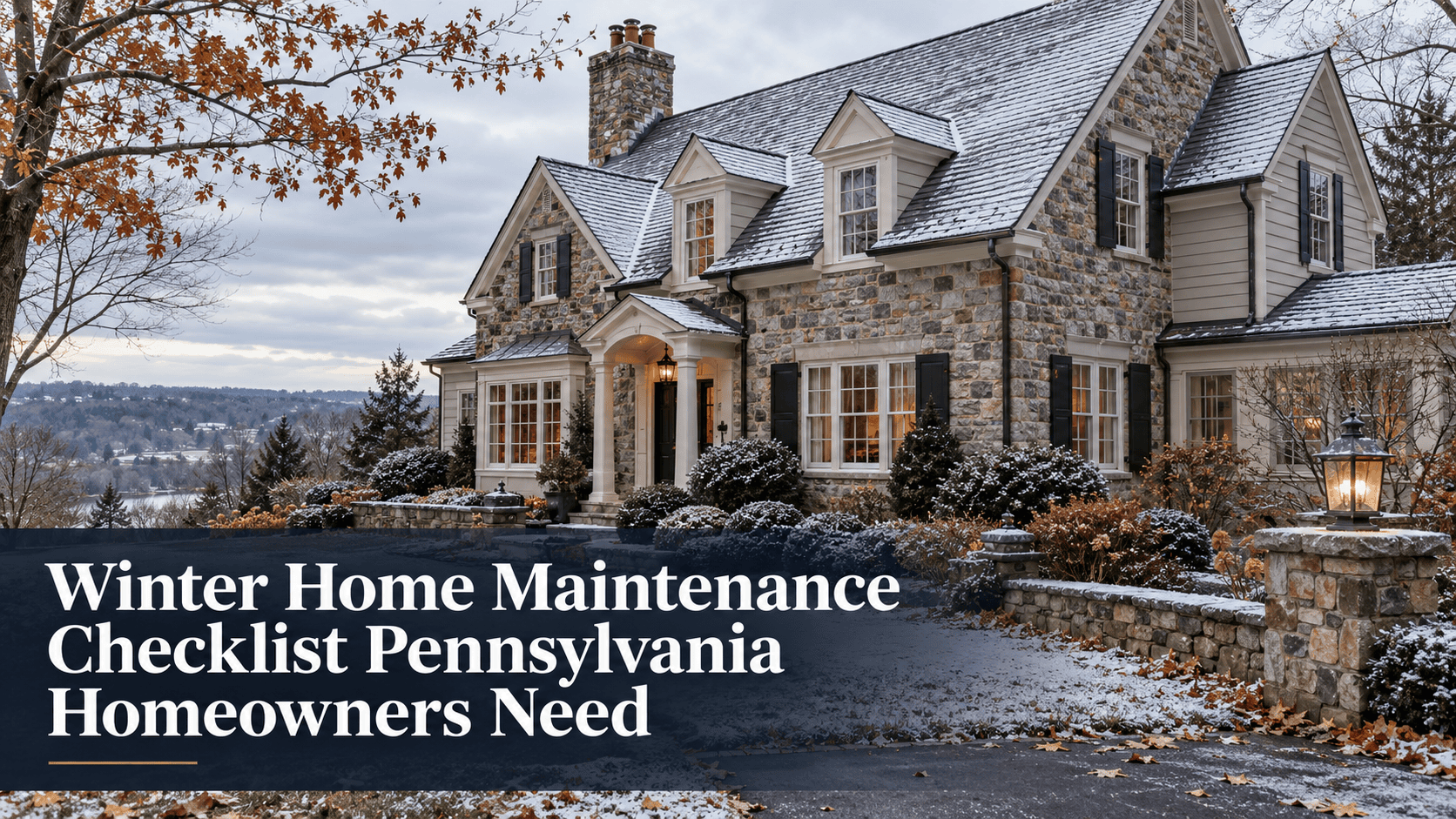
A thorough winter home maintenance checklist Pennsylvania homeowners can rely on covers far more than clearing gutters once and calling it done. Cold temperatures, ice, and heavy precipitation put real stress on a home’s exterior, and taking care of a few key areas in the fall can help you head into winter with fewer surprises.
This checklist walks through the roof, gutters, siding, windows, doors, and other exterior details worth reviewing before the first freeze. If you notice issues along the way, the roofing services page outlines how Hynes Construction can help address them before winter arrives. You can also visit the Hynes Construction home page to see the full range of exterior services available to Main Line homeowners.
Every home is different, and a checklist like this works best as a starting point rather than a substitute for a closer look at your specific property. Older homes, homes with mature trees nearby, and homes with a history of ice dams or drainage issues may need more attention in certain areas than a newer, simpler structure.
Is Your Home Ready for Pennsylvania Winter?
Before the first freeze arrives, use this Pennsylvania Winter Home Maintenance Checklist to quickly review your roof, gutters, siding, windows, doors, chimney, and drainage. Catching small exterior problems in the fall can give you more time to address them before winter weather makes repairs more difficult.
Not sure what to prioritize? Start with the areas most exposed to water, ice, and freezing temperatures. If you find a concern that needs a closer look, call Hynes Construction at 610-896-6388 to discuss your options.
Why Fall Is the Best Time for a Winter Home Maintenance Check
Fall gives you a window to catch and address issues while temperatures are still mild enough for repairs. Materials such as caulk and sealant cure better in moderate weather, and contractors generally have more scheduling flexibility before winter storm season creates a backlog of emergency calls. Waiting until the first snowfall to notice a problem often means dealing with it under worse conditions, at a less convenient time, and sometimes at greater expense.
Winter Roof Preparation Checklist
Your roof is your home’s primary defense against winter weather, so it deserves a close look before the season changes.
- Shingles. Check for missing, cracked, or curling shingles that could allow moisture in.
- Flashing. Inspect flashing around chimneys, vents, and skylights for gaps or rust.
- Roof penetrations. Look at pipe boots and vent seals, which are common points of leaks.
- Leaks. Check the attic for any signs of past or active water intrusion.
- Ventilation. Confirm that attic ventilation is functioning properly, since poor ventilation contributes to ice dam formation.
- Visible deterioration. Note any areas of the roof that look worn, discolored, or aged compared to the rest of the surface.
If you notice signs of damage during this review, it is worth having a professional evaluate the roof before winter weather makes repairs more difficult.
Gutter Maintenance Before Winter
Clogged or damaged gutters are one of the most common causes of winter water problems. Before temperatures drop, review the following.
- Debris. Clear leaves, twigs, and other buildup from gutters and downspouts.
- Loose gutters. Check for sections pulling away from the fascia or sagging under weight.
- Downspouts. Confirm downspouts are clear and directing water away from the foundation.
- Drainage. Look for pooling water near the base of downspouts that could indicate a drainage issue.
- Gutter guards or covers. If installed, check that they are securely attached and functioning as intended.
- Water direction. Make sure water is flowing away from the home rather than toward the foundation or walkways where it could refreeze.
You can learn more about ongoing gutter care through the gutter services Hynes Construction provides.
How to Protect Your Siding Before Winter
Siding takes on a protective role during winter, shielding your home’s structure from moisture and cold. A fall inspection should include:
- Cracks. Look for any splits or cracks that could allow water behind the siding.
- Loose or damaged sections. Check for panels that are warped, loose, or pulling away from the wall.
- Gaps. Inspect areas around corners, trim, and utility penetrations for gaps.
- Moisture signs. Look for discoloration, staining, or soft spots that could indicate trapped moisture.
- Areas needing repair. Note any sections that should be addressed before cold weather sets in.
Preparing Windows and Doors for Cold Weather
Windows and doors are common sources of heat loss and winter drafts. Reviewing them in the fall can improve comfort and help prevent moisture problems.
- Drafts. Feel around window and door frames for noticeable air movement.
- Caulking. Check exterior caulking for cracking or gaps and reapply where needed.
- Seals. Inspect weatherstripping around doors and window seals for wear.
- Damaged frames. Look for rot, warping, or damage to window and door frames.
- Storm doors and windows. Confirm that storm doors and windows are properly installed and functioning if your home has them.
- Water intrusion. Check for any signs that water has previously entered around window or door openings.
If you find recurring issues, the window services Hynes Construction offers can help address drafts, damaged frames, or aging seals.
Check Chimneys, Flashing, and Other Exterior Details
A handful of smaller exterior details often get overlooked but can lead to bigger problems if ignored.
- Chimney masonry. Look for cracked or crumbling mortar joints.
- Caps. Confirm the chimney cap is intact and properly secured.
- Flashing. Inspect flashing where the chimney meets the roofline for gaps or lifting.
- Roof and wall transitions. Check areas where different roof planes or wall sections meet, since these are common points of water entry.
- Exterior penetrations. Review areas where pipes, vents, or wiring pass through exterior walls or the roof.
These details are easy to overlook because they are small, but they are often where water first finds its way into a home. A close visual check from the ground, or with binoculars for higher areas, can help you catch problems before they turn into interior damage over the winter months. If you are unsure what to look for, a professional exterior review can cover these details more thoroughly, and you can review Hynes Construction’s certifications and affiliations to learn more about the manufacturer relationships and industry credentials behind the company’s work.
While no maintenance routine can guarantee complete prevention of winter roof issues, a few practices can help reduce the risk.
- Water drainage. Confirm gutters and downspouts are clear so melting snow can drain properly instead of pooling and refreezing.
- Snow and ice concerns. Be aware of areas where snow tends to accumulate or where ice dams have formed in past winters.
- Roof condition. A roof in good repair is generally better equipped to handle winter weather than one with existing damage.
- Ventilation. Proper attic ventilation helps regulate roof surface temperature, which plays a role in ice dam formation.
- Trees and branches. Trim back branches that hang over the roof and could break under the weight of snow or ice.
It is important to understand that these steps can help reduce risk, but they do not guarantee that ice dams or winter roof damage will never occur. Weather conditions and individual roof characteristics both play a role.
Ice dams typically form when heat escaping from the attic melts snow on the upper portions of the roof, and that meltwater refreezes as it reaches the colder eaves. Over time, this can create a ridge of ice that backs water up under shingles. Addressing attic insulation and ventilation, alongside keeping gutters clear, are two of the more effective ways homeowners can reduce the conditions that lead to ice dam formation, even though no single fix eliminates the possibility entirely.
Main Line Homes: What Older Properties Should Check Before Winter
Many homes throughout Ardmore, Haverford, Wynnewood, and other Main Line communities have older construction that may need extra attention before winter.
- Older roofing systems may show wear that is harder to spot without a close inspection.
- Masonry, including chimneys and foundations, can develop cracks over time that widen with freeze and thaw cycles.
- Stucco exteriors should be checked for cracking or moisture intrusion, particularly around window and door openings.
- Aging siding may have more gaps or areas of deterioration than newer materials.
- Windows in older homes sometimes have less efficient seals, which can mean more noticeable drafts.
- Flashing installed decades ago may not meet current standards and can be more prone to leaks.
- Drainage around older foundations sometimes needs adjustment as grading settles over time.
Many of these older homes have unique architectural details, such as slate roofing, stone masonry, or original wood trim, that benefit from a contractor familiar with older construction methods. A generic winter checklist is a good starting point, but an older home in Bryn Mawr, Villanova, or Wayne may have specific vulnerabilities that are worth discussing with someone who has experience working on similar properties in the area.
Which Exterior Repairs Should Be Completed Before the First Freeze?
Not every issue you find during a fall inspection needs to be addressed immediately, but it helps to prioritize.
Urgent issues include active leaks, significant roof damage, or anything allowing water directly into the home. These should be addressed as soon as possible.
Important issues include gutter problems, minor roof damage, or window and door seals that are clearly failing. These are worth scheduling before winter weather arrives.
Cosmetic issues, such as minor siding discoloration or small trim gaps that are not allowing water intrusion, can often wait until spring if needed, though addressing them earlier is generally easier.
Complete Pennsylvania Winter Home Maintenance Checklist
Use this scannable checklist as a quick reference before winter arrives.
- Roof: inspect shingles, flashing, and ventilation
- Gutters: clear debris and confirm proper drainage
- Siding: check for cracks, gaps, and moisture signs
- Windows: check seals, caulking, and drafts
- Doors: check weatherstripping and frame condition
- Chimney: inspect masonry, cap, and flashing
- Drainage: confirm water flows away from the foundation
- Trees: trim branches near the roofline
- Exterior repairs: prioritize urgent and important items before cosmetic ones
Frequently Asked Questions
What should I check around my house before winter?
Focus on the roof, gutters, siding, windows, doors, chimney, and drainage. These areas are most exposed to winter weather and most likely to develop issues if problems go unaddressed.
How do I prepare my roof for winter?
Inspect shingles, flashing, and attic ventilation, and address any signs of damage or leaks before cold weather arrives.
When should I clean my gutters before winter?
Fall, after most leaves have dropped, is typically the best time so gutters stay clear through the winter months.
How do I protect my siding in winter?
Check for cracks, gaps, and loose sections in the fall, and repair any areas of concern before moisture and freezing temperatures can make small issues worse.
How do I prepare windows for winter?
Check caulking, weatherstripping, and frames for wear, and address drafts or gaps before they lead to higher energy use or moisture problems.
How do I prevent winter roof damage?
Keep gutters clear, confirm proper attic ventilation, trim overhanging branches, and address any existing roof damage before winter weather arrives.
What home repairs should be completed before freezing temperatures?
Prioritize active leaks, significant roof or siding damage, and failing window or door seals, since these can worsen quickly once temperatures drop.
When should I schedule a fall home inspection?
Early to mid-fall generally allows enough time to schedule repairs before winter weather sets in.
A Pre-Winter Action Plan for Your Home
Think of this checklist as a pre-winter action plan rather than general advice to keep in the back of your mind. Working through it methodically, room by room and area by area, is more effective than a glance around the exterior on a single afternoon. Working through the roof, gutters, siding, windows, and other exterior details now can help you head into winter with fewer surprises. If your fall inspection turns up concerns you would like a professional to look at, contact Hynes Construction to schedule a review and ask about financing options if repairs are needed before the season changes.
For more home maintenance tips, seasonal exterior care recommendations, project updates, and information about Hynes Construction’s work throughout the Main Line, follow us on social media:
- Facebook: Follow Hynes Construction for project updates, home improvement tips, seasonal maintenance reminders, and company news. Follow Hynes Construction on Facebook
- Instagram: Follow Hynes Construction to see recent projects, exterior transformations, and additional home improvement insights. Follow Hynes Construction on Instagram
Do Not Let a Small Fall Problem Become a Winter Repair
A loose gutter, damaged shingle, failing seal, or drainage issue may seem minor today, but Pennsylvania’s winter weather can make existing exterior problems harder to manage. Before the first freeze, take a few minutes to work through this checklist and identify anything that needs attention.
If you are unsure whether a problem requires repair or simply needs monitoring, talk with the Hynes Construction team before winter arrives.
Call Hynes Construction at 610-896-6388 to discuss your home’s exterior needs and schedule a professional review.

(President, Hynes Roofing and Siding)
With over 35 years experience in the roofing and siding industry, Michelle Hynes has built a business from 2 people into over 45 people and 19 trucks!