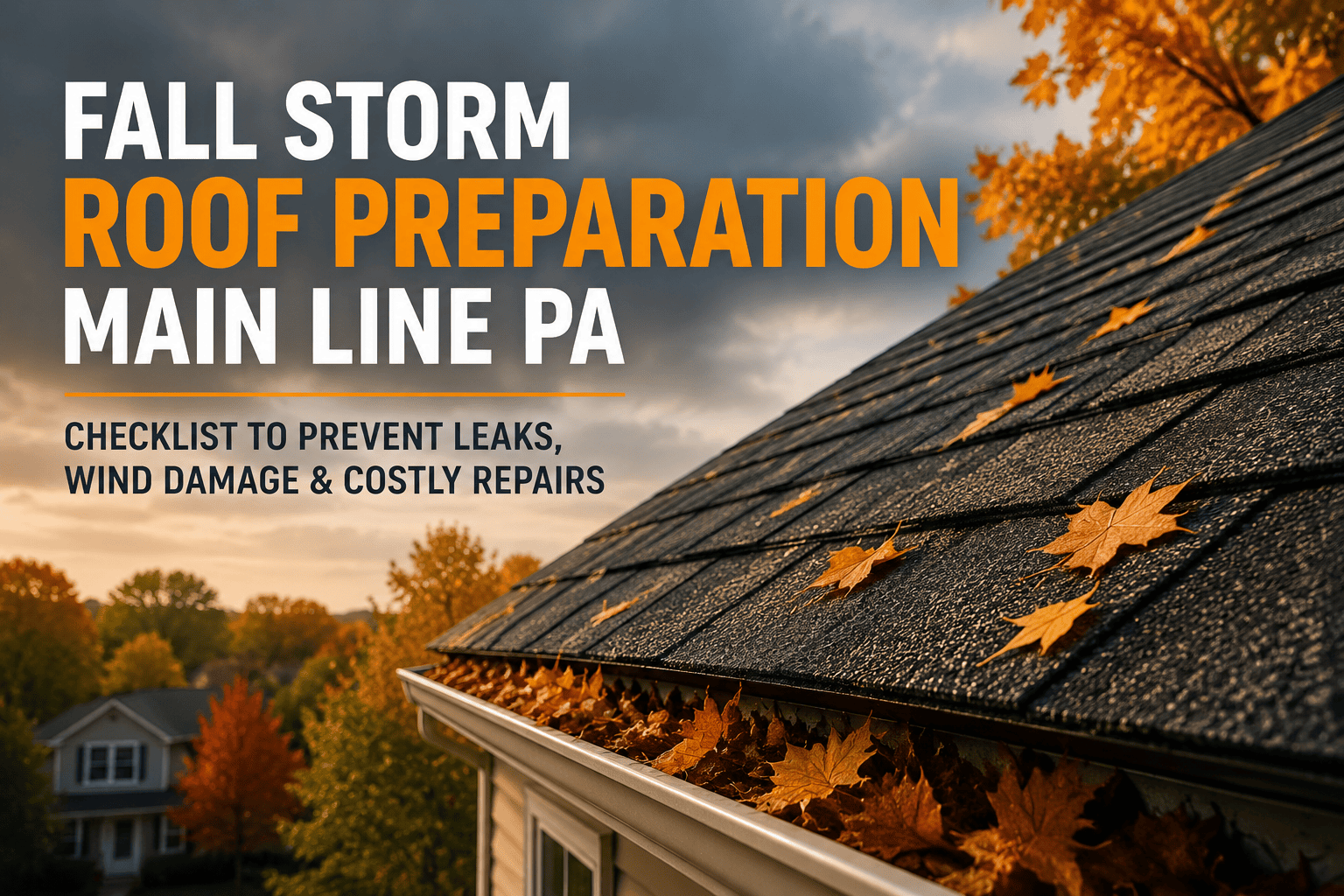
As the vibrant summer foliage across the Main Line transitions into crisp autumn air, homeowners throughout Delaware County, Montgomery County, Chester County, and the Philadelphia suburbs must turn their attention upward. Implementing a thorough fall storm roof preparation Main Line PA strategy is one of the most proactive investments you can make to protect your home’s structural integrity and financial value. Autumn in Pennsylvania brings a dramatic shift in weather patterns, introducing heavy nor’easters, freezing overnight temperatures, torrential rainfall, and destructive windstorms that test every component of your exterior building envelope. Without proper foresight and seasonal maintenance, minor vulnerabilities such as loose flashing, brittle shingle tabs, or clogged valley gutters can quickly escalate into catastrophic interior water damage, expensive drywall repairs, and hazardous mold outbreaks.
Schedule Your Fall Roof Inspection With Hynes Construction
Before fall storms arrive, make sure your roof is ready. Hynes Construction provides professional roof inspections and repair solutions throughout the Main Line, Delaware County, Montgomery County, and surrounding Pennsylvania communities. Call Hynes Construction today at 610-896-6388 to schedule your fall roof inspection and protect your home before storm damage occurs.
Homeowners residing in historic and suburban communities like Ardmore, Wayne, Bryn Mawr, Villanova, Haverford, and Wynnewood face unique environmental challenges. Mature canopy trees, rapid temperature fluctuations, and aging residential architecture require specialized care. This comprehensive guide provides an expert roadmap designed to help you fortify your roof before severe autumn weather arrives. By understanding seasonal risks, executing a rigorous inspection checklist, and partnering with qualified local professionals, you can safeguard your sanctuary and enjoy complete peace of mind all winter long.
Why Fall Storm Roof Preparation Matters for Main Line PA Homeowners
Understanding why seasonal upkeep is indispensable begins with examining local climate dynamics. Pennsylvania autumns are notoriously unpredictable, marked by sudden frontal boundaries colliding with tropical remnants moving up the Atlantic coast. This meteorological volatility generates high-velocity winds and torrential downpours that stress roofing materials to their limits. Engaging in comprehensive fall storm roof preparation Main Line PA ensures that your home is structurally equipped to withstand these rigorous environmental demands without succumbing to sudden leaks.
Furthermore, autumn serves as the crucial bridge toward winter freeze-thaw cycles. When trapped moisture enters tiny cracks in your roofing materials during autumn rains and subsequently freezes as temperatures plunge below zero, it expands with immense hydraulic force. This freezing action widens cracks, lifts shingle edges, and shatters masonry mortar joints. Proactive maintenance completed during September and October prevents these minor flaws from evolving into major structural emergencies when winter weather sets in. Emphasizing regular roof maintenance before winter guarantees optimal thermal efficiency, protects attic insulation from moisture saturation, and preserves your home envelope against costly degradation. Ensuring ongoing roof maintenance before winter is the most reliable method for avoiding catastrophic ice dams and indoor leaks.
Complete Fall Roof Inspection Checklist: What Homeowners Should Check Before Storm Season
A systematic inspection checklist is the cornerstone of effective autumn home maintenance. Whether you are inspecting from the safety of ground level with binoculars or reviewing notes from a professional assessment, covering every critical component of your roofing system is vital.
Begin your exterior assessment by examining the field of your roof for missing, cracked, or curling asphalt shingles. Granule loss, which appears as bald patches on shingles or large accumulations in your gutters, indicates that UV degradation has compromised the protective asphalt coating. Next, inspect all metal flashing around chimneys, dormers, skylights, and sidewalls. Flashing is the primary waterproof barrier where roof planes intersect vertical surfaces; rusted, buckled, or separated flashing is a leading cause of interior leaks. Valleys, where two roof slopes meet, require scrutiny to ensure accumulated leaves and pine needles are not blocking water runoff. To gain professional insights into evaluating these components, review guidance on professional roof inspection after storm damage to understand why expert evaluation uncovers hidden vulnerabilities. Securing a thorough roof inspection Main Line PA from certified technicians ensures that subtle structural defects are identified and remediated before autumn gales strike. Scheduling a professional roof inspection Main Line PA gives homeowners a clear, objective report on their exterior’s structural condition.
Check Your Roof for Signs of Wind Damage Before the Next Storm
High-velocity autumn winds can wreak havoc on residential roofing systems across suburban Philadelphia. Even when winds do not tear off entire sections of roofing, they exert tremendous uplift pressures that weaken shingle adhesive bonds and expose vulnerable underlayment.
Homeowners should scan rooflines after every significant wind event for telltale warning signs of wind stress. Lifted shingle tabs, exposed nail heads, protruding staples, and missing ridge caps are classic indicators that wind uplift has compromised your roof’s defense. Damaged roof edges and loose fascia boards also invite wind-driven rain to penetrate beneath the shingle perimeter. Implementing rigorous wind damage roof prevention techniques, such as reinforcing perimeter starter strips and securing loose flashing, dramatically reduces the risk of catastrophic blow-offs during severe storms. If wind damage is already present, arranging prompt professional storm damage roof repair Pennsylvania services prevents water from migrating across the roof deck and damaging interior ceilings. Utilizing advanced wind damage roof prevention strategies protects shingle tabs against high-velocity autumn gusts. When high winds breach exterior defenses, professional storm damage roof repair Pennsylvania ensures your home is restored quickly.
Prevent Roof Leaks Before Fall Rain and Storms Arrive
Preventing roof leaks before autumn downpours commence requires diligence, precision, and an understanding of how water travels along roof structures. Water is remarkably resourceful; a leak appearing in a first-floor living room ceiling may have originated from a compromised roof penetration twenty feet away.
Executing effective roof leak prevention tips begins with sealing all roof penetrations, including plumbing vent pipes, exhaust fan cowlings, and electrical service masts. Rubber boots around vent pipes frequently dry rot and crack under intense summer heat, creating immediate entry points for autumn rain. Applying high-grade polyurethane sealant or replacing deteriorated collars eliminates these vulnerabilities. Additionally, inspect your attic space during or immediately after a heavy rain shower. Checking attic sheathing and rafters for active water stains, damp insulation, or musty odors reveals hidden roof leaks long before they cause structural wood rot or interior ceiling collapse. Homeowners facing persistent moisture issues should review expert strategies on identifying common roofing problems to address root causes effectively. Following expert roof leak prevention tips safeguards your attic framing and interior drywall against moisture intrusion.
Why Gutters, Downspouts, and Roof Drainage Matter During Fall Storms
While homeowners focus primarily on shingles and flashing, the drainage system plays an equally critical role in overall roof health. During autumn, deciduous trees drop millions of leaves, twigs, and seed pods that quickly clog gutters and downspouts.
When gutters are blocked, rainwater cannot drain away from the roof edge. Instead, water pools in the gutter trough, soaking the wooden fascia boards and causing them to rot, sag, and detach from the framing. Furthermore, overflowing water cascades directly down against your home’s foundation, threatening basement waterproofing, shifting concrete slabs, and eroding landscaping. In freezing weather, trapped gutter water forms heavy ice dams that back up under roof shingles, causing severe interior water damage. Maintaining clean, free-flowing gutters and extending downspouts at least six feet away from your foundation is an indispensable part of any robust fall roof checklist Pennsylvania design. Incorporating gutter maintenance into your fall roof checklist in Pennsylvania ensures proper drainage and prevents foundation erosion.
How To Prepare Roof Flashing, Chimneys, Skylights, and Vulnerable Areas
Roof penetrations and architectural junctions represent the most vulnerable points on any residential roofing system. On historic and contemporary homes across the Main Line, masonry chimneys, skylights, and complex roof valleys require specialized preparation before autumn storms arrive.
Masonry chimneys are exposed to constant weathering, causing mortar joints to crumble and bricks to spall. Water entering deteriorated chimney crowns or rusted step flashing will rapidly migrate into interior living spaces. Similarly, aging skylight seals and cracked glass gaskets frequently fail under the thermal shock of fluctuating autumn temperatures. Professional contractors utilize specialized waterproof membranes, step-flashing integration, and elastomeric sealants to reinforce these critical junctions. Ensuring that flashing and penetrations are professionally secured prevents costly emergency repairs when autumn nor’easters bring relentless wind-driven rain.
Fall Roof Maintenance Tasks Homeowners Should Complete Before Winter
Transitioning your property from autumn to winter requires a structured checklist of preventative maintenance tasks. Completing these items before freezing temperatures arrive ensures your home remains energy-efficient and secure throughout the coldest months of the year.
Your pre-winter maintenance protocol should include:
- Thoroughly cleaning and flushing all gutters and downspouts after all deciduous trees have dropped their leaves.
- Trimming overhanging tree branches that scrape against shingles or drop heavy debris onto the roof surface during ice storms.
- Inspecting attic ventilation to ensure soffit and ridge vents are unobstructed, preventing warm attic air from melting snow unevenly and forming destructive ice dams.
- Scheduling a professional roof assessment to catch minor wear before winter snow loads test your roof structure.
- Addressing any minor shingle repairs or flashing touch-ups promptly.
Adhering to a disciplined roof maintenance before winter routine extends the lifespan of your roofing materials and protects your family from unexpected winter emergencies. If your autumn inspection reveals extensive wear that exceeds minor repairs, familiarizing yourself with the complete roof replacement process helps you plan ahead with confidence. Furthermore, addressing exterior vulnerabilities often extends to adjacent building components, making resources on how to deal with siding storm damage highly valuable for comprehensive home protection.
What To Do If Your Roof Is Damaged During a Fall Storm
Despite meticulous preparation, exceptionally severe autumn storms can occasionally inflict sudden damage on Main Line properties. Knowing how to respond calmly and methodically in the immediate aftermath of a storm is crucial for minimizing damage and streamlining insurance claims.
First, prioritize personal safety by staying clear of downed power lines, unstable ceilings, and flooded interior rooms. Second, document all exterior and interior damage thoroughly with photographs and video footage before touching anything or initiating emergency tarping. Third, take reasonable emergency measures to prevent further water intrusion, such as placing buckets or securing heavy-duty tarpaulins over exposed roof decks. Fourth, contact an established local roofing professional to perform a detailed damage assessment. Fifth, if structural or storm damage is extensive, notify your insurance carrier to initiate a formal claim, utilizing your contractor’s detailed documentation to substantiate your case.
Why Professional Roof Inspections Help Prevent Expensive Storm Repairs
Many homeowners wonder whether hiring a professional for an annual autumn inspection is truly necessary when their roof appears sound from the ground. The reality is that professional inspections uncover hidden defects that are invisible to the untrained eye.
Professional roofing technicians possess the safety equipment, technical training, and industry experience required to detect microscopic shingle blistering, fragile seal strips, compromised underlayment, and subtle fastener corrosion. By identifying these developing issues early, professional inspections allow homeowners to perform targeted, low-cost maintenance rather than facing expensive emergency replacements down the road. Moreover, annual professional documentation establishes a verifiable maintenance history that proves invaluable if you ever need to file an insurance claim following a major storm event.
Protect Your Home With Professional Fall Roof Preparation
Your home is your sanctuary, shielding your family from the harsh elements throughout every changing season. As autumn weather approaches the Main Line, Delaware County, Montgomery County, and surrounding Pennsylvania communities, taking proactive steps to prepare your roof is an investment in safety, comfort, and financial preservation.
By implementing a comprehensive maintenance strategy, checking vulnerable penetrations, clearing drainage systems, and partnering with experienced local professionals, you ensure that your roof remains a sturdy, reliable defense against autumn storms and winter snows. Do not wait for a catastrophic leak or severe structural failure to take action.
Schedule Your Fall Roof Inspection Today
Autumn storms and winter weather demand a secure, watertight roof. Hynes Construction helps homeowners throughout the Main Line and surrounding Pennsylvania communities protect their properties with expert inspections, preventative maintenance, and reliable repairs. Call 610-896-6388 today to schedule your fall roof preparation service.
Frequently Asked Questions
When is the best time to prepare my roof for fall and winter in Pennsylvania?
Late summer and early autumn (August through September) provide ideal weather conditions for completing roof inspections, clearing gutters, and sealing vulnerable penetrations before severe storms arrive.
How often should Main Line homes have professional roof inspections?
Homeowners should schedule professional roof inspections at least once a year, preferably in the fall, as well as immediately following any severe regional storm event.
What are the primary signs of wind damage on an asphalt shingle roof?
Key indicators include lifted or curling shingle tabs, exposed nail heads, missing shingles along ridge lines, and loose metal flashing around chimneys and valleys.
Why are clogged gutters dangerous for my roof during autumn?
Clogged gutters trap rainwater, causing water to back up under shingle edges, rot wooden fascia boards, damage attic insulation, and erode your home foundation.
Can I inspect my roof myself, or should I hire a professional?
While ground-level visual checks using binoculars are safe for homeowners, walking on a roof is hazardous and best left to professional contractors equipped with proper safety gear.
How does preventative roof maintenance lower long-term repair costs?
Addressing minor issues like cracked sealant, loose flashing, or a few missing shingles prevents water intrusion from rotting structural decking and destroying interior finishes.
Does homeowners insurance cover damage caused by lack of maintenance?
No. Insurance policies cover sudden, accidental storm damage, whereas damage resulting from deferred maintenance or gradual wear and tear is expressly excluded.
What role does attic ventilation play in roof preparation?
Proper attic ventilation prevents warm air from accumulating under the roof deck, reducing the risk of ice dam formation during freezing winter months.
How long does a typical professional fall roof inspection take?
A comprehensive professional roof inspection typically takes between forty-five minutes to an hour, depending on the size and complexity of the residential roofing system.
Who should I call for fall storm roof preparation in the Main Line?
Hynes Construction provides expert roofing inspections, preventative maintenance, and storm damage repairs across the Main Line and surrounding Pennsylvania counties.
At Hynes Construction, we believe homeowners should have access to reliable information before making important decisions about their homes. Follow us on Facebook and Instagram to see recent roofing projects, storm restoration updates, homeowner tips, and exterior improvement ideas from our team serving the Main Line and surrounding Pennsylvania communities. Stay connected with Hynes Construction

(President, Hynes Roofing and Siding)
With over 35 years experience in the roofing and siding industry, Michelle Hynes has built a business from 2 people into over 45 people and 19 trucks!