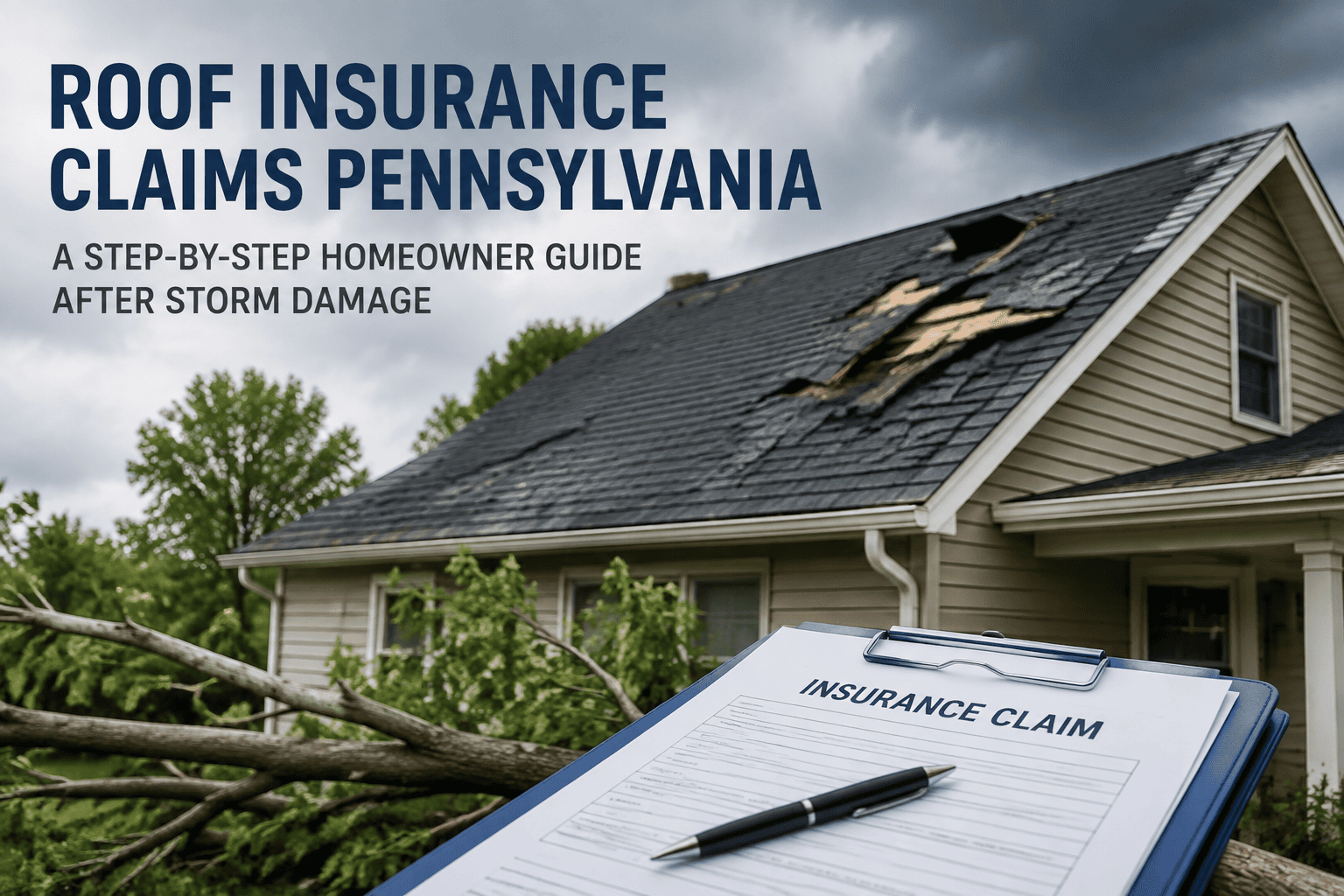
Navigating property insurance policies after severe weather strikes can feel overwhelming for homeowners across the Main Line, Delaware County, Montgomery County, Chester County, and Philadelphia. When severe thunderstorms, microbursts, heavy winter snowfalls, or hail events batter your residential property, your roof is often the primary line of defense. Understanding how roof insurance claims Pennsylvania work is essential to securing the financial compensation you deserve to restore your home to its pre-loss condition. Homeowners insurance policies are designed to protect your investment against sudden and accidental weather events, yet many property owners find themselves uncertain about where to begin when filing a claim. This comprehensive guide is crafted by experienced local roofing and exterior restoration professionals to walk you through every phase of the insurance claim process, ensuring you avoid common pitfalls, document damage accurately, and partner with the right professionals to protect your home.
Storm Damage Roof Inspection Offer
Think your roof may have storm damage? Before filing an insurance claim, allow Hynes Construction to inspect your roof and help identify potential damage. Our experienced team assists homeowners throughout the Main Line, Delaware County, Montgomery County, and surrounding Pennsylvania communities. Call Hynes Construction today at 610-896-6388 for a professional roof inspection.
When severe weather impacts your property, time is of the essence. Insurance carriers enforce strict reporting guidelines, and failing to act promptly can result in delayed inspections or disputed claims. Whether you reside in Ardmore, Wayne, Bryn Mawr, Villanova, Haverford, West Chester, or the surrounding Philadelphia suburbs, understanding the distinction between normal wear and tear versus acute storm damage is the foundation of a successful claim. Throughout this guide, we will explore the types of damage covered by standard homeowners insurance, how to conduct preliminary checks safely, how to document evidence for your adjuster, and why working with a local specialist like Hynes Construction makes all the difference.
Section 1: Understanding Roof Insurance Claims in Pennsylvania: What Homeowners Need to Know
When homeowners insurance policies are issued in Pennsylvania, they represent a contract between the property owner and the insurance carrier to cover unforeseen perils. Understanding roof insurance claims requires examining what constitutes covered storm damage versus deferred maintenance. Homeowners insurance is never a maintenance contract; it is designed strictly to indemnify policyholders against sudden, accidental damage caused by external forces of nature.
Over time, asphalt shingles, slate, tile, and metal roofing systems experience normal thermal expansion, UV degradation, and gradual weathering. Insurance adjusters are trained to distinguish between this natural aging process and acute trauma caused by high winds, flying debris, or large hailstones. When a severe weather event strikes the Main Line region, it can loosen shingle adhesive strips, fracture granule matrices, and compromise underlying roof deck integrity. Early inspection matters immensely because minor water intrusion can quickly escalate into structural wood rot, interior drywall collapse, and hazardous mold growth if left unaddressed. Homeowners should never delay repairs or reporting, as prompt mitigation is both a policy requirement and a vital safeguard for family health and home equity. If you need reliable assistance following a severe storm, professional storm damage roof repair Pennsylvania services ensure your home remains watertight and structurally sound. Navigating every single detail of a successful roof damage insurance claim requires meticulous record-keeping and expert physical evidence.
Section 2: What Types of Roof Damage Are Usually Covered by Insurance?
Homeowners across Pennsylvania frequently ask whether their specific weather event qualifies for insurance coverage. Standard homeowners insurance policies generally cover sudden and accidental damage rather than gradual deterioration. In the Mid-Atlantic and Philadelphia suburban regions, weather patterns vary widely throughout the year, bringing intense summer thunderstorms, microbursts with destructive straight-line winds, severe hailstorms, and heavy winter nor’easters.
When high winds sweep across Delaware County and Montgomery County, they generate uplift forces that can tear shingles entirely off the deck or lift them sufficiently to break their waterproof seals. Hailstorms leave distinct circular bruising, granule loss, and fractured fiberglass mats on asphalt shingles, which may not cause immediate indoor leaks but severely shorten the functional lifespan of the roof. Fallen tree branches and uprooted trees during saturated ground conditions represent another major category of covered damage, frequently causing catastrophic structural punctures. Insurance carriers evaluate these sudden incidents against your policy declarations page, deductible structures, and endorsement riders. Understanding these parameters helps homeowners set realistic expectations before initiating contact with their insurance provider.
Section 3: How to Tell If Your Roof Has Storm Damage Before Filing an Insurance Claim
Before formally contacting your insurance carrier, it is vital to perform a preliminary assessment of your property to determine whether filing a claim is warranted. However, homeowners must exercise extreme caution. Climbing onto a steep, wet, or structurally compromised roof is hazardous and should always be avoided. Instead, ground-level inspections and binocular assessments can reveal numerous warning signs of acute storm trauma.
Visible warning signs include missing or displaced asphalt shingles scattered across your lawn or driveway, curled or fractured shingle tabs, excessive mineral granules accumulating in your gutter downspouts, and dented metal flashing around chimneys, vents, and valleys. Inside your home, check your attic spaces and top-floor ceilings for fresh water stains, damp insulation, or musty odors during heavy rain events. If you observe any of these indicators, scheduling a hail damage roof inspection or a comprehensive professional evaluation is the next logical step. Furthermore, ensuring prompt wind damage roof repair prevents secondary moisture intrusion from destroying your interior finishes and structural framing.
Section 4: What To Do Immediately After Storm Damage Happens
When a severe storm damages your home in Ardmore, Wayne, Bryn Mawr, or surrounding Main Line neighborhoods, following a structured emergency response protocol protects your family and preserves your insurance claim eligibility.
First, ensure family safety by evacuating rooms with active ceiling collapses or severe structural sagging. Turn off electrical circuits in affected areas if water is near light fixtures or outlets. Second, document all visible exterior and interior damage thoroughly using high-resolution photographs and video walkthroughs with date stamps enabled. Capture wide-angle shots of your property in relation to fallen trees or storm debris, as well as close-up images of damaged shingles and dented siding. Third, take reasonable steps to prevent additional damage, such as placing buckets under active leaks or utilizing heavy-duty tarps over minor roof breaches where safe to do so. Fourth, contact a reputable local roofing contractor to perform a professional assessment. Fifth, notify your insurance company to initiate the formal claim process. Professional documentation from an established contractor provides independent verification that strengthens your claim significantly.
Section 5: How to Document Roof Damage for Your Insurance Company
Insurance adjusters evaluate claims based on empirical evidence, verifiable timelines, and policy language. Establishing a comprehensive documentation checklist is one of the most effective ways to ensure your claim is processed accurately and fairly.
Your documentation portfolio should include clear photographs of all damaged roofing planes, siding, gutters, window screens, and detached personal property. Record the exact date and approximate time the severe weather event occurred. Supplement your personal photos with official local weather reports, radar logs, and historical storm data confirming high wind speeds or hail activity in your specific zip code. Additionally, gather previous maintenance records, prior inspection reports, and original installation invoices to demonstrate that your roof was properly maintained before the storm. This meticulous level of preparation prevents adjusters from dismissing damage as pre-existing wear and tear or deferred maintenance.
Section 6: Should You Call Your Insurance Company or Roofing Contractor First?
A common dilemma for homeowners facing roof damage is determining whether to call their insurance carrier or a roofing contractor first. While some homeowners assume they must notify the insurance company immediately, industry experts and experienced consumer advocates strongly recommend scheduling a professional inspection with a trusted contractor before filing a formal claim.
The recommended process begins with a thorough, professional assessment by a qualified local roofing specialist. A professional inspection identifies all storm-related trauma, including subtle hail bruising and wind-lifted tabs that untrained eyes often miss. Once the contractor documents the findings with comprehensive photos and repair estimates, the homeowner has clear, objective data. Armed with this professional assessment, contacting your insurance provider ensures you can discuss the exact scope of damage accurately with your adjuster. Homeowners who skip the contractor inspection often file speculative claims or incomplete descriptions, leading to unnecessary claim denials or undervalued settlements. For further reading on pre-claim evaluations, review professional insights on professional roof inspection to understand how expert assessments protect your interests. Ensuring that every single finding is logged during your roof inspection for insurance claims provides undeniable proof of the severity of the weather event.
Section 7: How the Roof Insurance Claim Process Works Step by Step
Understanding the chronological progression of a roof insurance claim removes much of the anxiety associated with property restoration. The claims journey typically follows a structured six-step process.
- Damage Inspection: A qualified roofing contractor inspects the property, documents all storm-related damage, and prepares a detailed assessment.
- Claim Submission: The homeowner contacts their insurance company to file a formal claim, providing policy details and preliminary damage summaries.
- Adjuster Inspection: The insurance company assigns a claims adjuster to inspect the property in person, often accompanied by your roofing contractor to ensure all damage is properly accounted for.
- Approval Process: The insurance carrier reviews the adjuster’s report, compares it against policy coverage, and issues an Explanation of Benefits (EOB) along with an initial settlement estimate.
- Repair Estimate and Material Selection: The homeowner and contractor review the insurance scope of work, select high-quality replacement materials, and schedule the restoration project.
- Restoration Work: Professional crews execute the roof replacement or repair, followed by final inspections and submission of completion certificates to release final insurance funds.
Throughout this process, homeowners must understand key insurance terminology. Your deductible is the out-of-pocket amount you agreed to pay per your policy before insurance coverage kicks in. Depreciation represents the reduction in value of your roof due to age and wear. Many policies operate on Actual Cash Value (ACV), which pays out depreciated value initially, or Replacement Cost Value (RCV), which reimburses the full cost of replacing the roof with new materials of like kind and quality once the work is completed and documented.
Section 8: Common Reasons Roof Insurance Claims Get Denied
While insurance policies are purchased to provide peace of mind, roof claims are occasionally denied or underpaid, causing immense frustration for homeowners. Understanding the root causes of claim denials allows property owners to take proactive steps to avoid them.
The most frequent reasons for claim denials include lack of sufficient physical documentation, delayed reporting that violates policy notification windows, and damage resulting from long-term maintenance neglect or pre-existing structural issues. For example, if a roof has severe, long-standing wood rot and worn-out shingles that were failing before the storm occurred, adjusters will attribute the damage to wear and tear rather than the recent weather event. Furthermore, minor wind or hail marks that do not compromise the waterproof integrity or functional lifespan of the roof may fall below policy deductibles. To safeguard your investment and prevent minor issues from compounding, consult expert resources on identifying common roofing problems before storm season arrives. When preparing a claim, ensuring every piece of damage is accurately attributed to the storm event is paramount.
Section 9: Why Choose a Local Insurance Restoration Contractor in Pennsylvania?
When disaster strikes your home in Main Line, Ardmore, Wayne, Bryn Mawr, West Chester, Delaware County, or Montgomery County, partnering with a local, specialized contractor is crucial for a seamless restoration experience. Out-of-state storm-chasing contractors often flood affected regions after major weather events, offering quick fixes before disappearing without local accountability.
A reputable local insurance restoration contractor Pennsylvania brings deep familiarity with regional weather extremes, local municipal building codes, and insurance company adjuster protocols. Local contractors maintain permanent physical offices, established community reputations, and long-standing relationships with regional material suppliers. They understand the specific architectural styles found across historic Main Line estates and suburban developments alike. Furthermore, established local experts integrate comprehensive maintenance strategies into their services, encouraging homeowners to review proactive guides such as roof maintenance before storm season to minimize future vulnerability. When your insurance claim leads to a full-scale project, working with professionals who understand the complete roof replacement process ensures flawless execution from initial tear-off to final cleanup. Choosing a certified insurance restoration contractor Pennsylvania guarantees that your project complies with all local building codes and insurance standards.
Section 10: Protect Your Home With Professional Roof Insurance Claim Assistance
Your home is one of the most significant financial and emotional investments you will ever make. When severe Pennsylvania weather compromises your roof, taking swift, decisive action is essential to protect your property value, family safety, and long-term peace of mind. Delaying necessary repairs after storm events allows moisture to infiltrate attic spaces, rotting structural timber, staining ceilings, and breeding toxic mold.
By partnering with an experienced local restoration team, you transform a stressful administrative burden into a streamlined, professional project. From conducting meticulous preliminary inspections to working directly with insurance adjusters and executing flawless repairs, professional guidance ensures your home is restored to pristine condition. Whether you are dealing with minor wind trauma or catastrophic storm destruction, expert advocacy guarantees that your insurance policy works the way it was intended to work.
Need Help With A Roof Insurance Claim?
Storm damage can create uncertainty for homeowners. Hynes Construction helps Pennsylvania homeowners understand roof damage, document repairs, and restore their homes with confidence. Call 610-896-6388 today to schedule your roof inspection and discuss your storm restoration options.
Frequently Asked Questions
Does homeowners insurance cover roof damage in Pennsylvania?
Insurance policies commonly cover sudden storm-related damage, such as high winds, hail, and fallen trees, but coverage varies depending on the specific cause, the age of the roof, and your policy endorsements. Normal wear and tear is excluded.
How do I know if my roof damage is covered by insurance?
Determining coverage requires a professional inspection to identify acute storm damage, such as bruised shingles and lifted tabs, and distinguish it from normal aging and weathering.
Should I file a roof insurance claim after a storm?
Homeowners should first understand the severity of the damage through a professional inspection. If repair costs exceed your deductible, filing a claim is generally recommended.
How long do I have to file a roof insurance claim in Pennsylvania?
Filing timelines depend entirely on your specific insurance policy requirements, but most carriers require notification within a specific window following the date of the storm event.
Does insurance cover hail damage to a roof?
Hail damage is frequently covered by standard homeowners insurance when qualifying weather events cause bruising, granule loss, and structural compromise to roofing materials.
What evidence do I need for a roof insurance claim?
Essential evidence includes high-resolution photographs, professional inspection reports, official storm dates and weather logs, and detailed repair estimates.
Can a roofing contractor help with an insurance claim?
Experienced contractors inspect damage, compile thorough documentation, meet with insurance adjusters on-site, and guide homeowners through the entire restoration process.
Why do roof insurance claims get denied?
Common denial reasons include long-term maintenance neglect, delayed reporting beyond policy windows, insufficient physical evidence, and pre-existing wear and tear.
How much does insurance pay for roof replacement?
Insurance payouts depend on your policy deductible, depreciation schedules, and whether your policy is based on Actual Cash Value (ACV) or Replacement Cost Value (RCV).
How quickly should storm damage be repaired?
Immediate inspection and temporary repairs are crucial to prevent water intrusion, interior mold growth, and further structural deterioration of your home.
At Hynes Construction, we believe homeowners should have access to reliable information before making important decisions about their homes. Follow us on Facebook and Instagram to see recent roofing projects, storm restoration updates, homeowner tips, and exterior improvement ideas from our team serving the Main Line and surrounding Pennsylvania communities. Stay connected with Hynes Construction:

(President, Hynes Roofing and Siding)
With over 35 years experience in the roofing and siding industry, Michelle Hynes has built a business from 2 people into over 45 people and 19 trucks!