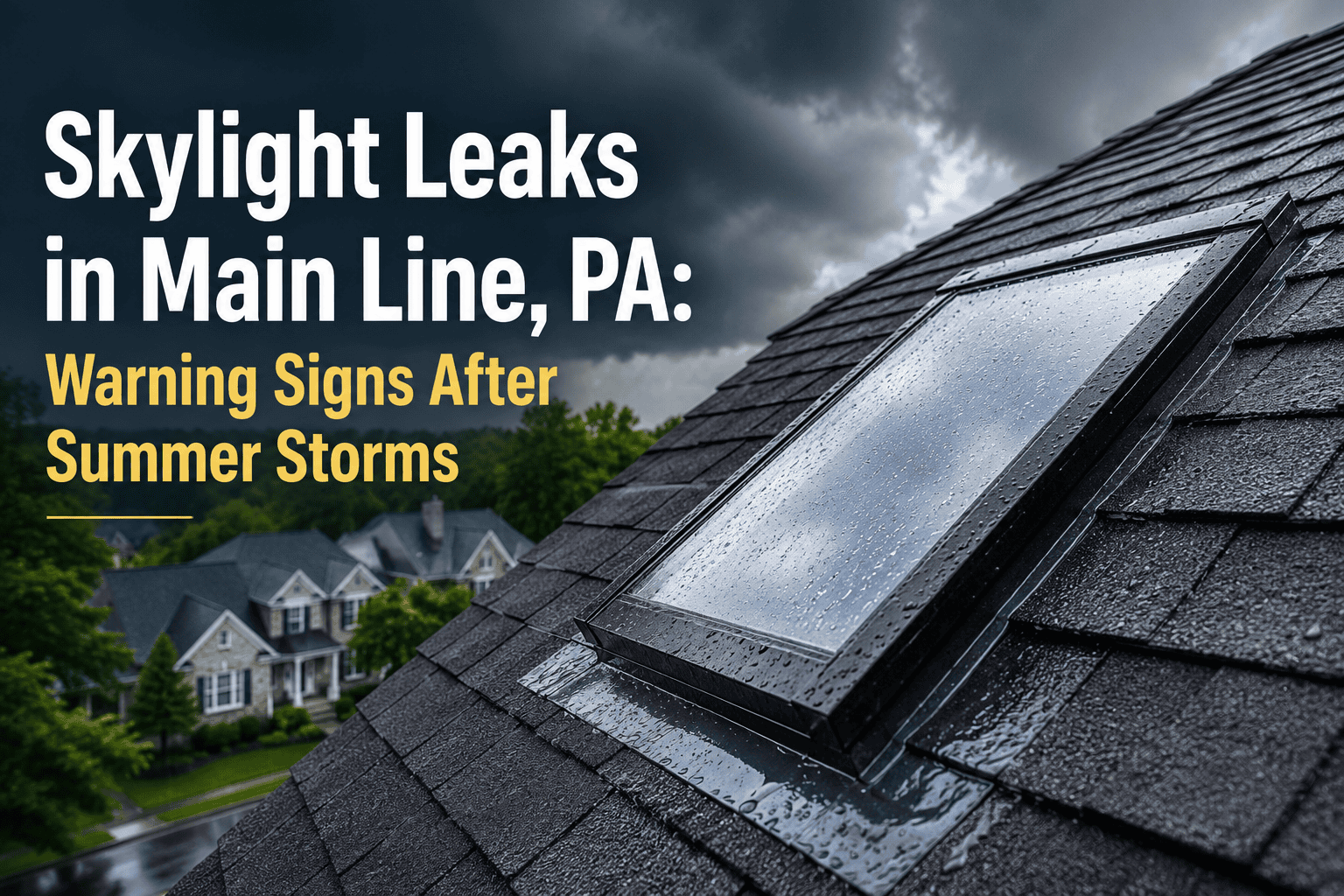
Skylight leaks Main Line, PA often develop after heavy summer storms, when wind-driven rain, damaged flashing, aging sealants, or clogged drainage channels allow water to penetrate around the skylight. If left untreated, even a small leak can lead to stained ceilings, mold growth, damaged insulation, and costly structural repairs. Knowing the warning signs early and addressing the problem quickly can help protect your home and prevent more extensive roof damage.
| Key Takeaway After a summer storm in Main Line PA, skylight leaks are one of the most commonly reported roofing problems. Many homeowners confuse skylight leaks with general roof leaks, leading to the wrong repair and continued water intrusion. This guide tells you exactly what to look for, what causes skylight leaks, and when the problem requires professional attention. |
Why Summer Storms Cause Skylight Problems on Main Line PA Homes
Summer storm season in the Main Line PA area is intense. Thunderstorms, heavy rain, and occasional hail hit Bryn Mawr, Wayne, Havertown, and Wynnewood from May through September. Skylights, by their nature, are openings in the roof plane. They are sealed against water intrusion by a combination of flashing, sealants, glazing seals, and frame integrity, any one of which can be compromised by a strong storm event.
What makes skylight leaks particularly challenging is that the source of the water is not always obvious. Water entering at a skylight can travel several feet along a rafter or ceiling joist before appearing as a stain or drip at a completely different location. A leak that appears to be coming from a ceiling light fixture may actually be originating at a skylight six feet away.
Not Sure If Your Skylight Is Leaking?
A small skylight leak can quickly turn into water damage, mold growth, and expensive roof repairs. If your home was hit by a recent summer storm, don’t wait for visible ceiling stains to appear. Schedule a professional skylight inspection with Hynes Construction. We will identify the source of the leak and recommend the right repair before the damage spreads.
Call (610) 880-3890 today
[Request a Free Roof & Skylight Inspection]
Hynes Construction has inspected and repaired skylight leaks across the Main Line for over 50 years. The following guide reflects what we actually see in the field on homes in this area.
The Four Main Causes of Skylight Leaks After Summer Storms
1. Flashing Failure
Flashing is the metal sheeting that seals the gap between the skylight frame and the surrounding roofing material. It is the primary water barrier for any skylight installation. Flashing can fail in several ways: it can separate from the skylight frame, lift at the edges due to wind pressure, crack from repeated thermal expansion and contraction, or corrode after years of exposure.
Storm winds create negative pressure on the upslope side of a skylight and positive pressure on the downslope side. This pressure differential can push water under flashing that has even slightly lifted edges. A skylight flashing that performed fine through years of normal rain may fail for the first time during a significant storm event because the wind-driven water finds gaps that standing rain never reached.
2. Degraded Sealant and Glazing Seals
Most residential skylights use a combination of metal flashing and sealant at the joints. Over time, sealant deteriorates due to ultraviolet exposure, freeze-thaw cycling, and simple age. Many Main Line homes have skylights that are 15 to 25 years old, well beyond the useful life of the original sealant. When a summer storm delivers heavy, wind-driven rain, degraded sealant that has been adequate under normal conditions becomes the entry point for water.
The glazing seal, the seal between the glass or polycarbonate pane and the frame, is another common failure point. A cracked, shrunk, or missing glazing seal allows water to enter the frame itself and appear as interior moisture on the ceiling below.
3. Condensation Mistaken for a Leak
This is an important distinction for Main Line PA homeowners. After a summer storm, when outdoor temperatures drop suddenly and humid air remains trapped inside the home, condensation can form on skylight surfaces and run down onto the ceiling. This looks exactly like a leak but is not one. The test is timing: condensation typically appears within hours of the temperature drop and dries within a day. A true leak appears during or immediately after rain and may persist or reappear with each subsequent rain event.
Older skylights with single-pane glazing are particularly prone to condensation because the interior glass surface can reach dew point temperature on humid summer nights. Upgrading to double or triple-pane skylight glazing eliminates most condensation issues.
4. Debris Accumulation and Drainage Blockage
Skylights installed in areas where leaves, pine needles, or other organic debris can accumulate around the frame are at significant risk of water intrusion. Debris holds moisture against the flashing and frame edges, accelerating deterioration. It can also block the small drainage channels built into the skylight frame, causing water to back up under the flashing during heavy rainfall.
After any significant storm in the Main Line area, debris clearance from around skylights should be part of your inspection routine.
How to Inspect Your Skylight After a Summer Storm
A systematic inspection after a significant storm event can catch problems early. Here is what to look for, starting from the safest vantage points and working toward more detailed examination:
Interior Inspection First
Begin inside. The ceiling around and below the skylight is your primary indicator. Look for:
- Water staining: Yellow or brown rings on drywall or plaster indicate moisture intrusion. Fresh stains are typically darker at the center and lighter at the edges. Old stains may have dried and appear faded.
- Soft or bubbling drywall: Paint that is blistering or drywall that feels soft to the touch indicates ongoing or recent moisture exposure.
- Visible dripping during or after rain: Note the exact location of any drip relative to the skylight position.
- Mold or mildew growth around the skylight frame on the interior: This indicates repeated or sustained moisture exposure over time.
Exterior Inspection from Ground Level
Use binoculars if necessary. From ground level, examine the skylight and the roof area around it:
- Check that the flashing sits flat against both the skylight frame and the roofing material. Any lifted edges or visible gaps are a concern.
- Look for debris accumulation in the valleys between the skylight frame and the roof slope.
- Check that the skylight glazing surface is intact. Cracks or chips in the glazing are direct water entry points during any rain.
- Examine the area downslope from the skylight on the roof surface for any disturbed or displaced shingles.
| When NOT to Go on the Roof We strongly advise against homeowners climbing onto a wet or recently rained-on roof for inspection purposes. Wet roofing materials are extremely slippery, particularly asphalt shingles. If you need a closer look, call Hynes Construction for a professional inspection. We carry proper safety equipment and insurance coverage for this work. |
Skylight Leak vs Roof Leak: How to Tell the Difference
One of the most common sources of confusion we encounter when responding to calls from Main Line homeowners is distinguishing between a skylight leak and a general roof leak that happens to appear near a skylight. Here are the key differentiating factors:
Timing Relative to Rain Events
A skylight leak typically produces water during or very shortly after rainfall, and the leak location tracks closely with the skylight position or the path water would take flowing from it. A general roof leak near a skylight can produce water with a significant delay because water must travel through insulation and across ceiling membranes before appearing.
Location of Staining
Staining that appears at the edges of the skylight frame on the interior, or directly below the skylight on the ceiling, strongly suggests a skylight source. Staining that appears well away from the skylight, even if the nearest roof opening is the skylight, is more likely a general roof leak that is traveling along framing members.
What Changes When the Skylight Is Covered
A useful diagnostic test is to temporarily cover the exterior of the skylight with a waterproof tarp during the next significant rain event. If the leak stops completely, the skylight is the source. If water continues to enter, the skylight is not the primary problem. This test is simple and inexpensive to perform before committing to repair work.
For a more detailed breakdown of how to tell these apart, see our blog on skylight leaks vs roof leaks.
Think Your Skylight May Be Leaking?
Many skylight leaks start around flashing or worn seals and often go unnoticed until they cause interior damage. Our experienced roofing specialists can inspect your skylight, identify the exact source of the leak, and recommend the most cost-effective solution. Protect your home before the next storm.
Call Hynes Construction at (610) 880-3890 for a professional skylight inspection.
Skylight Repair Options for Main Line PA Homes
Resealing and Flashing Repair
If the skylight frame and glazing are structurally sound and the leak is isolated to flashing or sealant failure, repair rather than replacement is often appropriate. This involves removing the existing sealant and flashing in the affected area, preparing the surfaces properly, and applying new flashing and sealant to manufacturer specifications.
Quality of material and installation matters enormously here. We have seen many skylight repairs on Main Line homes that lasted only one or two seasons because the repair used inappropriate sealant or did not address all of the flashing attachment points. A properly executed flashing repair should be expected to last many years.
Skylight Replacement
When the skylight frame has warped, the glazing is cracked or delaminating, the seals between panes have failed, or the unit is simply at the end of its service life, replacement is the right answer. Modern skylight units offer significantly better thermal performance, lower condensation risk, and improved drainage design compared to units installed before 2000.
If your roof is scheduled for replacement in the next few years, replacing skylights at the same time as the roof is highly recommended. The labor cost to integrate new skylight flashing is substantially lower when the roofing is already removed.
Full Removal and Patching
Some homeowners elect to remove skylight units entirely and patch the roof opening. This is a legitimate option if the skylight is not frequently used, if its position has always created ventilation or moisture challenges, or if repeated repair costs have exceeded the value of the skylight. A properly patched and re-roofed opening should be fully weathertight and will eliminate all future skylight-related maintenance.
Skylight Maintenance to Prevent Leaks
Regular maintenance significantly extends the trouble-free life of any skylight installation. Hynes Construction recommends the following routine for Main Line PA homeowners:
- Clear debris from around the skylight frame after every significant storm and before each winter season.
- Inspect the interior ceiling around the skylight at least twice per year for any early staining.
- Have the exterior flashing and sealant inspected by a professional every three to five years.
- Clean the glazing surface with appropriate non-abrasive cleaners to prevent buildup that traps moisture.
- Check that interior blinds or shades, if present, are not trapping condensation against the glazing.
If your roof has sustained storm damage beyond the skylight area, review our guide on what to do after storm damage on Main Line homes.
Insurance and Skylight Damage in Main Line PA
Whether skylight damage from a summer storm is covered by homeowners insurance depends on the cause and your specific policy terms. Storm damage to a skylight, including hail impact on the glazing or wind damage to flashing, is typically covered under the dwelling portion of a standard homeowners policy. Gradual deterioration from age and lack of maintenance is typically not covered.
When filing a claim for storm-related skylight damage, documentation is important. Take photos of the exterior damage, the interior staining, and any temporary protective measures you have taken. Note the date and details of the storm event. Keep records of any prior maintenance or inspections that demonstrate the skylight was in serviceable condition before the storm.
See our detailed guide on documenting hail and wind damage for insurance claims for Main Line PA homeowners.
Frequently Asked Questions
Q1. How quickly should I address a skylight leak after a storm?
As quickly as possible. Even a small skylight leak can cause significant damage to insulation, drywall, and ceiling framing if left unaddressed through multiple rain events. Contact Hynes Construction for an emergency assessment if you are experiencing active water intrusion.
Q2. Can I use caulk to repair a leaking skylight myself?
Surface caulk application is a temporary measure at best. Without proper flashing repair and surface preparation, caulk applied over a compromised seal will typically fail within one to two seasons. For a lasting repair, the underlying flashing and seal system must be properly addressed by a qualified roofing contractor.
Q3. How long do skylights typically last in Main Line PA?
A quality skylight installed correctly typically lasts 20 to 25 years before the frame, glazing seals, or thermal performance requires replacement. The flashing and exterior sealant may require attention sooner, around the 10 to 15 year mark, particularly in areas with significant weather exposure.
Q4. My skylight leaks only during heavy storms, not light rain. What does that mean?
This pattern typically indicates a flashing problem rather than a glazing seal failure. Wind-driven heavy rain creates pressure conditions that push water into gaps that vertical rain cannot reach. Flashing inspection and repair is the likely solution.
Q5. Is condensation on my skylight a problem?
Some condensation is normal on cold nights in humid conditions. Excessive or frequent condensation, particularly on double-pane units where it appears between the panes, indicates seal failure within the glazing unit itself. Single-pane skylights in older Main Line homes are particularly prone to condensation and may benefit from replacement with modern double or triple-pane units.
Q6. Should I replace my skylights when I replace my roof?
Yes, if the skylights are more than 15 years old. Integrating new skylight flashing with new roofing is significantly more cost-effective and produces a better result than re-flashing old units around new shingles. Discuss skylight condition with your contractor during any roof replacement estimate.
Q7. What size skylight is right for my room?
A common guideline is that skylight area should not exceed 5 percent of the floor area of the room it serves in rooms with many windows, or 15 percent in rooms with few windows. Oversized skylights create heat gain in summer and heat loss in winter that can offset their daylighting benefits. Hynes Construction can advise on appropriate sizing for your specific space.
Q8. Can a skylight leak cause mold?
Yes. Repeated or sustained moisture intrusion from a leaking skylight creates ideal conditions for mold growth in insulation, wall cavities, and ceiling framing. If mold is visible in the attic or around the skylight opening, address the leak source first and then assess whether mold remediation is needed.
Q9. Is my skylight covered under my roofing warranty?
Skylight warranties are separate from roofing material warranties. The skylight manufacturer typically warranties the unit itself, while the roofing contractor warranties the installation and flashing work. Review both documents carefully and ensure you know which contractor to contact for which type of issue.
Q10. How much does skylight repair or replacement cost in Main Line PA?
Flashing repair for a standard residential skylight typically costs several hundred dollars depending on access and scope. Full skylight replacement, including the unit and professional installation with new flashing, varies based on skylight size, type, and roof complexity. Contact Hynes Construction for a specific estimate for your home.
| Skylight concerns after a summer storm? Hynes Construction provides professional skylight inspection, repair, and replacement across Main Line PA including Ardmore, Bryn Mawr, Wayne, Havertown, Wynnewood, and Narberth. Emergency roof repair services available.Call (610) 880-3890 or visit hynesconstruction.com. |
Protect Your Home from Skylight Leaks
Whether your skylight needs a simple flashing repair or a complete replacement, Hynes Construction provides trusted skylight repair and roofing services throughout Ardmore, Bryn Mawr, Wayne, Havertown, Wynnewood, Narberth, and the entire Main Line, PA. Do not wait for a small leak to become a major repair.
✔ Professional Skylight Inspections
✔ Skylight Leak Repairs
✔ Skylight Replacement
✔ Emergency Storm Damage Roof Repairs
✔ Free Estimates
Call (610) 880-3890 today
Stay Connected with Hynes Construction
Follow Hynes Construction for expert roofing tips, seasonal home maintenance advice, project updates, and the latest exterior remodeling insights.

(President, Hynes Roofing and Siding)
With over 35 years experience in the roofing and siding industry, Michelle Hynes has built a business from 2 people into over 45 people and 19 trucks!