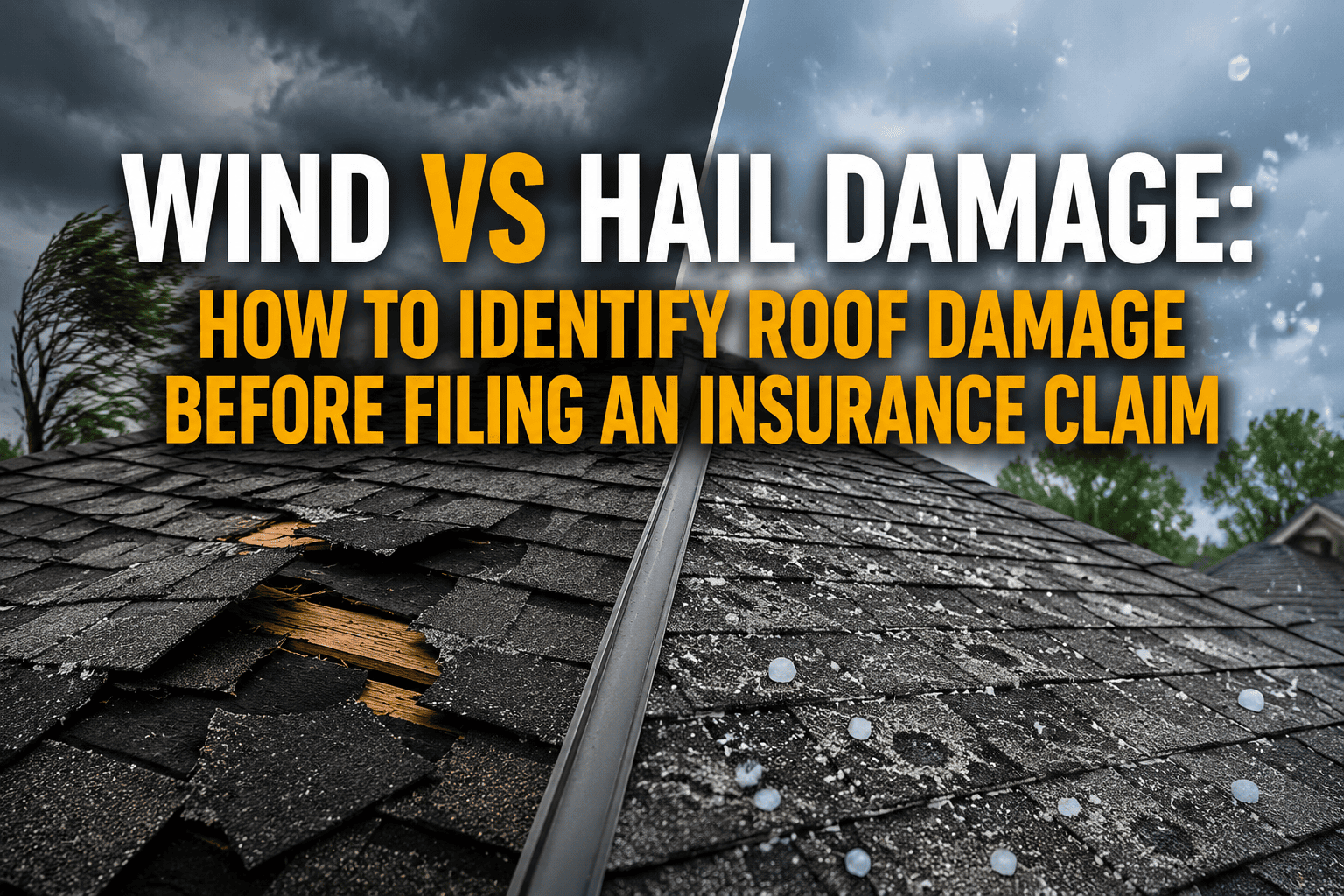
When severe weather sweeps across the Main Line, Delaware County, Montgomery County, Chester County, and Philadelphia, residential roofing systems bear the brunt of nature’s fury. Following a violent storm, homeowners frequently stand in their yards looking up at a roof that appears intact from a distance, wondering whether severe weather has inflicted hidden trauma. Understanding the distinct characteristics of wind vs hail damage roof assessment is essential before contacting your insurance carrier or filing a formal claim. High winds and falling ice stones create entirely different physical signatures on asphalt shingles, tile, and metal roofing systems.
Storm Damage Roof Inspection Offer
Unsure whether your roof has suffered wind or hail damage? Before filing an insurance claim, allow Hynes Construction to inspect your roof and identify potential storm trauma. Our experienced team assists homeowners throughout the Main Line, Delaware County, Montgomery County, and surrounding Pennsylvania communities. Call Hynes Construction today at 610-896-6388 for a professional roof inspection.
Homeowners residing in historic and suburban communities throughout Ardmore, Wayne, Bryn Mawr, Villanova, Haverford, and Newtown Square face diverse meteorological events each year. Knowing how to differentiate between wind uplift and hail impact empowers you to communicate effectively with insurance adjusters and secure the financial restoration your home requires. This comprehensive guide details the physical indicators of both storm perils, explains why professional evaluations matter, and outlines the steps necessary to navigate the insurance restoration process successfully.
Understanding the Difference Between Wind Damage and Hail Damage
When severe Pennsylvania thunderstorms unleash destructive weather across the Delaware Valley, wind and hail often strike simultaneously, yet their mechanical effects on residential roofing are fundamentally distinct. Understanding the mechanics of a wind vs hail damage roof scenario begins with examining how each peril attacks exterior building materials.
High winds generate powerful aerodynamic uplift pressures as they sweep across roof planes. When wind currents encounter eaves, ridges, and gable ends, they create a vacuum effect that pulls shingle tabs upward, breaks adhesive sealant strips, and tears roofing materials entirely off the deck. Conversely, hailstorms deliver blunt-force trauma from above. Ice stones hurled downward at high velocities impact shingle surfaces directly, fracturing the underlying fiberglass mat and displacing protective mineral granules in random circular patterns. While wind damage often manifests as missing shingles and loose flashing, hail damage frequently leaves the shingle structurally intact on the surface while severely compromising its internal waterproof integrity. Recognizing these differences is crucial for accurate damage reporting.
Why Identifying Storm Damage Before Filing an Insurance Claim Matters
Filing an insurance claim without a thorough understanding of your roof’s condition can lead to complicated disputes with insurance carriers or premature claim filings that count against your loss history without yielding financial resolution. Before calling your insurance company, you must establish clear, verifiable evidence of storm trauma.
Insurance policies require policyholders to demonstrate that damage resulted from a sudden, accidental weather event rather than normal aging or deferred maintenance. When homeowners conduct a preliminary assessment or schedule a professional storm damage roof inspection, they gain an objective report detailing whether the damage warrants a formal claim. Furthermore, insurance adjusters respect thorough, professional documentation. Partnering with local experts ensures that all subtle wind lifts and hail bruises are fully recorded, giving your claim the highest possible probability of approval and full financial compensation. Scheduling a professional storm damage roof inspection provides objective photographic evidence before filing an insurance claim.
Physical Signs of Wind Damage on Asphalt and Slate Roofs
Wind is an invisible force, but its destructive path leaves unmistakable physical evidence across residential roofing systems. Identifying wind trauma requires scanning roof surfaces for specific structural anomalies.
The most obvious sign of wind damage is missing shingles, leaving bare patches of dark underlayment or plywood decking exposed to the elements. However, less dramatic wind indicators are equally dangerous. Lifted shingle tabs, where wind has broken the factory-applied tar seal, allow wind-driven rain to penetrate beneath the shingle layers. Creased or folded shingle tabs indicate that wind has bent the material backward, permanently fracturing the fiberglass reinforcement mat. Additionally, check your roof perimeter for loose or detached metal drip edges, damaged ridge caps, and displaced flashing around chimneys and valleys. Prompt wind damage roof repair Pennsylvania is essential to prevent these localized vulnerabilities from expanding into widespread interior leaks. Executing prompt wind damage roof repair Pennsylvania stops water infiltration and prevents interior ceiling destruction.
Physical Signs of Hail Damage: Bruises, Granules, and Fractures
Unlike wind, which rips and tears materials apart, hail acts like a barrage of tiny hammers striking your roof. Identifying the subtle signs of roof hail damage requires a trained eye, as hail impacts do not always cause immediate, dramatic indoor leaks.
When large hailstones strike asphalt shingles, they displace the protective mineral granules that shield the asphalt from destructive ultraviolet radiation. These impact zones, known as bruises, appear as dark, circular depressions where the shingle surface feels soft or spongy under gentle thumb pressure. Examining your gutter troughs, downspouts, and splash blocks will frequently reveal a heavy accumulation of dislodged mineral granules. On metal valleys, flashing, and vents, hail leaves distinct, shiny dents. Furthermore, inspecting soft metals such as window screens, air conditioning condenser fins, and exterior light fixtures provides corroborating physical evidence of hailstone size and directional impact. For comprehensive property evaluations, scheduling a specialized hail damage roof inspection Main Line PA ensures every hail strike is properly documented. Recognizing the subtle signs of roof hail damage is essential for determining whether your roof requires insurance restoration. Booking a specialized hail damage roof inspection Main Line PA uncovers bruised shingle mats and dented metal vents across your property.
The Role of Professional Roof Inspections in Storm Claims
Many homeowners attempt to assess storm damage independently using binoculars or ladders. While ground-level checks provide a preliminary overview, climbing onto a storm-damaged roof is hazardous and frequently fails to reveal subtle hail bruising or hairline wind fractures.
Professional roofing contractors possess specialized training, safety gear, and technical expertise required to perform comprehensive forensic roof inspections. During a professional assessment, technicians evaluate shingle mat integrity, chalk test hail impacts on soft metal vents, inspect attic decking for moisture intrusion, and compile exhaustive photographic logs. For deeper insights into the value of expert evaluations, review professional guidance on professional roof inspection after storm damage to understand how certified inspection reports protect your home and strengthen your insurance negotiation position.
How Insurance Companies Evaluate Wind vs Hail Claims
Navigating the insurance claim evaluation process can be daunting for property owners. When an insurance adjuster visits your property to inspect storm damage, they evaluate the roof through the lens of specific policy guidelines and industry underwriting standards.
Insurance adjusters examine roof slopes independently, counting the number of hail hits or wind-damaged shingles per test square (typically a ten-by-ten-foot area) to determine whether repair or total replacement is warranted. If wind damage is localized to a single slope, repairs may involve replacing affected shingles. However, if hail impacts are widespread across all roof slopes or if matching shingle colors are no longer commercially available due to manufacturing discontinuation, insurance carriers frequently approve a full roof replacement after storm damage. Having an experienced local contractor present during the adjuster’s inspection ensures that all wind and hail trauma is correctly identified and accounted for in the final settlement estimate. Securing approval for a complete roof replacement after storm damage ensures your home receives modern, high-performance materials.
Successfully securing financial compensation for wind or hail restoration requires meticulous adherence to insurance procedures and clear communication. Navigating this administrative journey without professional guidance can lead to undervalued settlements or frustrating claim denials.
Professional roof insurance claim assistance transforms the restoration experience. An experienced local contractor acts as your advocate, reviewing your insurance. Explanation of Benefits (EOB), meeting with adjusters on-site to review damage scopes, and ensuring that all necessary line items, such as code-required drip edge, ice and water shield, and proper ventilation, are included in your payout. Furthermore, utilizing structured guidance from storm damage repair steps for homeowners ensures your recovery process remains organized and stress-free. Professional roof insurance claim assistance removes administrative guesswork and advocates for full settlement coverage.
When Roof Damage Requires Total Replacement vs Repairs
One of the most frequent questions homeowners ask following a severe storm is whether their roof can be successfully repaired or if a total replacement is required. Making this determination depends on the severity, extent, and age of the existing roofing system.
If wind damage is confined to a few isolated shingle tabs or if hail impact density is low on a single roof slope, targeted repairs using matching shingles are often sufficient. However, if your roof is over fifteen years old and has sustained widespread hail bruising across multiple slopes or extensive wind uplift that compromises its overall structural matrix, piecemeal repairs become impractical and cost-ineffective. In such cases, total roof replacement restores your home’s complete weather defense and comes with robust manufacturer warranties. To understand the chronological progression of a full replacement project, review detailed insights on the roof replacement process. Additionally, proactive maintenance strategies outlined in roof maintenance guide for homeowners help extend the lifespan of new installations.
Protecting Your Entire Exterior Envelope Against Severe Weather
While roofs absorb the direct impact of wind and hail, severe storms also batter your home’s secondary exterior components. Siding, gutters, window frames, and exterior trim frequently suffer collateral damage during violent weather events.
When evaluating storm trauma, homeowners must inspect their entire property envelope. Siding panels cracked by flying hail, aluminum gutters dented by wind-blown debris, and exterior trim scarred by severe weather compromise both aesthetic appeal and waterproof integrity. Addressing multi-surface destruction through unified exterior restoration guarantees that your home is thoroughly protected against future meteorological challenges. Reviewing expert recommendations on common roofing problems further enhances your ability to maintain a resilient, beautiful home exterior.
Partnering With Local Restoration Experts in Pennsylvania
When severe weather compromises your home in Main Line, Ardmore, Wayne, Bryn Mawr, West Chester, Delaware County, or Montgomery County, partnering with a trusted local restoration contractor is your greatest asset. Out-of-state storm chasers often target flood-affected neighborhoods, offering quick cosmetic fixes before disappearing without local accountability or warranty backing.
Choosing an established local contractor ensures deep familiarity with regional building codes, enduring relationships with insurance carriers, and unwavering community commitment. From conducting meticulous wind versus hail assessments to executing flawless restoration craftsmanship, professional guidance guarantees complete peace of mind.
Expert Wind and Hail Restoration Services
Navigating wind and hail damage requires professional expertise and reliable advocacy. Hynes Construction helps Main Line homeowners identify storm trauma, manage insurance claims, and restore their properties with superior craftsmanship. Call 610-896-6388 today to schedule your comprehensive storm inspection.
Frequently Asked Questions
How can I tell if my roof damage was caused by wind or hail?
Wind damage typically results in missing, lifted, or creased shingles and loose flashing, whereas hail damage creates circular bruised depressions, granule loss, and dented metal vents.
Does homeowners insurance cover both wind and hail damage?
Yes, standard homeowners insurance policies cover sudden and accidental damage caused by qualifying windstorms and hailstorms.
Do I need a professional inspection before filing a wind or hail claim?
Yes, a professional inspection provides objective photographic evidence and detailed repair scopes, ensuring your claim is accurate and well-substantiated.
What are the primary signs of hail damage on asphalt shingles?
Key signs include circular dark bruises where the shingle feels soft, heavy granule accumulation in gutters, and dented soft metals like vents and AC units.
What indicates wind damage on a residential shingle roof?
Primary indicators include missing shingle tabs, exposed nail heads, creased or folded shingles, and displaced metal flashing or ridge caps.
Can hail damage cause indoor roof leaks immediately?
Hail damage often compromises the internal fiberglass mat without causing immediate indoor leaks, though it significantly shortens the remaining lifespan of the roof.
When does wind or hail damage require a full roof replacement?
If damage is widespread across multiple roof slopes or if matching materials are discontinued, insurance carriers frequently approve a total roof replacement.
How do insurance adjusters evaluate wind versus hail claims?
Adjusters inspect roof slopes and count damaged shingles or hail hits per test square to determine whether repair or replacement is economically justified.
Why should I avoid out-of-state storm-chasing roofing contractors?
Out-of-state contractors lack local accountability, permanent offices, and regional licensing, often leaving homeowners with unenforceable warranties.
Who should I call for wind and hail damage restoration in the Main Line?
Hynes Construction provides expert storm inspections, insurance claim assistance, and premium exterior restoration across the Main Line and surrounding Pennsylvania counties.
At Hynes Construction, we believe homeowners should have access to reliable information before making important decisions about their homes. Follow us on Facebook and Instagram to see recent roofing projects, storm restoration updates, homeowner tips, and exterior improvement ideas from our team serving the Main Line and surrounding Pennsylvania communities. Stay connected with Hynes Construction:

(President, Hynes Roofing and Siding)
With over 35 years experience in the roofing and siding industry, Michelle Hynes has built a business from 2 people into over 45 people and 19 trucks!