Summer storms, heavy rain, and wind take a toll on a roof that isn’t always visible from the ground. Add in roofing materials that have aged another year and the colder, wetter conditions on the way, and fall becomes the one time of year when a roof’s real condition actually matters. A fall roof inspection Main Line PA homeowners scheduled now, before winter weather arrives, is often the difference between a small repair handled on your own timeline and an emergency call during the first major storm of the season. This guide walks through what a professional inspection actually checks, the warning signs worth knowing, and how to decide between repair and replacement if problems turn up.
Not sure whether your roof is ready for winter? Schedule a professional evaluation with Hynes Construction at 610-896-6388 before a small problem becomes a larger repair.
Why Fall Is a Good Time for a Roof Inspection
Roofs take their heaviest beating during the warmer months: UV exposure, summer thunderstorms, and wind events all add up, often without any visible sign from inside the house. Fall gives you a window to assess that cumulative wear before winter adds freeze-thaw cycles, ice, and heavy precipitation into the mix, all of which make existing damage worse. A roof that’s merely stressed in September can become a roof that’s actively leaking by January if the underlying issue isn’t addressed. Scheduling an inspection now, while weather and daylight still cooperate, also means repairs can usually be scheduled on a normal timeline instead of as an emergency.
What a Professional Roof Inspection Should Check
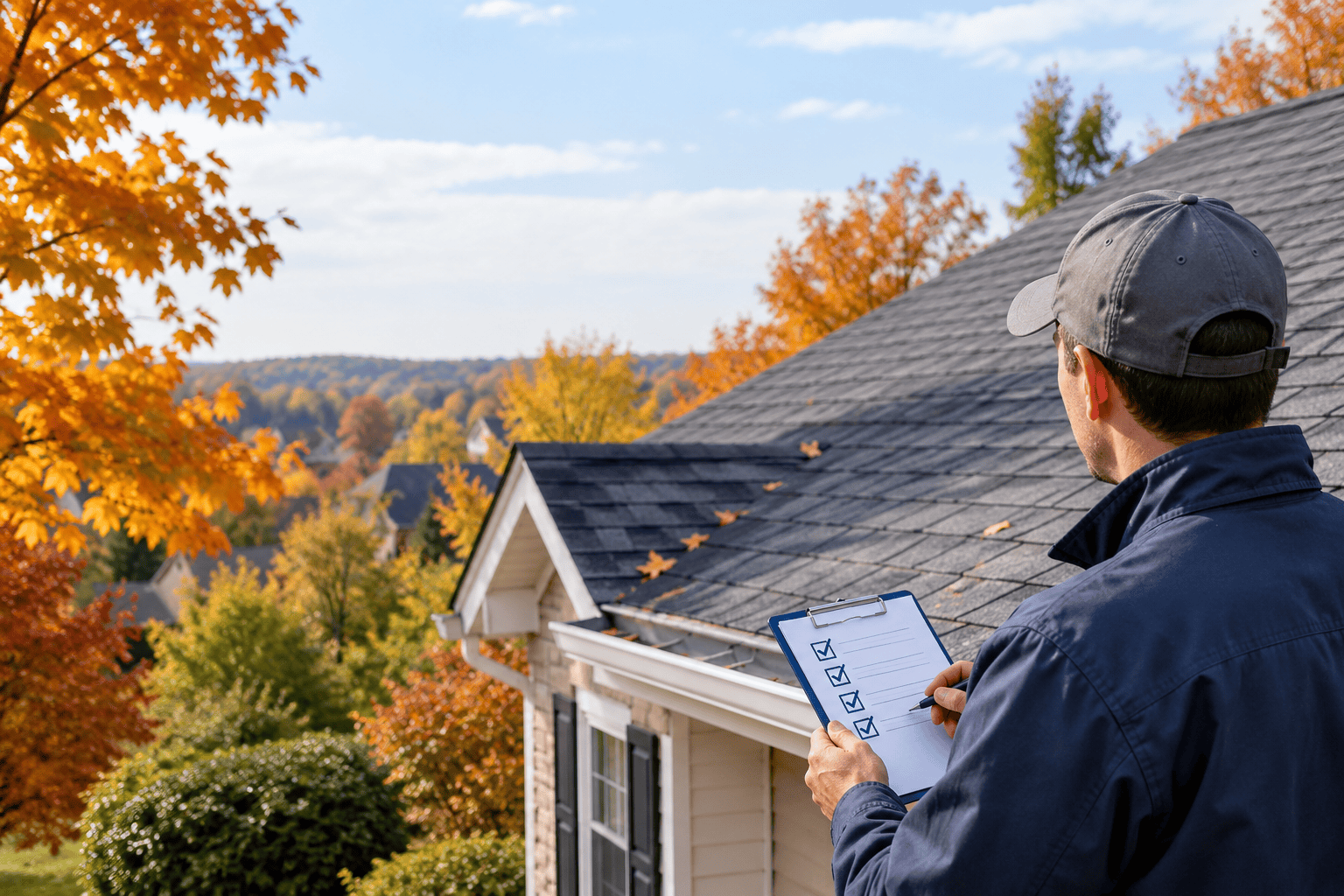
A thorough roof inspection checklist covers more than a glance from the driveway. A proper inspection should evaluate:
- Shingles, checking for cracking, curling, missing granules, or shingles that have blown loose or off entirely.
- Flashing, the metal strips that seal transitions around chimneys, vents, and roof edges, which are one of the most common sources of leaks when they deteriorate or separate.
- Roof penetrations, including vent pipes, exhaust fans, and other fixtures that pass through the roof surface, each a potential entry point for water if improperly sealed.
- Valleys, the angled sections where two roof planes meet, which handle a disproportionate amount of water runoff and show wear faster than flat sections.
- Gutters, checking that they’re properly attached and draining, since a roof inspection and gutter condition are closely connected.
- Drainage, confirming water is actually moving away from the roof and foundation rather than pooling or backing up.
- Ventilation, since poor attic ventilation can trap moisture and accelerate damage to roofing materials from underneath.
- Visible water damage, both on the roof surface and from inside the attic, where staining often shows up before a visible exterior leak does.
- Chimney and roof intersections, a frequent trouble spot where two different materials meet and flashing has to work especially hard.
- Skylights, which have their own seals and flashing details that need periodic attention separate from the rest of the roof.
A homeowner can spot some of this from the ground with binoculars, but a trained eye on the actual roof surface, combined with an interior attic check, catches far more than a visual scan from the yard.
It’s worth noting what a visual check from the ground actually misses. Granule loss on an asphalt shingle roof, for example, often shows up first as discoloration in the gutters, not as something visible on the roof itself from a distance. Lifted or resealed shingles after a wind event can look perfectly normal from the driveway while no longer providing a proper seal underneath. And flashing issues around a chimney or skylight are typically only visible up close, since the problem is usually a small gap or separation rather than something that changes the roof’s overall appearance. This is part of why a ground-level look, while better than nothing, isn’t a substitute for an actual inspection.
Signs Your Roof May Need Repair
Certain signs of roof damage point toward a repair rather than a full replacement, particularly when the issue is localized:
- A small number of missing or damaged shingles in an otherwise sound roof.
- Isolated flashing failure around a single chimney, vent, or skylight.
- A minor, recently discovered leak that hasn’t caused widespread interior damage.
- Clogged or damaged gutters contributing to water intrusion at the roofline.
- Minor granule loss without widespread shingle deterioration.
These issues, caught early, are usually straightforward to repair and prevent a bigger problem from developing over the winter months.
Signs You May Need Roof Replacement Instead
Other signs suggest the roof has reached, or is approaching, the end of its useful life:
- Widespread shingle deterioration across most or all of the roof, rather than isolated spots.
- Multiple leaks in different areas, suggesting the underlying roofing system is failing broadly rather than at one isolated point.
- A roof that’s reached or exceeded its expected lifespan for its material type.
- Visible sagging, which can indicate structural or decking problems beneath the roofing material.
- Repeated repairs to the same areas without lasting resolution.
When damage is widespread rather than isolated, repeated repairs often cost more over time than addressing the roof as a whole, which is why an honest assessment of scope matters more than reflexively choosing the less expensive option on paper. A roof that needed three separate repair visits over two years, each addressing a different leak, has often already cost close to what a full replacement would have, without actually solving the underlying problem of an aging roofing system that’s failing in multiple places at once.
The roof’s age relative to its material’s expected lifespan is one of the clearest indicators here. A roof well within its expected service life that develops an isolated issue is a straightforward repair candidate. A roof at or past that point, especially one already showing wear in more than one area, is a different situation: even a successful repair now doesn’t change the fact that the rest of the roofing system is aging at the same rate, and additional issues are likely to surface in the following seasons.
How Storm Damage Can Hide Until Later
Not all storm damage is obvious right away. Wind can lift and reseat shingles without fully detaching them, leaving a weakened seal that does not show an obvious gap but no longer protects the roof the way it should. Hail can bruise shingles in ways that are not visible from the ground, but that compromise the material’s integrity over time. This kind of damage often does not produce a visible leak until months later, sometimes not until the next significant storm, by which point water may have already affected the decking or interior. This is one of the main reasons a professional inspection matters even when a roof is not showing obvious problems: storm damage frequently looks like nothing until it looks like a leak.
What Homeowners Should Do After Finding Roof Damage
If an inspection turns up damage, a few steps help from there. Document what was found, including photos, since this matters both for understanding scope and for any potential insurance claim. If the damage appears storm-related, our guide on documenting roof storm damage for an insurance claim walks through that process in more detail. From there, get a clear recommendation on whether the issue calls for repair or replacement along with a realistic timeline, rather than delaying a decision until the next storm forces the issue.
Roof Repair vs. Roof Replacement
Deciding between repair and replacement comes down to the scope and location of the damage, the roof’s age relative to its expected lifespan, and whether problems are isolated or widespread. A newer roof with a single area of damage is usually a clear case for repair. An older roof nearing the end of its expected service life, especially one with damage showing up in multiple areas, often makes more sense to replace rather than patch repeatedly. Our detailed breakdown of roof replacement vs. roof repair covers the specific factors that go into that decision, and our roof replacement timeline guide is worth reviewing if replacement looks likely, so you know what to expect before committing.
Should You Have Your Roof Inspected Before Winter?
For most Main Line homeowners, yes, particularly if it’s been a year or more since the last inspection or if the roof went through a notable storm season without being checked afterward. Winter conditions, ice, heavy precipitation, and freeze-thaw cycling tend to expose weaknesses that were manageable in milder weather, turning a minor issue into a larger one. An inspection now, while scheduling is still flexible, gives you time to address whatever’s found on a normal timeline rather than during an emergency.
Hynes Construction has helped homeowners throughout the Main Line, including Ardmore, Wayne, Bryn Mawr, and the surrounding Delaware and Chester County communities, get ahead of roofing issues before winter weather arrives. If you have already read our guidance on fall roof preparation or storm preparation, this checklist is meant to help you act on that preparation with a concrete inspection plan, whether the result is a straightforward roof repair or something more involved.
Frequently Asked Questions
What does a fall roof inspection include?
A thorough inspection checks shingles, flashing, roof penetrations, valleys, gutters, drainage, ventilation, visible water damage, and areas where the roof meets chimneys or skylights, both from the roof surface and from inside the attic.
How often should I have my roof inspected?
Most homeowners benefit from an annual inspection, ideally in the fall before winter weather arrives, with an additional check after any major storm event involving high winds or hail.
Should I inspect my roof before winter?
Yes. Winter conditions like ice, heavy precipitation, and freeze-thaw cycling tend to worsen existing damage, so catching problems in the fall allows repairs to happen on a normal schedule rather than as a winter emergency.
What are the signs of roof damage?
Common signs include missing or curling shingles, granule loss, visible staining in the attic, sagging areas, and damaged flashing around chimneys, vents, or skylights. Some damage, especially from wind or hail, isn’t visible without a closer inspection.
How do I know if my roof needs repair or replacement?
It depends on whether damage is isolated or widespread and how the roof’s age compares to its expected lifespan. Isolated issues on a newer roof usually call for repair, while widespread damage or a roof near the end of its service life often points toward replacement.
Yes. A professional inspection checks both the roof surface and the attic interior, where staining or moisture can reveal a leak that hasn’t yet produced a visible drip inside the living space.
How much does a roof inspection cost?
Cost can vary depending on roof size, accessibility, and scope. Contacting a local roofing contractor directly is the most reliable way to get an accurate quote for your specific roof.
Can a roofing contractor inspect storm damage?
Yes. A roofing contractor can assess storm damage specifically, including documenting findings that may be needed for an insurance claim, and recommend whether repair or replacement is the appropriate response.
What should I do if my roof is damaged before winter?
Document the damage, get a professional assessment of scope, and address repairs on as normal a timeline as possible rather than waiting. Addressing issues before winter weather arrives generally prevents more extensive and costly damage.
How long does a professional roof inspection take?
Most inspections can be completed within a few hours, though timing depends on roof size, accessibility, and whether any issues require closer examination once initial findings come up.
Want to see more of our work, home improvement ideas, and project updates? Follow Hynes Construction on Facebook and Instagram for inspiration, project updates, and helpful homeowner information.
Do not wait until winter exposes a roofing problem. Call Hynes Construction at 610-896-6388 to schedule a professional roof inspection and discuss the right repair or replacement solution for your home.

(President, Hynes Roofing and Siding)
With over 35 years experience in the roofing and siding industry, Michelle Hynes has built a business from 2 people into over 45 people and 19 trucks!